Schools
All-Day K, Drop in Enrollment Dominate School Budget Session
All-day kindergarten could be had for around $141,000 in Barrington, but is it necessary? And will the number of teachers drop as students disappear?


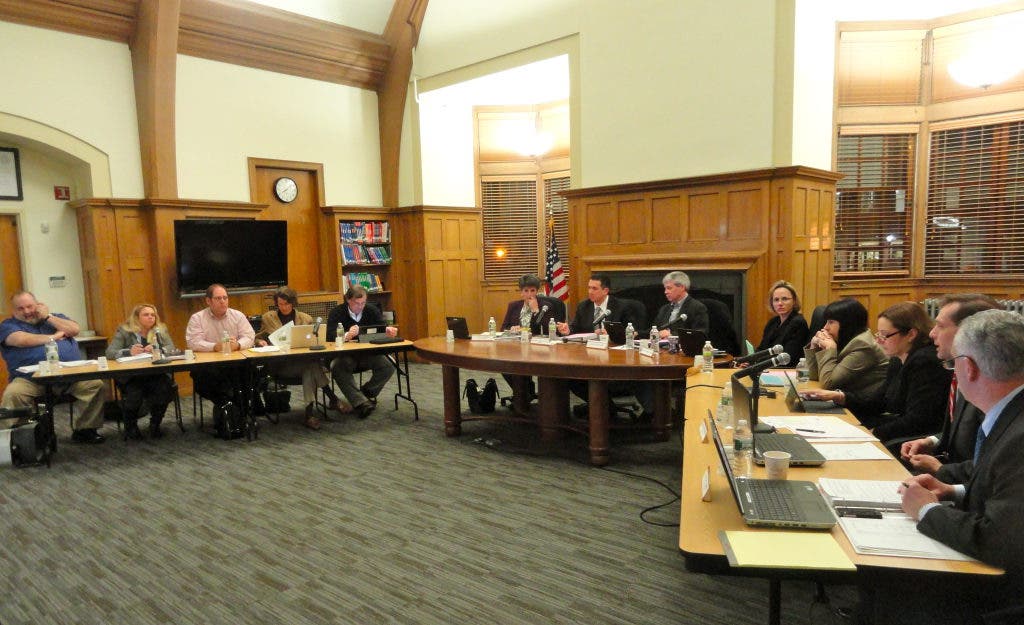


All-day kindergarten could be started for about $141,000 in Barrington right now, but is it necessary?
With enrollment dropping in Barrington, what is the right number of teachers needed in the schools?
What is the right technology for Barrington’s students?
Find out what's happening in Barringtonfor free with the latest updates from Patch.
Those three subject areas dominated the annual joint session of the School Committee and the Committee on Appropriations (COA) Thursday night. The proposed school budget for next fiscal year of $46.18 million actually got scant attention.
Rosetta Narvaez, a COA member, questioned the actual value of all-day kindergarten in Barrington – no matter what the cost. She also questioned whether the subcommittee set up to look at all-day K will be objective given the School Committee’s support of lengthening the day.
Find out what's happening in Barringtonfor free with the latest updates from Patch.
Superintendent Michael Messore said all-day kindergarten is essential to fully implement the Common Core curriculum in the schools.
Paula Dillon, director for curriculum, said: “The new standards are the reason we looked at it again. There simply is not sufficient class time with half-day K.”
“There is a real need for it from an instructional standpoint,” added School Committee member Paula Dominguez.
“More education earlier may save us money down the road,” said School Committee Chairman Robert Shea Jr.
School Committee member Scott Fuller, a member of the kindergarten subcommittee, said: “It is one of the top three or four things we can do for all kids. It’s an incredible value.”
But making a decision on all-day kindergarten still “is not a fait accompli,” he said.
The cost to add all-day kindergarten, in fact, has dropped significantly from a year or so ago, when the School Committee estimated it would cost close to a million dollars to implement it.
Those numbers changed substantially, said Finance Director Ron Tarro, because with declining enrollment, there is far less need to build new classrooms at around $250,000 each.
Enrollment has dropped about 100 students overall in two years and is projected to drop by 600 students over the next couple of years, said COA member Joel Hellmann. So, is there a game plan to reduce the number of teachers at the same time?
Tarro said the number of teachers is already down about 15 since 2008. With more to come.
“You must optimize programs, not just maintain them,” said Kathy Cadigan, chair of the COA. “You must make them more efficient and targeted under zero-base budgeting.”
“We’re a new administration here,” said Messore. “Just give us some time to dig into things.”
School Committee member Kate Brody said: “We now have data that takes the emotion out of decision-making. We vigorously evaluate the data we have.”
“We need the best bang for our buck,” said COA Vice Chair Tim Sweetser. “The economy is not expected to get much better over the next 10 to 15 years.”
Where does technology fit into this scenario?
A technology subcommittee will be evaluating a technology plan proposed by Katie Miller, technology director for the schools. It will make the decisions on what devices to buy and how many.
“Technology is still just the vehicle for accomplishing digital learning,” said Shea.
There are so many free resources in cyberspace, said Dillon, that the primary decision to be made about technology is exactly what devices make the most sense for students and teachers.
Get more local news delivered straight to your inbox. Sign up for free Patch newsletters and alerts.