Travel
Charlestown's Hidden History: Why Is It Called Old Post Road?
A familiar Charlestown road has a history stretching back centuries, from an early Native American travel route to a major colonial highway.


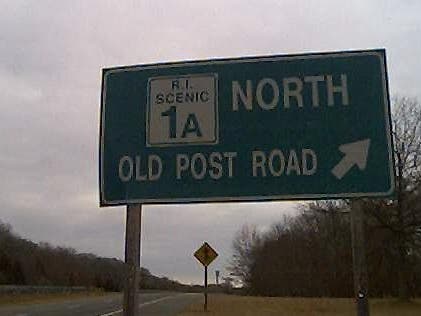
Drivers traveling along Old Post Road may not realize they are following a route with a history that predates Charlestown itself.
The road's path traces part of an early transportation corridor that was used by Native Americans before colonial settlement. By the early 1700s, the route had become part of a colonial highway connecting communities throughout the region.
According to historical records compiled by the Charlestown Historical Society, the Old Post Road was laid out through the area around 1703 and followed portions of an earlier Native American trail.
Find out what's happening in Charlestownfor free with the latest updates from Patch.
Over time, the route became an important link for travelers, trade and communication.
The road was known by several names throughout its history, including the Pequot Trail and King's Highway, before becoming associated with the colonial postal system and eventually earning the name Old Post Road.
Find out what's happening in Charlestownfor free with the latest updates from Patch.
The Rhode Island Historical Preservation Commission has identified the historic Post Road as one of the state's oldest transportation routes. Portions of the road through Charlestown still retain elements of the historic landscape, including stone walls, mature trees and historic buildings.
The route also played a role in the development of Cross Mills, one of Charlestown's historic village centers.
As traffic moved along the Post Road, businesses and services developed nearby to serve residents and travelers. Cross Mills became home to commercial and community institutions, including a mill, store, blacksmith shop, school, church and post office.
The road was more than a way to get from one town to another.
It helped determine where people settled, where businesses developed and how Charlestown connected with surrounding communities.
That importance changed as transportation evolved.
The development and expansion of modern highways, including U.S. Route 1, redirected much of the traffic that had historically traveled through village centers and along the older route.
Still, the history of Old Post Road remains visible.
The road continues through areas that reflect different periods of Charlestown's development, from early settlement and agriculture to the growth of village centers and the modern community that exists today.
The nearby Cross Mills Common Burying Ground also provides another connection to that history. The cemetery contains graves associated with some of Charlestown's early families and reflects generations of the community's history.
For local historians, roads such as Old Post Road can provide an important connection between Charlestown's past and present.
Road names often survive long after the original reasons for those names have faded from everyday memory.
In the case of Old Post Road, the name offers a clue to a much larger story.
The route was once part of a transportation network that connected communities across colonial New England. But its origins go back even further, following a path used before the road became part of the colonial landscape.
Today, thousands of people may travel portions of the route without considering its history.
But the next time you drive down Old Post Road, you may be traveling along one of the oldest routes in Charlestown.
This is the first in what could become an ongoing series exploring the history behind the roads, landmarks and places we see every day in Charlestown. Would you like to see more? Let me know in the comments, and feel free to suggest a road, landmark or location I should investigate next.