Schools
Buses Won't be Privatized for Now, Committee Orders Cost Study
Despite an energetic presentation by the bus union's general manager, Arthur Jordan, the School Committee decided to hold off making a decision on bussing in the district until receiving results from a city-wide commission.
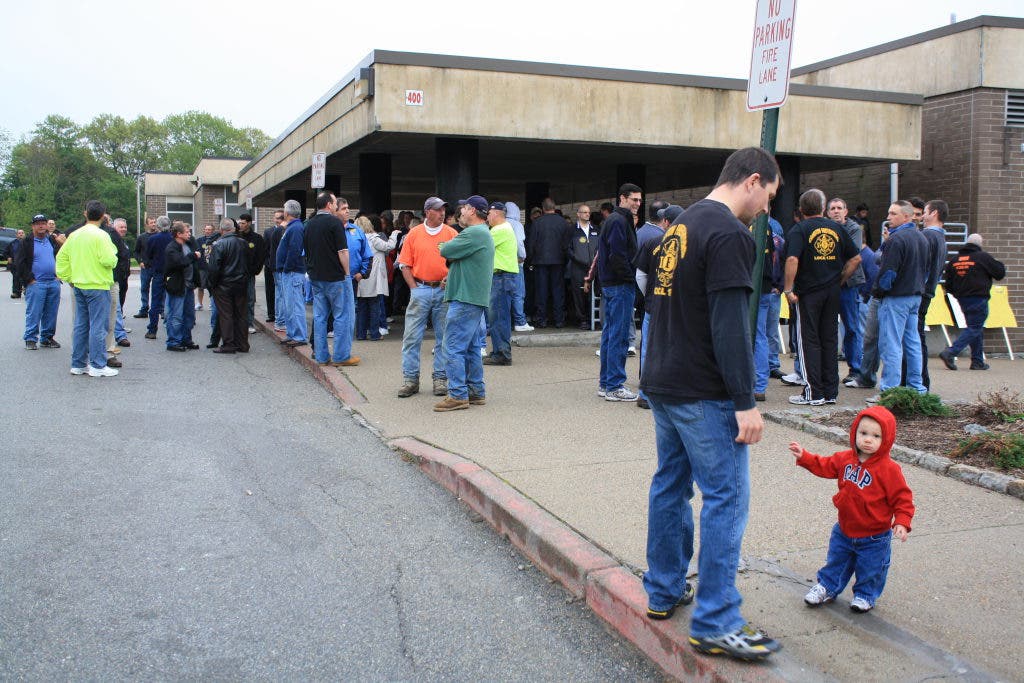


The bus drivers’ union, Local 1322, promised extra savings and did its best to try to secure the contract for Cranston’s school bus operations at a school committee work session at Western Hills Middle School on Wednesday night, but in the end, failed to secure a deciding vote.
The committee instead decided not to privatize or accept the union's bid. Instead, it created a commission to complete a cost savings study that could last until December, effectively sticking with the status quo as the current fleet will operate unchanged for the time being.
Before a boisterous, standing room only audience, Arthur Jordan, the union’s general manager, tried to convince the School Committee that by sticking with the Local 1322, there would be demonstrable savings for the school department.
Find out what's happening in Cranstonfor free with the latest updates from Patch.
In responses to a city request for proposals, the union put in a bid of $7.2 million. First Student, a large busing conglomerate, bid $5.9 million to operate Cranston's bus fleet.
The committee voted 4-1 for the study. It will involve City Council members, the mayor’s office and School Committee members. The commission would be required to release the results of their findings by December.
Find out what's happening in Cranstonfor free with the latest updates from Patch.
Jordan's presentation was an 85-page PowerPoint presentation that devoted 63 slides to highlight local news stories of First Student's problems and foibles across the country in an attempt to show the bus empire suffered from poor customer service, driver misconduct, labor disputes, broken promises and angry parents who filed lawsuits.
Jordan said he found the news articles by Googling “First Student.”
Among the incidents — buses not delivered in Cincinnati, dirty buses in Indianapolis, frozen fuel lines in Stamford, Conn., failing to pay overtime in Baltimore, driver shortages in Buffalo and a town in Montana that actually paid First Student $575,000 to leave town so they could operate their own fleet.
First Student operates in 1,500 school districts across the U.S., according to their website. They transport 6 million students every day to and from school.
The highlight of the presentation focused on the 2007 blizzard fiasco in Providence where some students were trapped and didn't get home until 10:30 p.m.
He asked the audience if they knew where Cranston students were that night. And before they could answer he switched slides to a young girl laying in bed, hugging a teddy bear. The slide read, “At home… Safe and asleep in their beds.”
He noted that it was precisely these types of emergency situations in which Cranston union bus drivers are at their best.
Jordan’s presentation also included pictures of bus drivers and listed their commitment to the community and their jobs.
“There’s got to be a value on that,” Jordan said. “When you have longstanding employees that are part of your community that are dedicated to the job they do. There’s a value to that. It’s the School Committee’s job to decide the value of that. The safety of a child [is] priceless.”
Despite assurances from First Student that every attempt would be made to rehire the city's drivers, Jordan spoke as if their jobs were substantially at risk.
Jordan said the union has made concessions. He said there would be a health insurance co-pay increase, some coverage plans being dropped, two-year pay and step-increase freezes, reduction in holiday and sick days, among others.
Those savings add up to $494,760, Jordan said.
The union also said it was willing to do basic maintenance like brake repairs , oil changes and steering box fixes in-house. The presentation noted this would save an additional $92,000. Other cuts and cost savings measures added up to an estimated additional $100,000, giving the union around $700,000 in savings off their original $7.2 million bid, landing them at around $6.5 million.
First Student’s bid came in at $5.9 million, but Jordan claimed in his presentation there were a number of problems with that bid.
He noted that their bid did not include the costs of the following:
- The approximately 900 field trips Cranston students take every year (Jordan estimated at $103,856 per year)
- The School Department liaison for First Student ($72,973)
- Additional programs/ Summer trips (said were underbid by $164,244)
- Discrepancy in Aides benefits ($35,000)
Adding in those additional costs would make First Student’s bid closer to $6.3 million than $5.9 million, Jordan said.
A First Student representative who was at the meeting said that those were Jordan’s numbers, not theirs, and said that Jordan had overestimated the cost of field trips under First Student.
According to the bus union’s figures, First student will only save the school department approximately $100,000 over 5 years after all the union’s concessions.
School Committee Member Steven Bloom noted that a lot of the information provided in the union’s presentation was still in "disagreement" with the School Committee.
“We need to sort that out,” said Bloom, who was occasionally heckled by the audience of bus union members, their families and supporters.
The stickler issue is the cost of replacing the 80-vehicle fleet. School Committee members noted there has not been an estimate of how much a fleet replacement would cost. The city has an aging bus fleet and if the union is chosen to continue bus operations, the city would be on the hook for buses that can cost upwards of $80,000 to $100,000.
First Student has agreed to provide a new fleet of buses for the district. Taken together First Student would spend $3.8 million on the buses and they would have an average age of about 3 years old. The existing Cranston bus fleet has an average age of almost 14 years old.
“I think we need new language that would address what commitment the city and or the Mayor would make to help us provide a new fleet,” said School Committee Member Stephanie Culhane, “We can’t move forward without knowing what the city’s commitment would be to providing a new fleet or replacing at least the fleet that’s 16 to 15 years old.”
School Committee Member Paula McFarland also said the fleet needed to be addressed. She initially proposed the study.
Both Bloom and Janice Ruggieri said that most of the research on this matter has already been done and that the School Committee owed it to the children, who are riding around in old, possibly unsafe buses, to make a decision sooner than December.
But McFarland, who made her union support clear at the meeting, said the City Council would not be able to decide on this matter in four months.
“I spent 10 years on the other side, the City Council, it’s not going to get done in four months,” McFarland said.
With Mike Traficante not present on a personal matter and Andrea Iannazzi recusing herself because of her father’s position as general manager of the laborers’ union in Providence, the vote was 4 to 1 in favor of the study, with Bloom voting no because he believes the decision should be made sooner than December.