Weather
Super Blue Blood Moon And Lunar Eclipse Jan. 31: Watch In RI
The phenomenon of a blue moon, supermoon and total lunar eclipse hasn't occurred in the United States in more than 150 years.


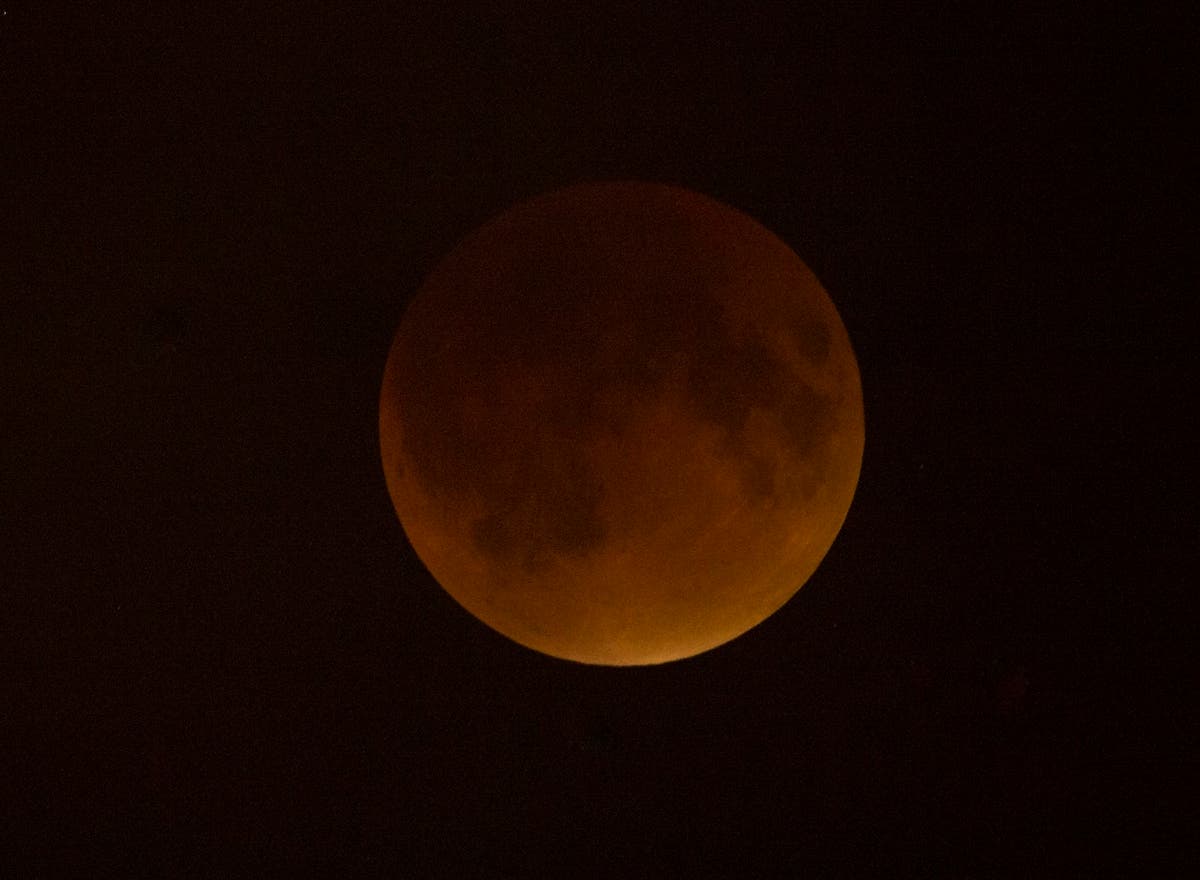
A spectacular lunar event — a blue moon, supermoon and total lunar eclipse causing a “blood” moon on the same night — occurs in the early morning hours of Jan. 31. Those three events haven’t coincided in more than 150 years. Whether you’ll be able to see the lunar eclipse, especially, and the supermoon depends on where you live and the local weather forecast. In Rhode Island, the weather will be very cold (single-digit wind chills,) but fortunately very clear.
The East Coast won't have the best view of the show, but if the conditions are right you can see some of it. It looks like you'll have a chance.
Find out what's happening in Cranstonfor free with the latest updates from Patch.
Viewers in New York or Washington, D.C., may see something, but not much, according to NASA. The darker part of the Earth’s shadow will begin to blanket part of the moon with a reddish hue around 6:48 a.m. EST, but the moon will set less than a half hour later.
“So your best opportunity if you live in the East is to head outside about 6:45 a.m. and get to a high place to watch the start of the eclipse—make sure you have a clear line of sight to the horizon in the west-northwest, opposite from where the Sun will rise,” Johnston said.
Find out what's happening in Cranstonfor free with the latest updates from Patch.
A lunar eclipse can happen only during a full moon and, during a calendar year, from two to five times. There will be five lunar eclipses in 2018, according to Earthsky.org, but only the Jan. 31 one will be visible in the United States. The next time a total lunar eclipse will be visible in North America is Jan. 21, 2019, and it will be visible throughout all of the United States. It will also be a supermoon, but it won’t be a blue moon.
The eclipse aside, the supermoon will be spectacular but smaller than the two that preceded it. Check local moonrise times here.
What do all those terms mean?
Supermoon: According to NASA, it's when the moon reaches its closest point to Earth in its orbit, known as perigee, in a single orbit. The moon appears about 14 percent brighter than usual and also appears larger as it rises.
Blue moon: That’s the common name for the second full moon in a single month, but the moon does not take on a blue color. The first full moon of the month, also a supermoon, occured Jan.1. The occurrence of a blue moon means there won’t be a full moon in February. But March also has a blue moon.
Lunar eclipse: A lunar eclipse occurs when the moon passes through the Earth’s shadow, blocking the sun’s light, which would otherwise reflect off the moon. The most dramatic of the types of eclipses — total, partial and penumbral — is the total lunar eclipse, in which the Earth’s shadow completely covers the moon.
Total eclipse of the moon: The inner part of the Earth’s shadow, the umbra, falls on the moon’s face and completely obstructs it.
Partial lunar eclipse: The umbra takes only a bite of the moon. The bite grows larger, and then recedes, but never completely shadows the moon.
Penumbral lunar eclipse: When this occurs, only the diffuse outer shadow of Earth falls on the moon, and it’s difficult to observe because Earth doesn’t appear to take a bite out of the moon. The moon takes on a darker shade at mid-eclipse, but most people won’t notice it.
Blood moon: While the moon is in the Earth’s shadow, it takes on a reddish tint. As NASA explained, “Some sunlight still reaches the moon [during a total lunar eclipse], but first it goes through Earth's atmosphere. The atmosphere filters out most of the sun’s blue light, so the moon looks red.”
For some historical perspective, the last time a supermoon, blue moon and lunar eclipse coincided, on March 31, 1866, President Andrew Johnson was in the White House, America was about a year into Reconstruction from the Civil War and Congress was gathering votes to override Johnson’s veto of the Civil Rights Act of 1866 — the first federal legislation to protect the rights of African-Americans, which Congress had overwhelmingly passed (it did override the veto, on April 9, 1866).
In more recent times, the Eastern Hemisphere saw the trifecta Dec. 30, 1982.
No matter where you live, NASA offers a live stream of the lunar eclipse.
» See Also: 2018 Guide To Meteor Showers And Other Celestial Events
Photo of supermoon lunar eclipse by Aubrey Gemignani/NASA via Getty Image
Get more local news delivered straight to your inbox. Sign up for free Patch newsletters and alerts.