Business & Tech
New Local Doctor Doesn't Take Insurance, Makes House Calls, for Flat Monthly Fee
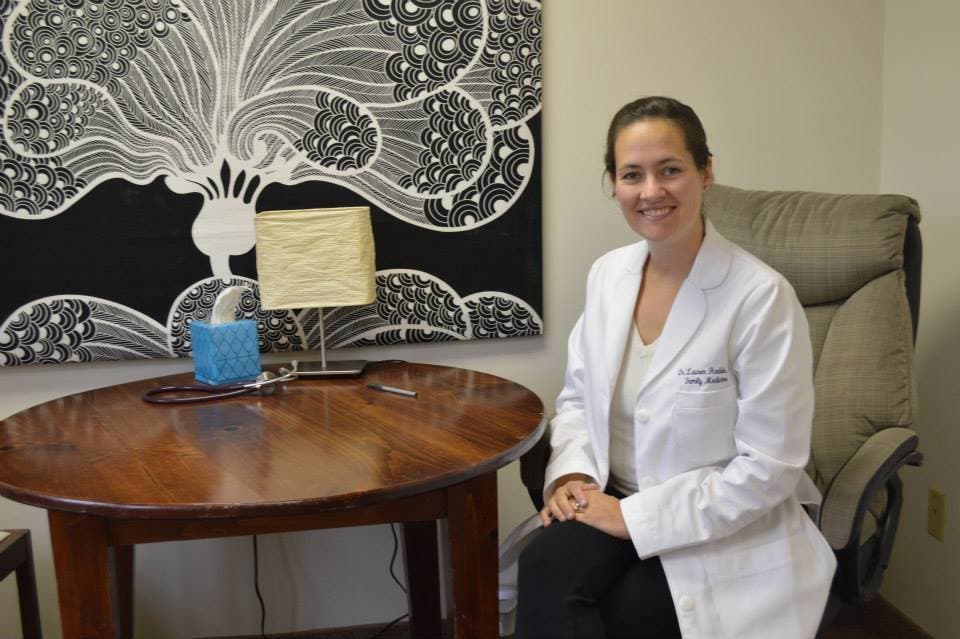
Dr. Lauren Hedde has opened a new practice in North Kingstown using an innovative model for delivering care that bucks the status quo.


Imagine going to a primary care doctor and never being asked “do you have insurance?”
Or having your doctor’s cell phone number and never feeling nervous before making an after-hours call during the inevitable crises of parenthood when a child’s fever is spiking or a strange rash appears. And maybe getting a house call.
It sounds like a Normal Rockwell painting but there is a doctor in North Kingstown that offers just that — for a flat monthly fee that costs less than a smartphone with a data plan.
Find out what's happening in East Greenwichfor free with the latest updates from Patch.
Her name is Dr. Lauren Hedde and she’s the owner of Direct Doctors Inc., at 320 Phillip St.
The new practice has a simple premise.
Find out what's happening in East Greenwichfor free with the latest updates from Patch.
“I don’t accept insurance,” Hedde said. “I don’t charge patients a co-pay and I don’t bill their insurance company.”
Instead, patients pay a monthly fee of $50 to $100 per month and that makes them part of her practice.
It’s a new model that has sprouted recently in communities across the country as physicians, especially younger ones, find themselves looking for a way to offer quality care without the weight of the medical industrial and insurance complex on their shoulders.
The result is a practice that sees fewer patients, between 500 to 700 as compared to the 1,500 to 3,500 a typical family and primary practice maintains. That means longer visit times, closer care and a doctor who spends zero time wrangling with insurance companies and billing and more time seeing patients and looking at their cases.
“The average visit is 30 minutes minimum and often closer to an hour,” she said. “It gives me a lot more flexibility to work with patients.”
The first direct care practices began around 2007 in Seattle, WA, Hedde said, and it has been spreading across the country steadily since.
“I’m a young doctor and I have a lot of energy and excitement about this concept and I believe we have enough patients here to support the practice.”
Hedde said she’s also not walking away from the benefits from a career in medicine by distancing herself from the insurance-driven model of health care. She will still earn a salary typical to other physicians. What she will sacrifice is time, however, because the model requires her to be more like the traditional family doctor of yore who made house calls and was always available to patients.
“I’m taking on a lot by making myself available to patients 24/7,” she said. “But I feel like that’s essential to provide top notch primary care. A little bit of sacrifice allows a much better relationship with patients and that is more satisfying than the traditional treadmill practice.”
Primary care practices are not profit factories by any means. Along with their own extreme insurance costs to cover malpractice claims, they are under constant squeeze by insurance companies driven by profit models that cater to shareholders more than patients. Every dollar counts and often, shortfalls are covered with a drive to bring in more and more patients.
A direct care practice might appeal to someone who has a very high deductible insurance plan and has children or expects to go to a primary care doctor enough that co-pays and payments towards the deductible would far exceed $50 per month. Anyone with a barebones health plan who has gone through pregnancy and delivery, surgery or rehabilitation knows that it can seem like the insurance isn’t helping all that much with so many out of pocket costs.
“If they have a high deductible plan, they’re paying out of pocket, so I’m saving them money,” Hedde said. “When they pay the monthly fee with me, it’s predictable and it’s where they get the majority of their care.”
And then there are patients who have good insurance coverage but are sick of the status quo and are tired of “waiting in line for the doctor and not being able to get in,” she said.
People without insurance can’t meet requirements to have coverage by signing up with a direct care practice. Direct Doctors is not an insurance company. It’s recommended that everyone has some level of insurance, whether it’s through the state health exchange or an employer.
But Direct Doctors is a full-fledge practice, which means things like prescriptions, referrals to specialists and everything else one expects from their doctor is available.
For more information, check out Direct Doctors on Facebook.
Get more local news delivered straight to your inbox. Sign up for free Patch newsletters and alerts.