Politics & Government
First Budget Hearing Of The Year Brings Promise And Uncertainty
Town, school officials meet Monday night to begin the long road toward the adoption of the fiscal 2012.

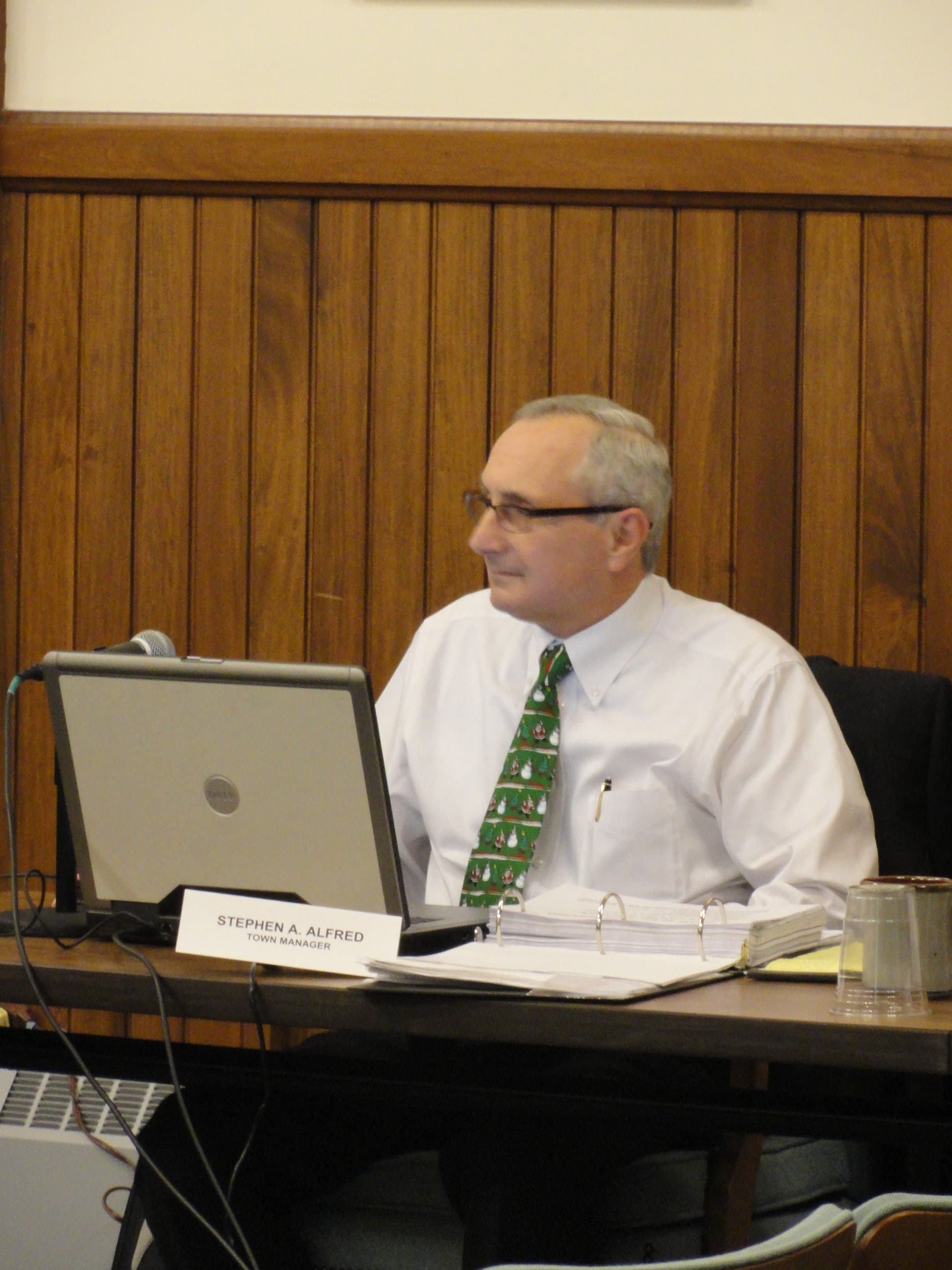


The first public budget hearing of the year made for an interesting scene-setter as town officials presented some of their their projected numbers and laid out a glimpse of the road to June 30 during a joint meeting of the Town Council and the School Committee at the town hall.
In the presentation of his pro-forma budget Monday night, Town Manager Steve Alfred indicated that residents should see only a modest property tax increase of about 1.5 percent, even though the town has a smaller tax roll to count on for revenues. That's because the town can collect more from the motor vehicle tax after raising the value exemption to $3,000 from $500. The town has also implemented an expanded pay as you go portion of the Capital Improvement budget.
The town's property tax increase cap has been set at 4.25 percent for the coming fiscal year, and if the town raised taxes to that point, the residential rate would go from the current rate of $14.19 per thousand to nearly $15. However, Alfred explained that in the last two years, South Kingstown residents have seen only modest property tax increases of 1.22 and 1.54 percent, respectively, a trend he hopes to continue.
Find out what's happening in Narragansett-South Kingstownfor free with the latest updates from Patch.
Alfred's budget target assumes level school funding, a tall order given the over $700,000 in losses from state aid projected by Superintendent Kristen Stringfellow during her presentation the same night. Stringfellow indicated that if the Rhode Island Department of Education follows through with its adoption of the school funding formula released by the Race to the Top Program, the town would be classified as "overfunded" according to RIDE and stand to lose around $300,000 in state aid to schools, starting with the 2012 fiscal year. Combined with an anticipated five percent additional cut from state aid to help shore up a nearly $300 million state deficit, Stringfellow said the chances of a level budget on the school side are not good.
"We will not be a better school department as a result of these cuts," Stringfellow said as she and School Committee Member Rick Angeli said that almost 70 percent of the town's reduction of full-time school employees have occurred in the last two years. "In some cases we've come as far as we can go," Stringfellow said.
Find out what's happening in Narragansett-South Kingstownfor free with the latest updates from Patch.
"I understand that logic, but this is the top of our school system that sits along this table," Roland Benjamin said as the floor was opened up to questions from the public. "I realize there are funding problems but they are not insurmountable. Doesn't it start by saying we want to be a better school system?"
Alfred stated during his presentation that a variety of factors contribute to the budget picture, including a revaluation that reduced the value of the town's property tax roll by 17 percent. With a reduced roll, revenues from property taxes will be decreased. With the town's unemployment rate hovering around 9.2 percent as of September, Alfred said he understands that any increase will be difficult.
The school department is heading into budget negotiations with teachers at the end of the fiscal year, with the last gasp of their contracts being an increase in school department pension contributions to 13.23 percent for certified teachers and 8.59 percent for non-certified employees, a budget increase of at least $440,000.
Upon receiving a question from resident Doug Wardwell, Stringfellow indicated that teachers' health care co-pays average around 3 percent. The town's police officers hired before Aug. 1, 2002 are paying 5 percent, but the rest of the town's labor contracted employees are paying higher rates and many will see co-pays as high as 20 percent in the coming years. Under their contracts, police, Council 94, and EMS employees will be seeing a 2.25 percent raise in the coming year.
Alrfed also explained that the town's municipal retirement system stands at 93.9 percent funded as on June 30, 2009, down from rates as high as 99 percent before the financial difficulties in 2008 and beyond.
Combined with step increases for teachers and other increases, including a slight return of the materials budget, insurance and utilities increases, and adjustments in rates for outside tuitions, the school side is looking at several areas of potential budget increase.
Even with level staffing, the school department anticipates fewer teachers will retire, and that will bite into the department's turnover allowance. The department is looking at an approximate $2220,000 budget surplus this year, and plans to devote 25 percent of its undesignated fund balance to the next fiscal year's budget.
The town is also planning to contribute around $1.2 million from its undesignated fund balance to next year's budget, but is hesitant to dig any deeper in fear that any further reductions in the balance will negatively affect the town's AA III bond rating, which shared with three other communities as the highest in the state, according to Alfred.
"We're all quietly walking around these issues and its going to come back to haunt us," Councilman James O'Neill said, adding that he believed the school department may have to "dig deep" to help keep the budget balanced.
"We're trying to meet all the requirements on our side as well," Angeli said. "We will continue to do what's right for the students and for the taxpayers."
"Hopefully we'll all work together to find a solution that's good for the schools and good for the people," council Vice President Carol Hagan McEntee said.
The next step in the process will be the town's capital improvement budget hearings scheduled for Jan. 4, 5 and 13. To read a copy of the town's initial budget hearing numbers, click here.
Get more local news delivered straight to your inbox. Sign up for free Patch newsletters and alerts.