Community Corner
State Discusses East Matunuck Pavilion Demolition With Town
This coming summer beachgoers will be without a pavilion at East Matunuck State Beach as DEM commences construction on an energy-efficient replacement.
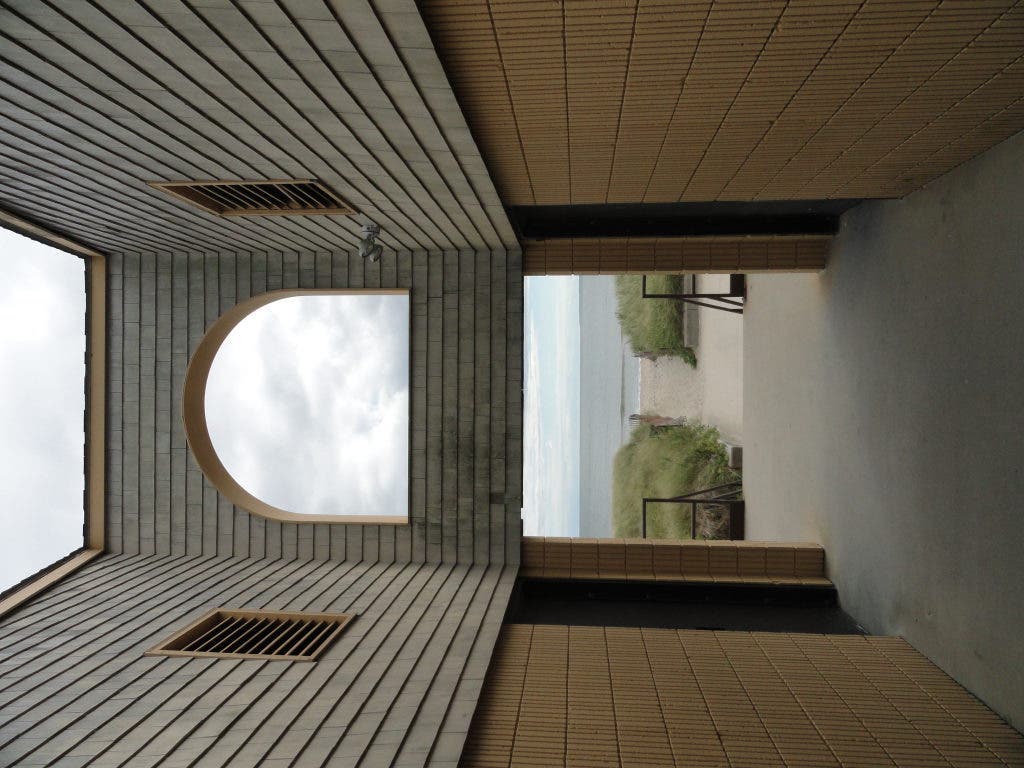


The Rhode Island Department of Environmental Management (DEM) will be demolishing the East Matunuck State Beach pavilion this spring in order to make way for a brand new, environmentally-friendly facility forecasted to open in spring 2012.
On Wednesday town officials met with members of the RIDEM to discuss the logistics of the reconstruction and assess how it will affect this coming beach season.
Andrew Nota, director of administrative services for South Kingstown, reported on Wednesday that he "[spoke] with representatives of RIDEM earlier today, [and] they are gearing up to bid the project in the coming weeks with the hope of breaking ground on demolition in the spring."
Find out what's happening in Narragansett-South Kingstownfor free with the latest updates from Patch.
According to RIDEM principal civil engineer Lisa Lawless, the 32 year-old pavilion is in need of reconstruction due to extensive decay caused by the salty environment. The pavilion also experienced an electrical system failure that required emergency repair prior to opening this past beach season. Lawless likened the building to an "old car" in constant disrepair that is no longer economically viable to operate.
Burgin Lambert Architects conceived the design for the new pavilion, which is Leadership in Energy and Environmental Design (LEED) Silver certified. LEED is an internationally recognized green building certification system developed by the US Green Building Council (USGBC). Certification is based on requirements in water and energy efficiency, indoor environmental quality, materials selection, and sustainable site development according to the USGBC website.
Find out what's happening in Narragansett-South Kingstownfor free with the latest updates from Patch.
The new pavilion's green improvements will include optimized natural ventilation and daylight, waterless urinals, composting toilets, low-flow showers, solar-heated hot water, and electricity provided by either two wind turbines, roof-mounted photovoltaic panels, or a combination of both, depending on which solution is most cost-effective. Additionally, in order to decrease the number of impervious surfaces at the site, beach grass will substitute asphalt and concrete surfaces surrounding the pavilion and the asphalt parking lot will be replaced with gravel.
Beachgoers will benefit from the new pavilion's improvements as much as the environment. A new concession area with seating and adjacent deck area will be implemented, along with an expanded deck featuring an incorporated shade structure. The size of the women's room will be doubled, additional storage rooms will be built, and there will be a second floor observation deck. The new pavilion is also aimed at maximizing access for those with disabilities.
Also discussed at Wednesday's meeting was the possibility of constructing an LED sign on Route 1 to inform motorists as to whether or not the beach parking lot is at maximum capacity. The proposed sign would be controlled remotely from the new pavilion. However, the proposal was met with some criticism from town officials.
"The idea of an electronic sign, whether that is LED based or otherwise is not something that is felt by Town officials to fit in with the rural character of the community," reported Nota. Nevertheless, Nota stated that "RIDEM officials appeared comfortable supporting the Town's perspective on this issue," and that the proposal is not out of the question.
During reconstruction in the spring and summer of 2011 the beach will remain open to the public. However, the beach's smaller east parking lot is expected to be closed in order to accommodate construction personnel and equipment. Temporary restrooms will be set up for beachgoers during the summer, according to Lawless.
The budget for the project is estimated at $3.2 million, and the new pavilion is expected to be completed by spring 2012.