Health & Fitness
URI professors seek alcohol interventions for First Nation group
The Psychology study by Professors Nichea Spillane and Nicole Weiss is funded by a $600,000 grant from the National Institutes of Health.

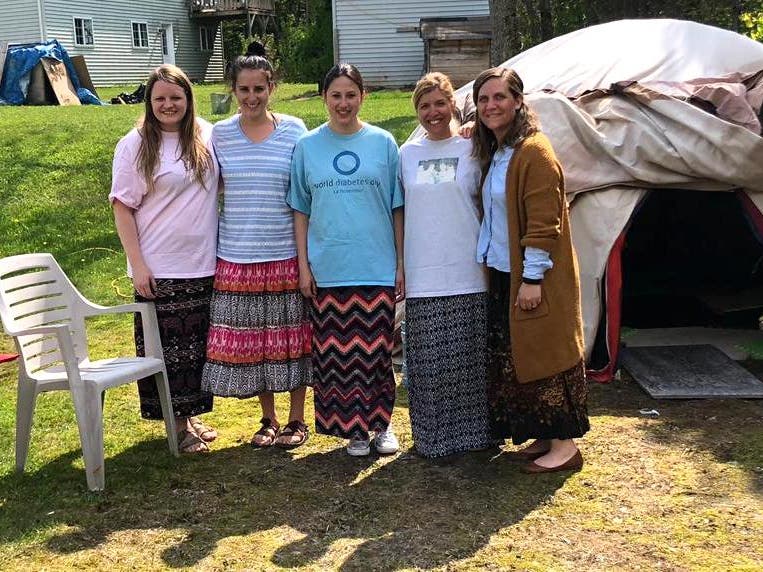
Two University of Rhode Island psychology professors are seeking to develop and implement new interventions for alcohol use disorder among First Nation Groups — helping alleviate at least one outcome of the historical trauma indigenous peoples have faced — thanks to a $600,000 grant from the National Institute on Alcohol Abuse and Alcoholism, a division of the National Institutes of Health.
Professors Nichea Spillane and Nicole Weiss have conducted multiple focus groups with members of a First Nation Group in Canada, learning from them some of the sources of trauma and stress that often lead to abuse of substances like alcohol, one of the greatest public health problems the group experiences. The professors, working with members of the community as well as tribal health professionals and tribal elders, will develop a manual of intervention combining traditional indigenous methods with western health therapies, which they hope to use as a model for treatment across indigenous groups.
“Once we’re sure we have a manual that works, we will be working with people within the community to study it,” said Spillane, herself a member of the First Nation group. “We’ll look at 30 people as a control group and 30 people with active intervention and we’ll see what happens with their drinking over time. We’re letting the community guide us, but also using our own knowledge in regard to alcohol use treatment to help them as much as they need or want our advice.”
Find out what's happening in Narragansett-South Kingstownfor free with the latest updates from Patch.
Much of their work focuses on the origins of stressors that can lead to alcohol use disorder. For First Nation groups, like their Native American counterparts, much of that stress stems from the historical trauma inflicted on them by colonists, beginning with the theft of their land and their forced relocation.
“Historical trauma is a unique kind of trauma experienced by communities who have experienced intergenerational emotional and psychological wounding across their lifespan,” Spillane said. “It’s really defined as cumulative and is associated with a number of historical losses that we know indigenous populations have faced. It’s a type of traumatic response that is different from responses we typically see from trauma. Ultimately, the research suggests that that historical trauma causes shifts in individuals that increases risk both of other traumas and of alcohol and substance use.”
Find out what's happening in Narragansett-South Kingstownfor free with the latest updates from Patch.
The historical trauma has continued through centuries of discrimination that has seen indigenous traditions such as the use of sweat lodges, traditional dances, and birth ceremonies prohibited. Even traditional languages have been lost to some as elders decline to teach children their own language for fear of discrimination.
“There was so much shame associated with practices because they were forbidden,” Weiss said. “Over time, when you’re sent that message again and again, it can be hard to see around that even though elders within the community knew the dancing wasn’t really bad. But when you’re told that your entire life, it’s hard to change that perspective.”
That lack of positive reinforcement tends to lead people to seek reinforcement elsewhere, often in the use of substances like alcohol, which colonists themselves introduced to native populations and often used as a vehicle to take advantage of them, Spillane said. Historical trauma and the resulting misuse of substances can generally lead to greater trauma, potentially including domestic violence, sexual assault and child abuse.
“I’ve done a series of studies with adults and adolescents to look at why alcohol use is such a problem,” Spillane said. “What kept coming up was this loss of culture, multiple traumas that are experienced, both historical and current as well, and how that impacts alcohol use, and also related to other mental health issues. They’ve identified it as a problem. We are taking a community-based participatory approach, so really it’s a partnership with them to understand how to best address trauma in alcohol intervention.”
Weiss and Spillane have completed five focus groups, two with group members who self-identify as drinkers; and one each with former drinkers in recovery, health care professionals and tribal elders. The pair is reviewing the information from those groups to inform the treatment manual they will create.
“One thing I’ve walked from the focus groups knowing is that this treatment, while it may include our Western knowledge to some extent, will look very different to how traditional alcohol interventions look,” Weiss said. “You might have the same underlying mechanisms to help people process trauma, but the ways in which that processing happens is going to look drastically different. What they told us is really is there going to be a need for catharsis or healing from trauma through reattachment to culture. I think that’s what the treatment is going to ultimately look like to some extent.”