Community Corner
Local Company Seeks to Bridge The Farmer's Market Gap
The creators of What'sGood are helping to make locally-sourced food more widely accessible to consumers.


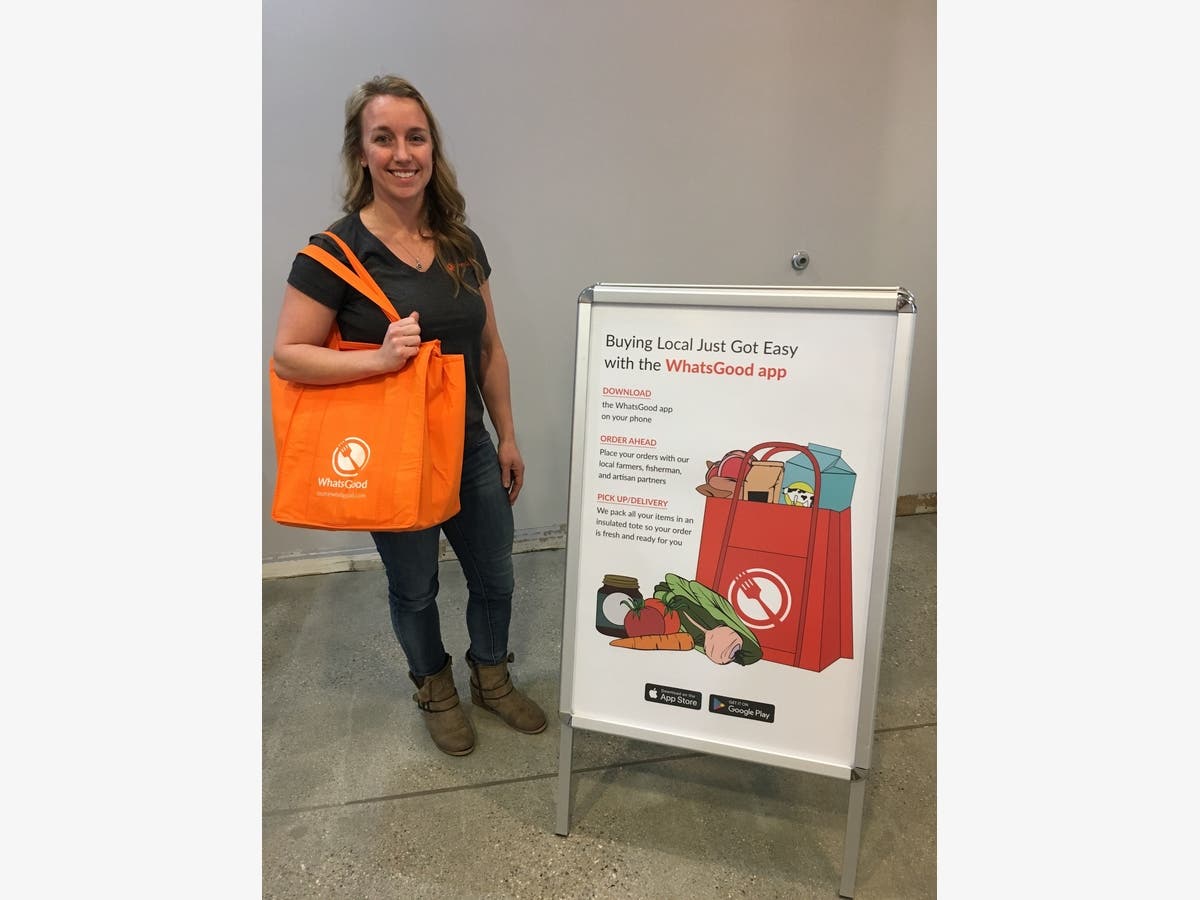
PROVIDENCE, R.I. -- For those of us who aren't able to make weekly trips to the farmer's market, Erin and Matt Tortora believe they have the solution for accessible, locally sourced food. Together with co-founder Will Araujo, the pair has created an online marketplace for local food.
Their app, What'sGood, aims to bridge the gap between farmers, local food producers and consumers.
"A lot of people express interest in buying locally, but don't have time to go to the farmer's market every week to stock up," Erin Tortora said. "We've essentially created an online, 24/7 farmers market that allows direct communication between the purveyor and the consumer."
Find out what's happening in Newportfor free with the latest updates from Patch.
The couple had the idea for the app back in 2012, when Erin was stationed at the Newport Navy base and Matt was attending culinary school at Johnson and Wales. Matt then began working at a local restaurant, where he witnessed the inconvenient process of buying locally sourced food.
Thinking there had to be a better way, the pair teamed up with Araujo and began to lay the foundation that would become the What'sGood marketplace, intended only to be used between chefs and farmers. Now in 2019, the business has blossomed into a nationwide effort to bring consumers and producers closer together.
Find out what's happening in Newportfor free with the latest updates from Patch.
To use the service, customers download the app and create a profile. They then have the opportunity to browse through local purveyors and select from a variety of produce, proteins, beverages, prepared foods, and more.
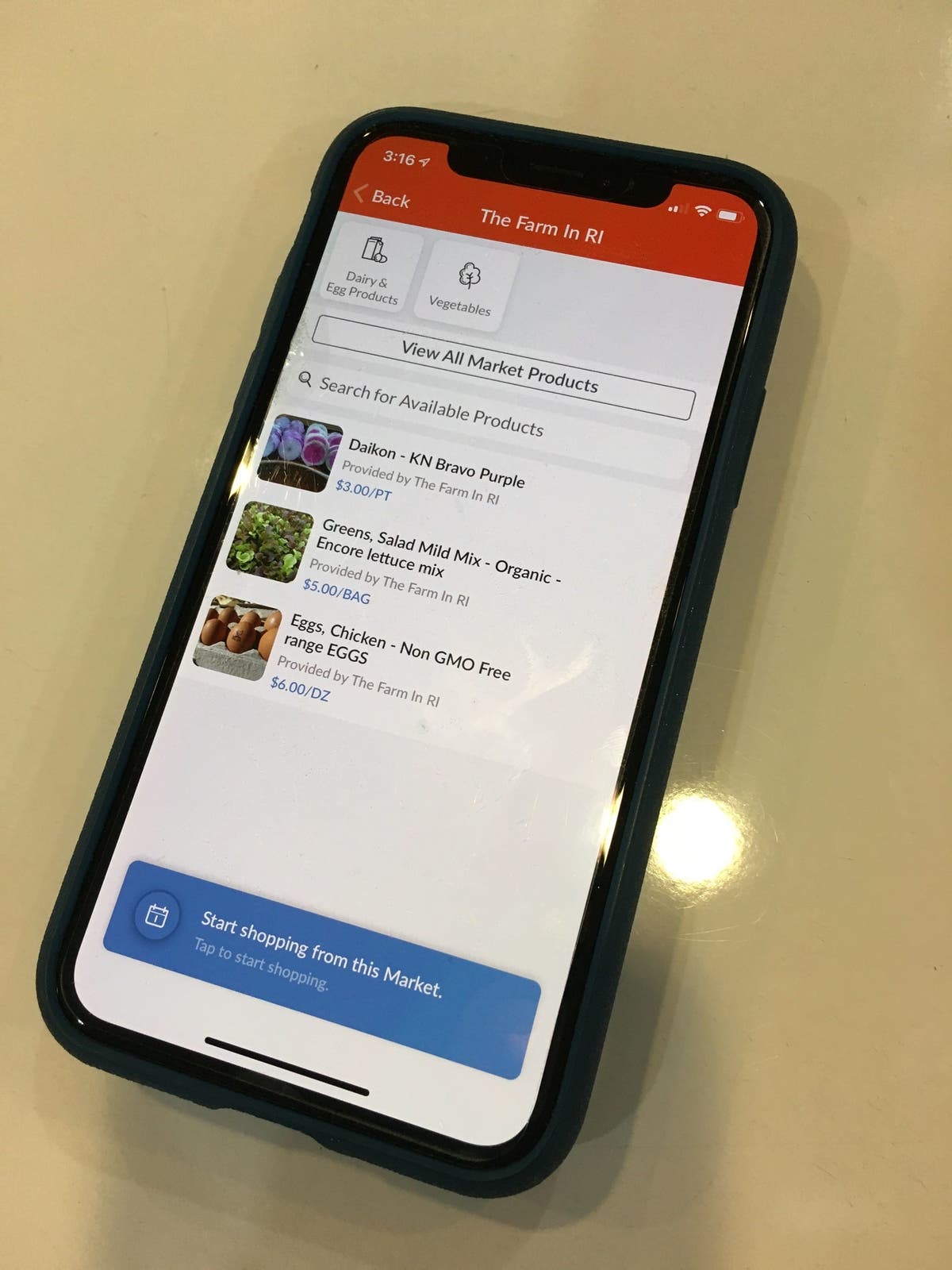
By aggregating suppliers into one marketplace, consumers have the opportunity to browse a wider selection and have a more convenient shopping experience.
"All of these purchases can be made together for one convenient checkout," Tortora said.
Once the order has been placed, the purveyor prepares the items for pickup on Wednesday or Friday. Consumers have the option of picking up orders from a designated location, having orders delivered to their workplace, or getting a delivery directly to their home.
"We're really excited to have recently expanded our delivery options," Tortora said. "We're hoping to expand our workplace deliveries in the coming months to help regulate our routes."
Employers have several options for workplace deliveries. The first is to simply allow employees to have deliveries dropped off at the workplace, with the goal of centralizing several orders and reducing individual home deliveries. Some employers offer incentives to employees by offering corporate discounts on orders.
The third option is for businesses to use What'sGood in place of a traditional food supplier, for stocking break rooms or providing company meals.
"Our products include granola bars, creamers, coffee and other snack you'd usually see in a workplace," Tortora said. "It's a great way for businesses to help support the local food economy."
For those unable to have their delivery sent to their business, pickup is also an option. The company is in the process of setting up more locations throughout the state where customers can pick up their orders and support local businesses.
"A great example of this is Proclamation Ale Company, where you can pick up your order and enjoy a beer from a local brewery while you're there," Tortora said.
One of the biggest hurdles for the company has been distinguishing itself from the dozens of other food delivery apps and services.
"We're not a meal kit delivery service, and we're not Uber Eats or DoorDash," Tortora said. "We're just trying to bring whole, good food to people who are tired of not knowing where their food comes from. We aren't here to bring you food from one specific restaurant. We're trying to bring the entire local food economy together."
Unlike meal kit delivery services that are famously chock-full of plastic packaging, Tortora said What'sGood focuses on sustainability in packaging. Orders are delivered in a reusable tote bag, and individual items are packaged in sustainable packaging whenever possible.
"We encourage our purveyors to reuse whatever they can," Tortora said. "We take back tote bags, ice packs, egg cartons, even bottles and return them to the source."
By buying local, consumers are also helping to decrease the amount of emissions created by food transportation.
"We don't set any specific parameters for what qualifies as 'local,' because it really does vary from community to community," Tortora said. "Our main focus is transparency between the purveyors and the consumers. So often, food is nearly impossible to trace. We want our consumers to know exactly where their food is coming from and what is in it."
As more people join the community, suppliers are able to offer goods at a lower retail price.
"Before What'sGood, a lot of our purveyor's sales were wholesale. Now that there's an increased demand for retail, many have been able to lower their prices," Tortora said.
For most items, prices are fairly comparable to what one would find in a store. Rhody Fresh Milk and produce, in particular, are nearly identical in price to other retail counterparts. The one exception is meat, where purveyors are forced to raise prices to offset the cost of small-scale production.
"We shouldn't be saying 'why is this so expensive?'" Tortora said. "Instead, we as consumers should be asking why meat prices in the store are so low. Industrial meat production has completely broken our food system and changed our perceptions of what meat really costs to produce."
More than anything, Tortora and the other founders of What'sGood hope to encourage consumers to be more mindful about their food choices.
"Every time you buy food, you're voting with your dollars. We're encouraging people to vote for their local food economies," she said. "Food doesn't always have to be an afterthought, it should be an intentional choice."
Learn more about What'sGood by visiting the company's website or downloading the app, which is available on the app store and Google Play.
Photo Credit: Rachel Nunes, Patch
Get more local news delivered straight to your inbox. Sign up for free Patch newsletters and alerts.