Politics & Government
Newport Native Plans to Divert Waste from Landfill
Marty Grimes discussed his composting pilot program on Aquidneck Island.
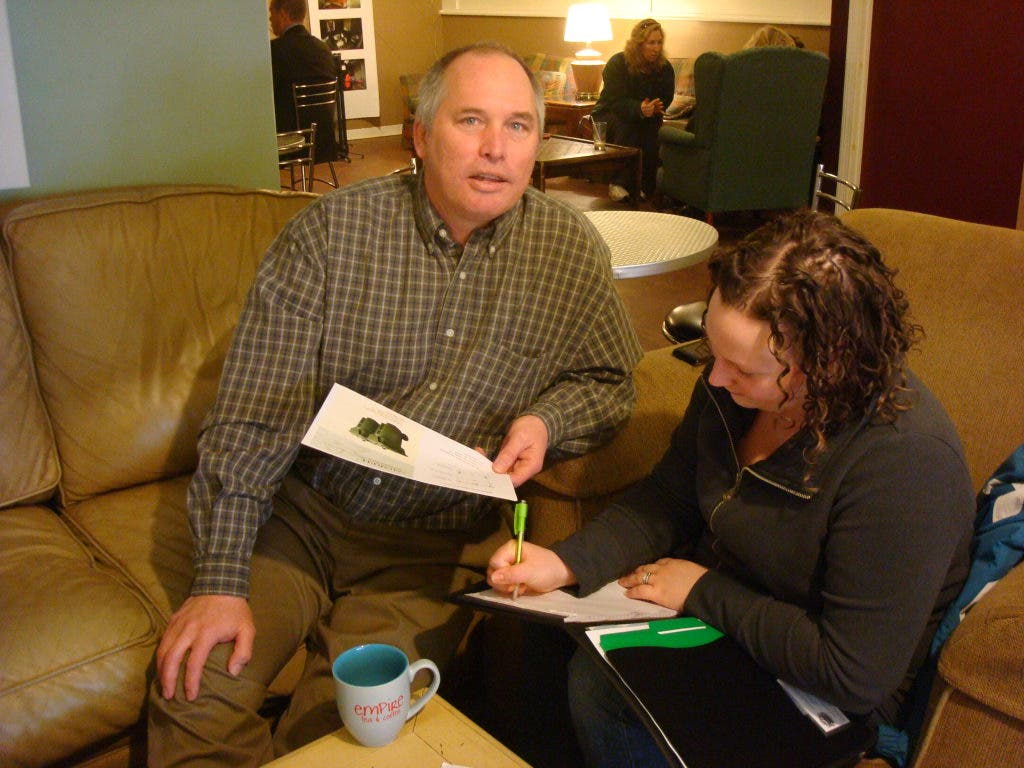
Marty Grimes is a lifelong resident of Newport. As former chairman of the Energy & Environment Commission, he has been outspoken on many issues pertaining to the environment, such as the new UV plant at Easton’s Pond and building green at the new Pell elementary school. Now Grimes is taking on another project.
Through his company, Rhode Power, Grimes is seeking to introduce an anaerobic digestion pilot program to Aquidneck Island. Currently, Grimes is working with Senator Sheldon Whitehouse’s office to seek the $100,000 in funding needed for a feasibility study, which will allow him to analyze data for the best location for a facility. Specifically, Grimes is hoping to secure Navy property for a pilot program in hopes of sending the energy produced from the anaerobic digester to the base.
In simple terms, anaerobic digestion is the breakdown of biological matter in a non-toxic environment, which produces methane gas with a soil amendment that can be organic fertilizer. The methane gas produced from anaerobic digestion can be used for energy in two ways: it can be mixed with gas to use it as gas, or it can burn in a generator to make electricity.
Find out what's happening in Newportfor free with the latest updates from Patch.
Having an anaerobic digester on Aquidneck Island would mean that towns would be diverting a large portion of waste from the landfill, Grimes said. Paper, yard and leaf, and food waste could all be composted through the facility. Grimes recently presented his project to Rhode Island Resource Recovery Corporation, whose biggest complaint was that the island is running out of room at the landfill.
Grimes said they liked his idea because it will help the landfill last longer, and they have also offered him up to six acres of land for an anaerobic digester on the landfill site.
Find out what's happening in Newportfor free with the latest updates from Patch.
“Aquidneck Island is the ideal location in the state of Rhode Island for this technology,” Grimes said. “If we run out of room at the landfill, we’re going to have to ship our garbage out of state or barge it out and dump it in the ocean. We are an ‘ocean state’ and we need to find a solution before this happens.”
Kristin Littlefield, coordinator for the Clean City Program, said waste diversion would be more cost effective.
"Diverting waste just three to five miles as opposed to trucking it to the landfill would save so much money in tipping fees, especially for the schools and for restaurants," she said. "Not only is it very costly to transport it to Johnston, but it takes Rhode Island Resource Recovery Corporation a lot of money to move it around the yard.”
According to Grimes, the State of Rhode Island wants Aquidneck Island to solve its own biodegradable waste problem and the EPA would love us to be a microcosm. The pilot program would produce one to two megawatts of power by 2012 with a scaled up facility of at least 10 to 15 megawatts further down the road. The ultimate goal: to provide Aquidneck Island with power.
In California food recycling is mandatory and they have what is known as the “third bin” for composting. Grimes said that California has been so successful that in San Francisco alone they have 8,000 tons of compost a day serving ten digesters.
Grimes said that education is critical and that he is currently doing everything he can to get the word out to municipalities, residents, and politicians.
“An anaerobic digester will only benefit us if we have cooperation and support from the communities,” Grimes concluded. “Not only do we have the financial incentive, but if we keep our compostable waste on-island the public will benefit from clean energy and viable, organic fertilizer. This is an energy policy strategy.”