Politics & Government
Alpacas Here to Stay
The North Kingstown Zoning Board of Review granted Northbriar resident Jonathan King a special use permit and dimensional variance Tuesday night, thereby accommodating King's hobby: raising alpacas.
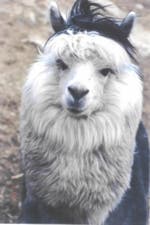
The North Kingstown Zoning Board of Review granted Northbriar resident Jonathan King permission to continue construction on a barn intended to house alpacas—soft, four-legged, fleecy creatures similar to llamas—by granting the residential homeowner a dimensional variance Tuesday night at the l.
The partially constructed barn, which sits behind King's property at 80 Whitman Drive off North Quidnessett Road in North Kingstown, is located at the top of King's driveway and to the right of his septic system. This location, King told zoning board members during the meeting, was the optimal place on which to situate the barn, as it created plenty of open, usable space for King's 10 alpacas.
However, the barn's location in a side yard setback didn't fall within the parameters of the town's zoning ordinances, and King received a notice of violation from the planning department.
Find out what's happening in North Kingstownfor free with the latest updates from Patch.
According to King, he was surprised by the notice because—prior to beginning construction on the barn—he was informed by an administrative assistant in the planning department that the barn would be considered an "agricultural outbuilding" and therefore wouldn't be regulated.
Furthermore, King said he was told his alpacas weren't considered "consumable animals" and were therefore permitted on residential property. That's when "I proceeded to build the barn," King said. All that remains of the barn's construction is to "shingle it," he added.
Find out what's happening in North Kingstownfor free with the latest updates from Patch.
King asked the board to allow him to continue his alpaca operation, adding "[neighborhood children] walk up [to the alpacas] in droves" and that the exotic animals "provide an unbelievable opportunity for these kids."
"I could talk about them all night long," King said of his alpacas after stating they're docile creatures and that they have "done wonders to his stress level."
A number of King's neighbors reiterated King's statements, defending the unique addition to the Northbriar neighborhood.
Cheryl Decotis-Thomas lives two doors down from King and said she supports King's venture and that she hasn't experienced disruption or noise as a result of the alpacas' presence in the neighborhood.
"My own animals are louder," she said.
Furthermore, Decotis-Thomas said King is a responsible, courteous neighbor that has assisted the community during snowstorms and floods, and that his animals have "brought her children together."
Diane Craven, wife of zoning board member Stephen Craven, said she has lived in Northbriar for 24 years and that King's alpacas have "brought the neighborhood together." Like Decotis-Thomas, she said she's more concerned about neighborhood dogs than the allegedly docile alpacas.
But what's a zoning-board meeting without dissenting opinions?
Gilbert Fletcher and his wife, Janice Fletcher, live three doors down from King and expressed concern over their home's property value, the unpleasant odors sometimes emanating from King's 3/4-acre plot and the way this situation could possibly open the door to more unwelcome farm-like operations in Northbriar.
"I think it's a slippery slope," said Mr. Fletcher of the alpacas' presence in the residential neighborhood. "What's next?" he asked.
"This is a major change to the character of the neighborhood," he said.
And while Mrs. Fletcher said the animals haven't been disruptive, she said she feels strongly that the alpacas don't belong in Northbriar.
Dave Vanderpyl, president of Northbriar's civic, non-binding, non-covenental neighborhood association said during public comment that accepting the alpacas presence in a residential neighborhood is like "putting lipstick on a pig."
"This isn't farm land," he said, adding the neighborhood will have no control of the operation and how much it expands once it starts.
As a result of the dissenting public comments, members of the zoning board placed restrictions on the extent of King's alpaca hobby.
"Neighbors have a right to too much expansion on this," said board member Gregg O'Neill.
Consequently, King will be allowed no more than 20 alpacas on his property and the alpaca paddock is to remain in the back of the property. Additionally, the existing vegetative buffering must be maintained, the allowances made for the alpacas are applicable to the specific breed of alpaca and King must develop a list of best-management practices for managing the alpaca waste.
Members of the zoning board also approved King's application for a special-use permit, which will allow King to harvest his alpacas' fur.
"If they're your pet, that's one thing," said Rebecca Lamond, liaison staff, of the alpacas. "If you're gonna sell sell their fur, then you have to get a special use permit," she clarified during the Tuesday night meeting.
Formal, written approval of the dimensional variance and special-use permit will take place at the board's next meeting on June 28. King will then have to wait out the 20-day appeal period before finishing construction on his barn.