“Why Gauguin Matters: Artistic Response from Matisse to Global Contemporary Art”
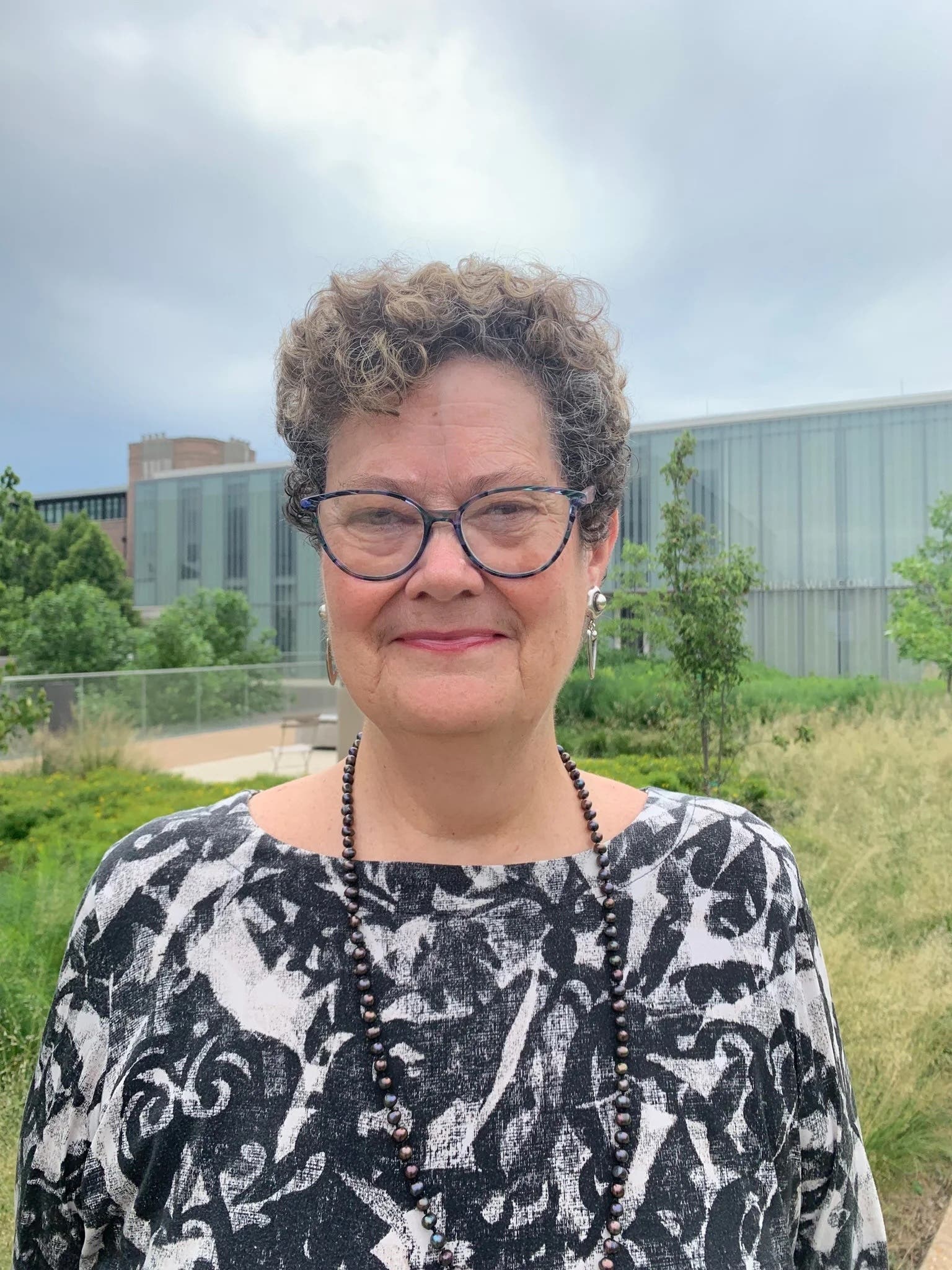
Prof. Elizabeth Childs, The Etta and Mark Steinberg Professor of Modern Art, Department of Art History and Archaeology, Washington University in St. Louis
RSVP encouraged | Free and open to the public
Paul Gauguin (1848–1903) is recognized as a seminal figure in French Post-Impressionism and modernism, notable for his non-naturalistic use of color and decorative flattening of space. Elizabeth Childs explores the enduring influence of Gauguin across modern and contemporary art, from Picasso and Matisse, who admired his work in early 20th-century Paris, to international women artists like Paula Modersohn-Becker and Amrita Sher-Gil, who brought distinct perspectives to his themes. More recently, Pacific Islander artists such as Yuki Kihara, Tyla Vaeau, and Kay George have engaged critically with Gauguin’s legacy, interrogating its gendered and racial politics and reimagining his imagery in contemporary contexts. These works respond to the existential questions Gauguin posed in Where do we come from? What are we? Where are we going?—a painting on view nearby at the Boston Museum of Fine Arts.
ABOUT THE LECTURER
Professor Elizabeth Childs, Washington University in St. Louis, specializes in modern art, encompassing late eighteenth- through early twentieth-century European art and visual culture, broadly defined. She is a specialist in European avant-garde modernism, particularly painting, photography, and prints, and has published on key figures including Daumier, Degas, Van Gogh, and Gauguin, as well as select chapters of American art, including the photography of exploration, the earth works of Robert Smithson, and the exoticism of John La Farge and historian Henry Adams. Her work on Gauguin emphasizes his engagement with Tahitian and Marquesan culture, colonial society, photography, world religions, and the construction of a primitivist identity, with a forthcoming monograph on his late work and writings in progress.
In her courses, Professor Childs considers art in relation to political, social, and ideological contexts, with particular attention to colonialism, imperialism, tourism, anthropology, and exploration. She is broadly interested in exoticism, orientalism, and japonisme in both fine and popular arts, the study of gender and race, theories and practices of landscape painting and photography, modern art in transnational contexts, and the collection and interpretation of non-Western objects in the Euro-American art world. Her research also explores art’s intersections with science, cultural geography, censorship, female agency, and humor in visual culture, particularly caricature.
ABOUT THE MARK S. WEIL LECTURE
The Mark Steinberg Weil Art History Lecture at Jamestown Arts Center is a free public program established in memory of artist Joan Hall’s late husband. Each year, the lecture invites a distinguished art historian to speak on a topic connected to Professor Weil’s areas of research, continuing his legacy of scholarship, curiosity, and deep engagement with the visual arts.
Mark S. Weil (1939–2021) was the E. Desmond Lee Professor Emeritus for Collaboration in the Arts at Washington University in St. Louis, where he taught for nearly four decades and twice served as chair of the Department of Art History and Archaeology. A specialist in Italian Baroque sculpture and early modern European art, he was a deeply influential scholar, curator, and teacher known for his commitment to close looking and firsthand engagement with works of art. He was also a passionate collector of Old Master prints, drawings, and sculpture, a collection that was gifted to the Saint Louis Art Museum upon his death. In his own artistic practice, he created a series of self-portraits reflected in sculptural works. In retirement, he lived in Jamestown, Rhode Island, where he continued his research, mentoring, and artistic practice, and remained a dedicated supporter of the arts and humanities.