Politics & Government
The Potassium Iodide Pill Rush: Silly Sensationalism or Nuclear Preparedness?
As a nuclear crisis in Japan unfolds, so does a rush for thyroid-protecting potassium iodide pills, leaving many skeptical as to the legitimacy of concerns.
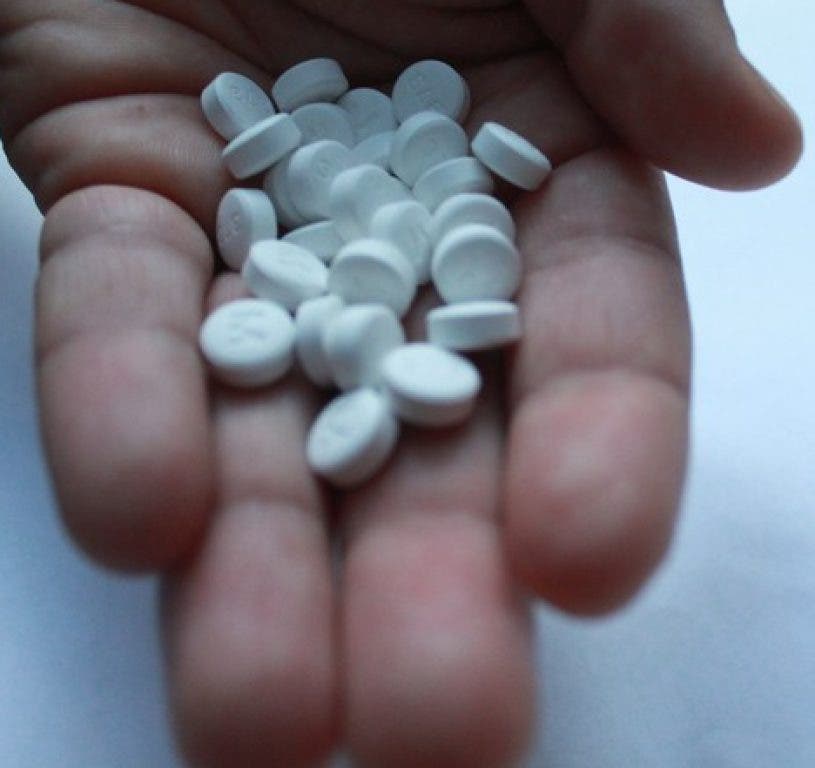
As the ongoing nuclear crisis in Japan continues to unfold, potassium iodide pills (also commonly referred to as ‘KI pills’ and ‘iodide pills’) are flying off of shelves worldwide, and manufacturers are unable to keep production in line with demand.
KI pills prevent the uptake of radioactive iodine by the human thyroid by saturating it with a benign, non-radioactive form of iodine, drastically reducing the risk of thyroid cancer after exposure to radiation.
The online potassium iodide pill provider Nukepills.com is no longer accepting orders, according to its website. Its Twitter account provides insight into the madness ensuing as a result of the spike in demand, with tweets like, “Amazon.com suspends our selling acct cause we're selling too much. Keeping all funds for 30 days, though we are shipping all orders on time.”
Find out what's happening in North Kingstownfor free with the latest updates from Patch.
In a humanitarian effort, Nukepills.com donated 50,000 pills to the Tokushukai Hospital in Tokyo, Japan, according to a March 15 press release posted on its website.
Two days later, a stark realization of how insane the demand for FDA approved KI actually is. A March 17 Nukepills.com tweet read “4,000 more donated potassium iodide pills just overnighted to Tokushukai Hospital, Tokyo, Japan. Out-of-stock until April.”
Find out what's happening in North Kingstownfor free with the latest updates from Patch.
One might expect the KI rush in America as a result of concerned citizens in California. But closer to home, apparently the east coast is not impermeable to the paranoia.
On March 18, CBS 7 of Spartanburg, SC was one of the earliest to report that drug and supplement stores in the area were unable to keep potassium iodide in stock.
In response to the rush, the South Carolina Department of Health and Environmental Control commented, “the rush of potassium iodide pills is knee jerk and not warranted."
It is unclear, however, as to whether consumers are legitimately concerned over radiation drifting from Japan, or are merely injecting a dose of preparedness into their own lives, triggered by a crisis-induced realization of risk in the wake of media hype.
CNNmoney.com recently posted a web special ‘How close is your home to a nuclear power plant?’ The website lets users enter an address or zip code and see the closest nuclear power plant, with distances provided and an outline delineating the 10-mile plume Exposure Pathway Zone set by the U.S. Nuclear Regulatory Commission. The EPZ characterizes the area around nuclear power plants that could be directly affected by radiation exposure in the event of an incident.
Locally, a recently published article in the South County Independent quelled whatever Japan-induced concerns locals may have had over the small-scale research reactor at the University of Rhode Island’s Bay Campus. The article also references two reactors at the Millstone nuclear power plant in Waterford, CT operated by the energy company Dominion.
Crisis-induced realization of risk is clearly the cause of the announcement by the Waterford, CT Millstone Nuclear Power Plant of its intention to review its disaster contingency plans. The Salem County, NJ Health Department also recently issued a reminder to citizens on KI preparations, as Salem County contains three power-generating nuclear reactors.
According to the CNNmoney.com special on power plant locations, the Millstone reactors are 34 miles from Wakefield and 40 miles from Wickford, well outside the 10-mile EPZ. Wakefield and Wickford do, however, fall within the 50-mile Ingestion Pathway Zone, the population area at risk for potential radiation exposure from ingestion of contaminated food or water.
The Connecticut Department of Emergency Management and Homeland Security has a Millstone Media Manual posted on its website. The Rhode Island Department of Environmental Management has an Ingestion Exposure Pathway Plan posted on its website, as well.
The Connecticut manual provides information on the Millstone nuclear reactors, covering everything from fundamentals of nuclear power and radiation, to reactor components, emergency preparedness, and security. In the event of a potential radiation release, food, milk and water pathways would be monitored, according to the manual. The manual also contains a chart detailing different levels of incident classification. For the more severe levels, the chart states “consider potassium iodide (KI) recommendations for the public and emergency workers.” It also cites the availability of KI at evacuation host communities.
While the NRC provides funding for states to purchase a stockpile of KI, it is limited to the population within the 10-mile EPZ radius. But according to the NRC’s website, “Section 127 of the Public Health Security and Bioterrorism Preparedness and Response Act of 2002 requires state governments, through the national KI stockpile, to distribute KI tablets to the population within 20 miles of a nuclear power plant.”
As South Kingstown lies 34 miles from the Millstone reactor, and potentially downwind from the plant, most community members agreed keeping a bottle of KI in the cabinet doesn’t seem like a bad idea, for preparedness' sake. For residents just now getting concerned, keep in mind that the Millstone plant has been producing nuclear power since 1970 and the oldest reactor on site began operating in 1975. Most community members agreed the motives of public concern are questionable after 41 years of safe plant operation, given many of them were not even aware of the plant's existence and proximity.
A March 15 article in Connecticut newspaper, The Day, details how the Millstone reactors differ from the reactors at the Fukushima Daiichi plant. The article also points out that any design of a nuclear reactor hit with both an earthquake and tsunami would likely be in a situation similar to that in Japan.
Rhode Islanders should also be well aware of how rare acute radiation syndrome deaths are in the nuclear industry. The only to occur in the entire U.S. was right at home at the Wood River Junction in Hope Valley. The incident is documented in an October 1994 article in Yankee Magazine.
Aside from disaster preparedness, there is no other warrant to the rush for KI pills seen in areas around the country, according to many sources. There is certainly no need to be taking the pills as a precaution. In fact, taking them unnecessarily can pose a health risk, according to the U.S. Centers for Disease Control. KI is not a radiation antidote, either. It protects only against radiation-induced thyroid cancers and diseases and against radiation from uptake of iodine only, not other radioactive elements appearing in Japan such as cesium.
Numerous tweets from the World Health Organization over the past few weeks advised the paranoid public against consumption of potassium iodide. “Consult your doctor before taking iodine pills. Do not self-medicate!”
A desire for preparedness could be fueling the KI push reported early in Spartanburg and Greenville, SC, as there are three nuclear reactors 28 miles west of Greenville. There is also some indication that South Kingstown residents may be as susceptible to the same sensationalism.
“I’ve had one call from one customer who actually lives in Connecticut near the nuclear power plants,” said the Pharmacist at in response to a telephone inquiry, “that’s it.”
and were unable to comment as to whether or not there had been requests for potassium iodide and referred all requests for comments to thier corporate offices.
Local supplement stores seem to have fielded a number of requests for KI, however. When asked if customers have asked for potassium iodide, Kristina Wilk, co-owner of Food for Thought in Wakefield replied, “Yes we have had that experience. We don’t carry potassium iodide but do carry natural supplements rich in iodine, so we’ve had a run of kelp.”
Wilk provided an insightful perspective on a potential source of hype for KI. “We were bombarded by industry news saying that panic was going to set in, but it wasn’t really like that here. It was a little more modest than I was expecting. Potassium iodide can be toxic at high levels, so it’s something we’d be hesitant to carry off-hand.”
and supplement buyer for in historic Wakefield spoke of a similar experience.
“A couple of days after the first notice of the nuclear crisis in Japan we received, I had a couple of customers ask about it. I have ordered potassium iodide and I’ve been bombarded by different suppliers wanting me to carry it.”
The motives driving vendor urges and consumer decisions to purchase potassium iodide and other items containing iodine remain unclear, leaving retailers only to speculate.
“I know KI is meant to be used only if there’s a significant threat to exposure," said Falcone. "It’s not to be taken preventatively. I think these people are afraid that they’re going to be heavily exposed [to radiation from Japan]. I don’t think that’s the case. That’s just my opinion, my impression of why they’re coming in for it. They’re not educated enough in the case of direct radiation exposure. Then they panic and think 'I better take this.'”
Of the e-mail bombardment she received from vendors urging her to stock up on potassium iodide, Falcone said, “If I had to do it over again I probably wouldn’t have gone with the media blitz so quickly.”
As it turns out, her sentiments are correct. Shortly after Falcone was interviewed on Friday afternoon, the U.S. Food and Drug Administration updated a Public Health Focus entitled "Radiation Safety" on the news and events section of its website,. It addressed a wide range of radiation-related questions, including KI. Pertinent to local retailers' comments, the FDA Focus reads:
The FDA is alerting consumers to be wary of internet sites and other retail outlets promoting products making false claims to prevent or treat effects of radiation or products that are not FDA-approved. These fraudulent products come in all varieties and could include dietary supplements, food items, or products purporting to be drugs, devices or vaccines.
The FDA focus also addresses citizens’ concerns:
At this time the U.S. Government is not recommending that residents of the United States or its territories take potassium iodide, even as a preventative measure. According to the Nuclear Regulatory Commission, all the available information continues to indicate that the U.S. Territories and the U.S. West Coast are not expected to experience any harmful levels of radioactivity.
The FDA post also reiterates that there are only three FDA-approved products for internal contamination, a fact that locally, both Wilk and Falcone stated they were unaware of. The approved KI products are listed in the FDA Post, which reiterates of KI, “it is not a general radioprotective agent.”
As the buzz of the rush is mainly over potassium iodide, the message from the FDA seems to be that consumers are clearly missing the point. Why? Because there are other products that guard against absorption of other radioactive elements aside from iodine by the body, listed on the FDA Public Health Focus on Radiation.
Falcone alternatively pointed out that our bodies encounter radiation on a daily basis from many sources including the sun, televisions, and cell phones.
“When you get an X-ray or mammogram, there’s radiation exposure there," she said. "You’re given coverings, but a lot of time you have to ask for them. And they don’t cover too much. There’s radiation everywhere.”
In a country where one can buy a pill for virtually anything, Falcone was quick to mention that the KI rush may be indicative of an ailed mentality.
“People are happier drinking a Dunkin Donuts’ latte with an egg sandwich in the morning as opposed to green vegetables that help our body filter out this kind of radiation and toxins, and combat that naturally. For those concerned about that, I’d just recommend a diet rich in iodine. We need to start thinking about the greens out there that help us filter toxins out of the body.”
The KI pill drama will certainly play out over the coming weeks. All sources say there is no immediate radiation concern to the U.S. or its food sources, including Pacific seafood.
“Nonetheless, the FDA is working with manufacturers to facilitate increased production of this medicine as quickly as possible,” according to the March 25, 2001 update to the FDA Public Health Focus on Radiation.