Arts & Entertainment
Yo-ho-ho! Music Brings History to Foot-Tapping Life
Sea songs from the days of pirates enlivened a sunny afternoon at historic Smith's Castle.
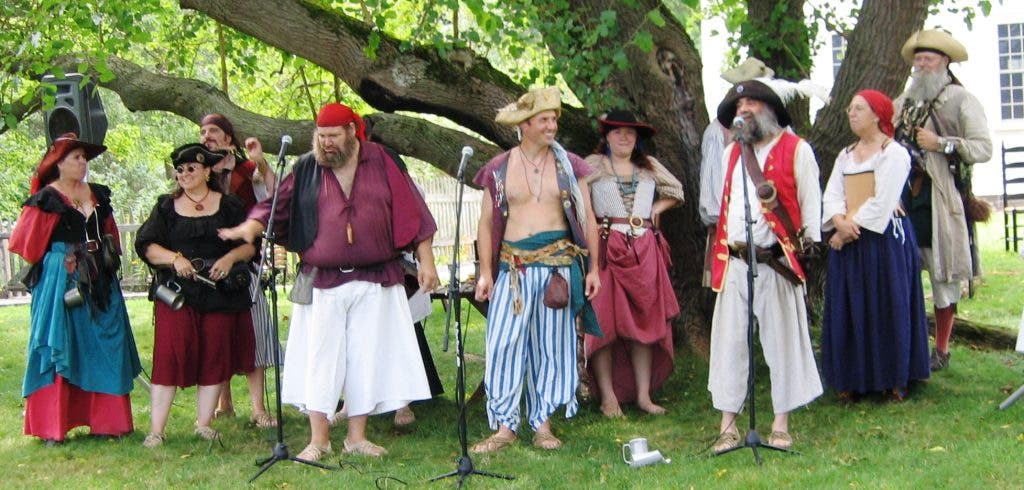


Pirate tunes and sea chanteys appeared seductive for the crowd lounging in the shade of a massive white mulberry tree on the waterside lawn of Smith's Castle Saturday afternoon.
Small children capered and adults clapped to tunes played on traditional instruments from the 17th century onward at “North Kingstown and the Sea.” Jigs, hornpipes and rhythmic chanteys designed to keep teams of sailors coordinated as they hauled sails and anchors drifted out toward Wickford Cove, all part of “A Celebration of the Songs of the Sea and the Hale and Hearty Men Who Sang Them.”
A brief but intense thunderstorm around noon cleared the air for the 2 p.m. free performance and kept temperatures in the 80s rather than the threatened three digits. The audience of around 70 relaxed on their own folding chairs, blankets. and commandeered benches.
Find out what's happening in North Kingstownfor free with the latest updates from Patch.
Most of the entertainers – including “hale and hearty” women – dressed in Colonial garb reminiscent of Jack Sparrow and company. Local historian Tim Cranston, impersonating his 18th Century ancestor Governor Samuel Cranston, wore high boots with his period costume, as did a couple of the pirates, but most opted for looser outfits and sandals.
The duo of Jack Wright and Tom Maguire opened the musical program with jigs and a selection of Irish songs of the sea. They began with Wright on the accordion and Maguire playing the Irish bodhran. Later, Maguire stood to sing acapello for two numbers, including "A Daring, Sailing Man."
Find out what's happening in North Kingstownfor free with the latest updates from Patch.
They were followed by three members of Barnacle, a Celtic folk band specializing in sea music. They performed with pennywhistles, recorder, flute, guitar, fife and drum. As a cool breeze set the mulberry leaves fluttering, they brought some young listeners forward to demonstrate how sea chanteys encourage rhythm.
Cranston appeared between musical sets to explain how Rhode Island became a haven for pirates, including the notorious Capt. Kidd. As a young man, Samuel Cranston (1659-1727) trained as a goldsmith in England. On his way home to Rhode Island, his ship was captured by pirates, and Cranston served as a captive goldsmith under Kidd for several years.
At that time Rhode Island residents eagerly purchased captured goods that pirates offered for sale – without charging royal taxes. As governor, Cranston provided official “letters of marque” that permitted privateers to capture French and Spanish ships. When peacetime reduced the opportunity for privateers, many turned to piracy.
Yet Cranston’s policies proved so popular he was elected to one-year terms as governor 29 times.
The final performers of the afternoon were the boisterous pirate re-enactors, “The Free Men of the Sea.
“North Kingstown by the Sea” was sponsored by the North Kingstown Arts Council and Cranston’s Swamptown Enterprises.