Health & Fitness
Volvo Ocean Race: Big Winds Cause Injuries Aboard Southern Ocean
Volvo Ocean Race teams face their toughest challenge yet as they cross the Southern Ocean.
First question at the press conference the other day was how we would we describe our outlook for the next leg of the race in one word. A tough one. For a tough leg.
The answers from the six of us skippers were consistent: cautious, anxious, respectful. Each word equally appropriate as we faced the Southern Ocean.
The Southern Ocean means freezing temps, pounding waves (like we didn't have enough the last leg), winds like we haven't seen yet this race, and don't forget icebergs. Not the most hospitable part of the planet. And, it certainly adds to the mystique of the Southern Ocean and the passage of Cape Horn.
I wasn't alone in saying that we needed to treat it with a lot of respect. There's also not a sailor in this race that wasn't feeling the same.
We walked out of our weather briefing before departing Auckland with nervous anticipation. Front-to-back the forecast was full-on. Including a full gale in the first 24 hours. Rome Kirby, the youngest sailor in this year's race at 22, is making his first trip across the Southern Ocean and around the horn. He's the kid, and definitely has that youthful attitude, looking forward to every step of this adventure. But, even he was admittedly a bit nervous.
Gale-force winds, immense seas, all right out of the gate? Quite a forecast. Like I said before we left, that's serious boat-breaking and person-breaking weather. A "Welcome to the Southern Ocean" moment, for sure.
We've hit it all exactly as predicted. Wind speed regularly registering above 40 over the first 24-plus hours. That was until our wind instruments blew off the top of the mast. The boat's been falling off waves more than 5 meters high (that's over 16 feet). Makes it nearly impossible to walk, stand, or do a lot on this boat, like sit at a computer to write a blog.
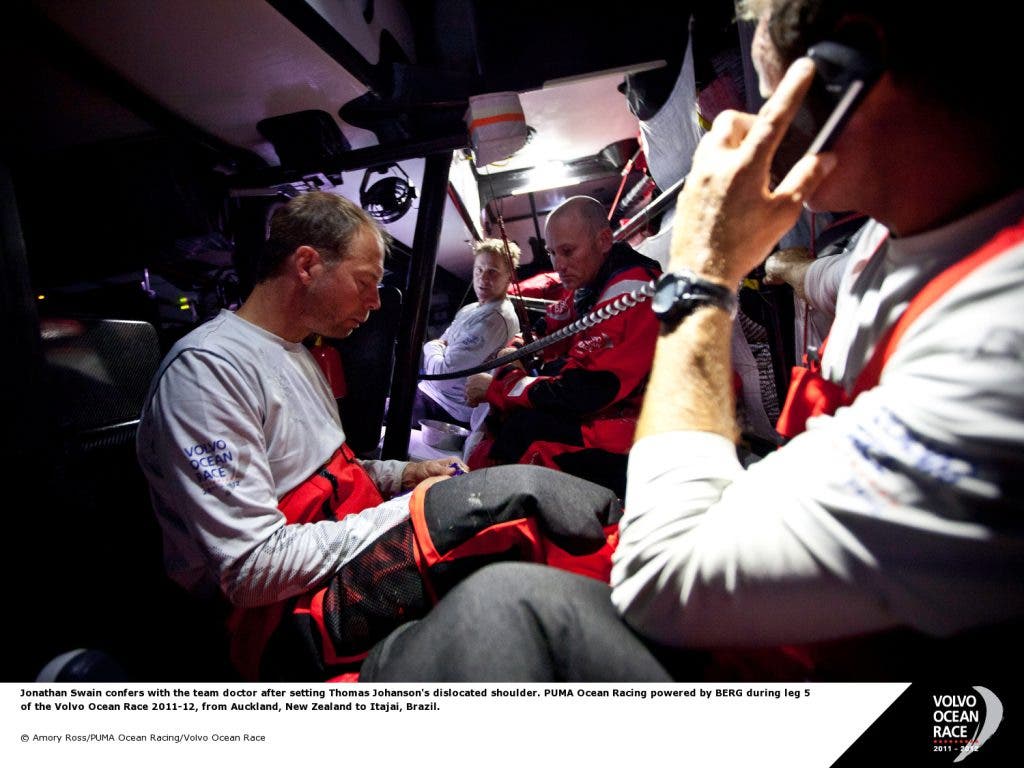
Unfortunately, it's taking its toll. We have a banged-up crew, including a pair of injuries. Thomas Johanson, our newbie for this leg, dislocated his right shoulder when he was unexpectedly taken out by a huge wave in the cockpit, and Casey Smith has injured his lower back simply dragging a sail forward. They're both recovering, and both at this stage are staying onboard. It took a team effort, led by Jono Swain, and a few attempts to get Thomas' shoulder popped back in. It was a big moment when it did. Obviously, it's been painful for both of them ... and frustrating.
All of this, and as I write, we're not even 48 hours into the leg. Does it really have to be this hard?
Now, we're approaching the "roaring forties," heading below 40 degrees South latitude. Below that, the "furious 50s." Why? Not much land mass to slow the conditions down, which means colder temps, more wind, more waves larger than any of us want to surf...well, maybe they'll look pretty good to our friend Laird Hamilton. But, the fact is that we put ourselves in harms way if the wind is right because it propels us faster to our destination. A simple philosophy, really.
It's going to continue to be tough for this fleet. We've packed extra sleeping bags, warmer layers, extra propane, beefy freeze-dried meals. We've said goodbye to shirtless sailing for a while, and added helmets to our daily wardrobe on deck. Safety will always be our No. 1 priority as we try to avoid any more injuries on this hospital ship.
So, Casey and Thomas are toughing it out, both in recovery. We're anxious to get to Cape Horn, always a milestone, plus it typically means we're through the rough stretch. And, Casey will need to be up to speed at that point so he can celebrate, and find a way to top his streaking dash across the deck last race as we sailed around the horn. Stay tuned.
Ken Read is skipper of the PUMA Ocean Racing powered by BERG team, competing in the Volvo Ocean Race. The 39,000 nautical mile round the world yacht race is the world's longest continuous professional sporting event. Visiting five continents over nine months, the world's best offshore sailors risk their lives every day competing in the 'Everest of sailing.' The race began in Alicante, Spain on Nov. 5, 2011, and will stop in Miami this May before finishing in Galway, Ireland, early July. Follow the race at www.volvooceanrace.com.