Since childhood, I have wandered down to the water’s edge and found the beach littered with the remains of a feast.
The founder of the feast “made the oceans, pouring them into his vast reservoirs,” filled with “all kinds of swimming creatures.”
Sometimes there were grayish quahog shells rimmed with purple hues; elongated blue/black mussel shells; fish heads of scup, flounder and blues; reddish lobster claws and crabs’ legs; tiny conical-shaped shells of gray and black periwinkles; snake-like skeletons of eels; and mounds of brittle clam shells.
Find out what's happening in Tiverton-Little Comptonfor free with the latest updates from Patch.
These foodstuffs for humans, fish and fowl have always provided a delicious reward for those who hunt, fish and farm the ocean depths.
For the first time in history our population of almost seven billion people is breaching the limits of what our land and oceans can support. As we crowd the oceans’ shores and pollute the waters, our search for food becomes more difficult. In my short lifetime I have watched the ocean harvest decrease with each passing year.
Find out what's happening in Tiverton-Little Comptonfor free with the latest updates from Patch.
Since food from the ocean was so abundant during my childhood summers, we feasted on the gifts from the sea almost exclusively. We carried our aluminum boat to shore, slipped into the orange life preservers and paddled out with a fresh supply of sandworms and tiny bait crabs that we had found under half-submerged rocks the night before. A short time later we would haul in one fish after another, sometimes two at a time. The pail would be jumping with the silvery scup, and they would spill out into the bottom of the boat.
Later, some of the fish were gutted on shore while the seagulls encircled us overhead. Returning to the summer house, we would give some of the catch to neighbors, cook some, freeze some and leave a couple of carcasses in the hot noontime sun. These would become our crab bait.
In late afternoon we carried our nets, fishing line, bait and pail, while we walked over field grass and rocks through inlets of fresh and saltwater. Arriving at the creek, the waters inhabited by the blue crabs, we tied the rigormortis-stricken fish onto one end of a fishing line and flung the bait out into the center of the creek. It was a waiting game. Sometimes we left without even one tug on our line. But when the crabs were hungry, they would grab the fish with their large pincers and start devouring their catch. The tug was ever so slight at first; then the tension on the line increased as the crab tried to swim away with the fish. Pulling the line in slowly, we placed the net over the water just behind the crab. With one swoop the crab was in the net.
During low tides we went shopping for our next meal. Grabbing a pail from the shed, we ambled down to the beach and chose our fixings. Sometimes we would collect handfuls of periwinkles, wresting them from the rocks they clung to and filling the large pail in minutes with the tiny shells. Blue mussels were always in plentiful supply, sharing space on the rocks with the periwinkles. They were quickly gathered. Quahogs were always an elusive and much-sought-after catch. Burrowed deep in the waters of the muddy coves, the quahogs proved difficult to unearth. Covering a small area, we would sometimes feel the familiar shape while digging with our feet.
On other outings we would head down to the estuary and dig for clams. Turning over large stones that had been covered with water a few hours’ earlier, we would look for the telltale holes in the muddy soil. We then began scooping the wet earth, searching for the prize. Sometimes there were slim pickings in the clam cove, and the few clams we gathered would be the main ingredient in a stockpot of clam chowder. But other times the soft-shelled clams were in hiding together, nestled in a community a foot deep. They would squirt at us as we tossed them into the pail.
I return to the summer house every year, but my family no longer relies on the sea to feed us. Trawlers, which had always remained in the open sea, invaded our inlets, filling their nets and cleaning out the beds. We catch few fish even though we anchor our boat over ledges that used to be home to many schools. I no longer eat periwinkles because of my fear of the red tides. At times the water has a reddish tinge due to the presence of a certain type of algae called dinoflagellates, and shellfish may be poisonous to eat. When we have the urge for a clam boil, we drive to the fish market and purchase Maine clams. The family of blue mussels that used to thrive along the rocky beach has been replaced by tiny black specks of shells that never mature during summer’s short span. These tiny specimens must be food for some creatures, but not for us.
When we humans fish too heavily, we run the risk of reducing the numbers of marine life to the point where they have difficulty reproducing themselves. Sometimes it takes years or decades to recover. Oceanographers call this threshold the maximum sustainable yield or the maximum amount of any fish or shellfish that may be harvested year after year. Apparently, the maximum sustainable yield had been surpassed in our coastal waters, and consequently, the supplies of our local fish and shellfish dwindled.
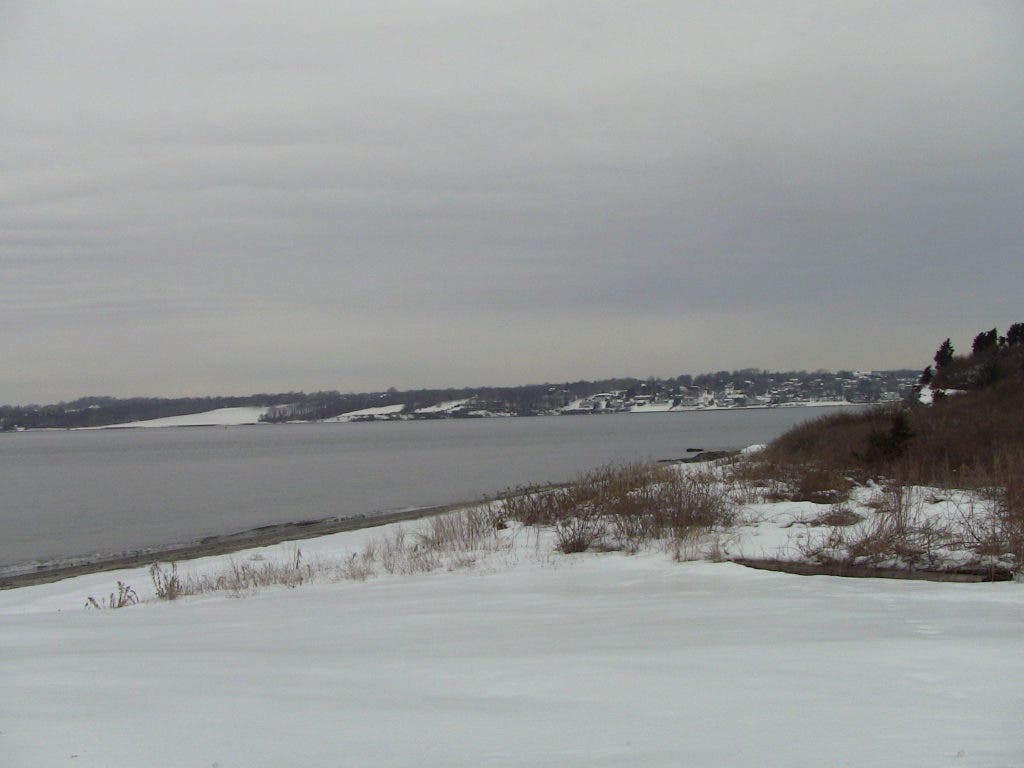
These days the ocean tosses more rocks and seaweed on the beach than shells; yet if I search more closely, the remains of edible foodstuffs are still here. The wind-driven seas continue to carry sustenance to us, if only we would harvest its gifts sensibly.
After an absence of more than twenty years, I spied a blue crab in the creek last summer. Another generation has found its way home.
ABOUT SEA, SKY & SPIRIT: Drawing from the many seasonal faces of Fogland, Linda Andrade Rodrigues paints vignettes about nature and spirituality.