Politics & Government
City Works To Improve Bond Rating
Mayor and finance director focus on deficit bond to remove "junk" status from city's debt.
In June of 2010, CNN called Woonsocket one of the seven “junkiest cities” in America. This unfortunate title isn’t a result of local aesthetics or demographics. The reason is that Woonsocket’s debt was relegated to junk bond status in May of 2010 by the financial rating company Moody’s, meaning that investors should shy away from putting money into the city’s projects. Woonsocket officials hope that a large deficit bond will fix this problem.
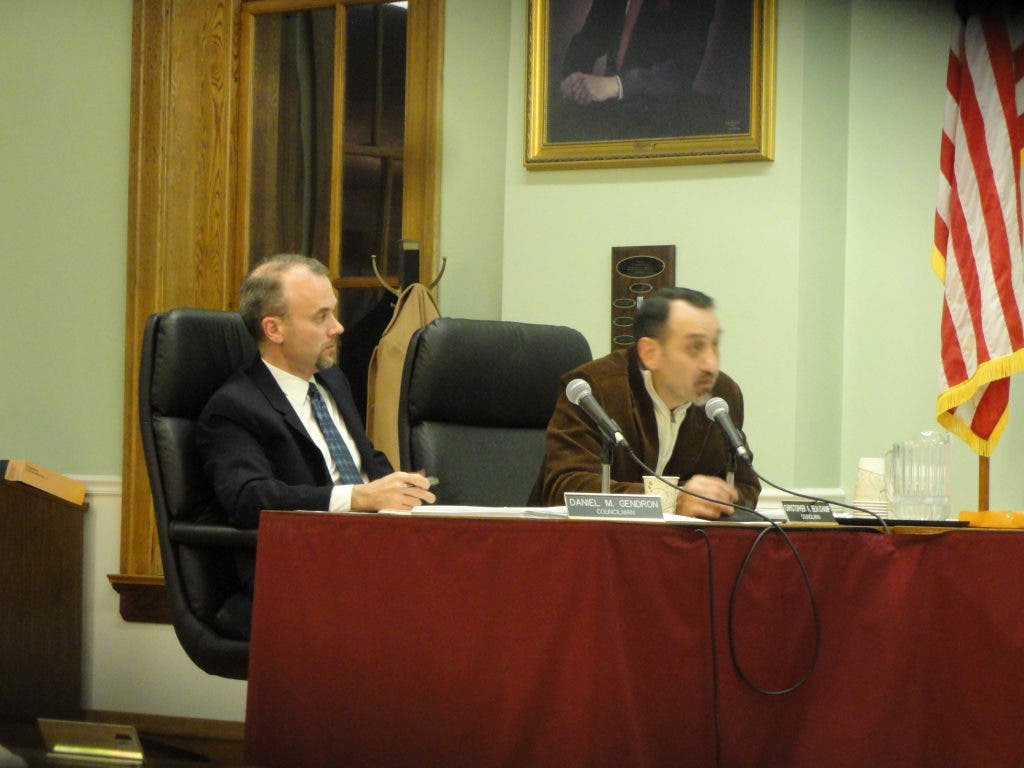
At last night’s city council meeting, a resolution was passed to add an additional $1.5 million to the $10 million deficit bond, which was approved by council members last July.
The money was added to provide much needed funds to the cash-strapped school department.
Find out what's happening in Woonsocketfor free with the latest updates from Patch.
Mayor Leo Fontaine and Finance Director Thomas Bruce believe the $11.5 million deficit bond, which will be priced on March 1 and sold on March 8, will help the city return its bond rating to investment grade.
The deficit bond will pay for three years of debt, from 2008 to 2010, that the city racked up due to cuts in state aid. As the recession decreased state revenue, cash flow to the city has steadily dropped. By 2010, that debt had turned into $6 million in the school fund and $3.5 million in the city’s general fund.
Find out what's happening in Woonsocketfor free with the latest updates from Patch.
“It took three years of financial deficit for this to come to a head,” said Bruce, “Moody’s found the $10 million deficit and the ability to borrow and issue bonds was immediately at risk for the city. In 2009 the city got an interest rate of about 3%, but in 2010 that interest rate became 6.25%. It is real difficult when you can’t borrow, especially when taxes come in at different times and you aren’t able to pay your expenses.”
In order to get that lower interest rate back, the city came up with a plan that revolves around the issuance of a deficit bond last July. This will be Bruce’s third time working with a deficit bond and the fourth time one will have to be used in Rhode Island. Deficit bonds have been used in the past by West Warwick, Johnston and Cranston.
“I favor environments where there is a fiscal crisis to work on,” said Bruce, “The statutes in Rhode Island favor a deficit bond.”
Bruce worked in West Warwick and Johnston after they were forced to sell a deficit bond.
This bond will be sold by the city to banks or investors for $11.5 million. $6 million will go to the school department to cover their deficit. $4 million will be spent to eliminate the general fund deficit. The additional $1.5 million will be spent as a one-time cash payment to the school department to bring down the amount the city currently owes to education down to $2.2 million, while providing the department with immediate funds for its daily operations.
The deficit bond will have to be paid back over five years. Although the interest rate will not be determined until the bond is priced on March 1, Bruce said Johnston’s deficit bond interest rate was 9%. Bruce expects this bond will add $2.5 million per year to the city’s $16 million debt load.
The benefit of increasing that debt load, however, is that over time the city will be able to get its bond rating back to investment grade. Johnston and West Warwick’s bond status were returned to investment grade after paying back their deficit loan for two years. If Woonsocket is able to return to investment grade the city will be able to refinance its debt and significantly decrease the amount paid in interest. Without the deficit bond, said Bruce, the city's bond rating might get even lower, raising interest rates even further.
“It’s like a company that’s about to go belly-up,” said Bruce. “It’s a cumulative loss in order for the city to build schools, build highways, pay its pensions and borrow money to pay for things between taxes. We pay the interest on it. That is the cost of having the second chance to get back into investment grade. It is an opportunity to avoid takeover by the state and avoid insolvency.”
“Yes, this obviously costs the taxpayers,” said Fontaine at the meeting, “If we didn’t think there’s an overall benefit to doing this, I wouldn’t be proposing it. The driving factor in everything we do is to get our financial house back in order and I hope that eventually our bond rating will improve to above investment grade. In the long run these steps are going to decrease the cost of our debt and reduce the cost of government in general considerably.”
In order to pay back this addition to the debt load the city will have to increase taxes and continue to make more budget cuts, said Bruce.
“There are several ways in addition to taxes to offset that cost,” said Bruce, “We’re making sure every option is on the table we’re pursuing them all. These options include increase in wastewater revenue, department cuts, building permits, parking tickets, increasing the efficiency of tax collection and going out to bid for all services.”
Moody’s will be providing a new rating for the city Wednesday. Bruce hopes the city gets lucky and is removed from junk status, but with the current fiscal situation the rating is likely to remain the same.