Politics & Government
Council Says 'Not Now' To Accreditation Manager For Woonsocket Police
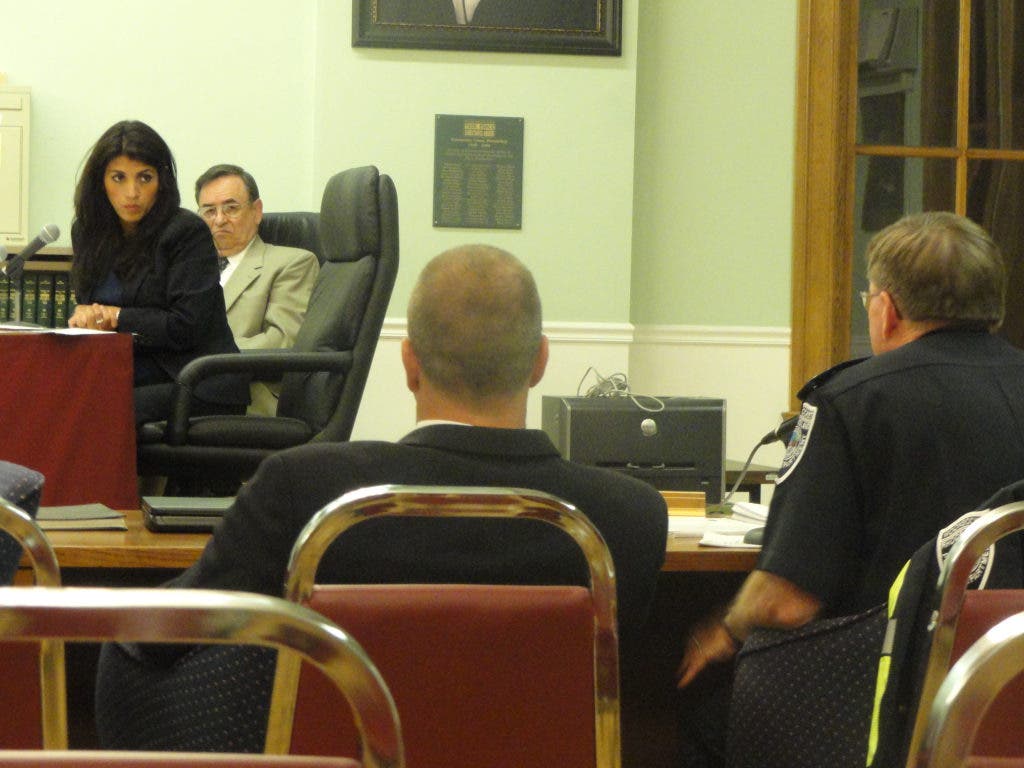
Plan to convert Radio Technician position into Accreditation/Grant Manager position is turned down by City Council.

There is a time and place for everything, or so the saying goes.
As such, 2011 may not be the year that Police Chief Thomas Carey gets to hire a dedicated manager to help advance his goal of accreditation for the Wooonsocket Police Department by CALEA - the Commission on Accreditation for Law Enforcement Agencies.
The designation by the national commission is a stamp of excellence, earned through complying with nearly 500 best practices standards. Carey's former department in St. Petersburg, FL was accredited by the group and the city chief said he would bring the respected label to Woonsocket when he was first appointed in 2008.
Find out what's happening in Woonsocketfor free with the latest updates from Patch.
"What we're trying to do is ensure that we're maintaining the best practices and providing the best police service to the community, " Carey said. The department has already undertaken steps towards updating policies and procedures in hopes of moving the project forward this year. The Rhode Island State Police Department is an accredited law enforcement organization as are the Providence, Smithfield and Cumberland Departments. In Florida, the practice is common, with most agencies maintaining the designation.
The problem, Carey explained, is that meeting the standards -or at least preparing to meet them- can be time consuming.
Find out what's happening in Woonsocketfor free with the latest updates from Patch.
"The big concern is putting together a filing system," he said. According to CALEA standards, each of the 500 requirements needs its own file, including a policy which is updated regularly with proof of compliance. "The challenge is just getting started."
With legislation before the City Council Tuesday night, Carey had hoped to get help with the process by replacing the job of Radio Technician (a position phased-out last year,) with the $48,000 a year job of Accreditation/Grant Manager. The individual, Carey thought, could oversee implementation, while also helping the department to locate and apply for outside grant funding.
Accreditation, however, entails costs beyond the personnel investment. Carey estimated that the process would cost $20,000 in the first three years, an expense he hopes to cover with the department's forfeitures.
"It's a difficult decision," Councilman Dan Gendron said of approving the new position. "My first instinct is to say give them what they need, but my financial background is telling me that now my not be the right time."
Councilman Roger Jalette outlined some specific concerns before ultimately voting in favor of the measure. "John Dionne stated on the talk shows 'I wonder if the council actually knows what it's getting into, because the rules of accreditation say - and the reason why we haven't gotten into this from day one - was because the rules can be very expensive to the taxpayers of Woonsocket'," he said. Jalette used the examples of cruisers with too many miles or bullet vests that are still good, but too old for CALEA standards, as possible expenses which could be brought about as a result of accreditation.
"Mileage is not a factor and we look at our fleet to make sure that those automobiles are safe for the detectives and patrol officers to operate. We're on a recycle program with federal money to replace vests," replied Carey, reiterating that his plan involves using forfeiture money rather than city funding to deal with any associated costs.
"I'm struggling with this chief. You look around at City Hall and there's dark rooms. There's people in this administration that are doing two jobs. We laid off five laborers in the Public Works Department. It's all about money," said Councilman William Schneck.
The ordinance was ultimately defeated in a 3-4 vote with council members Jalette, Christopher Beauchamp and Susan Vadenais voting in favor of creating the new job.
The decision is not likely to hinder Carey's mission to make accreditation - and the high standards that come with it - affordable and attainable for law enforcement agencies across the state. Carey, in fact, is an executive board member of a committee in the Rhode Island Association of Chiefs of Police that is working to create an alternative in-state program for accreditation.
"A lot of agencies don't have the funding to do CALEA. That's really what prompted the in-state accreditation, to create something that's more affordable," said Carey. Massachusetts already has such a system and the chief explained that the board is working on policies that would mirror CALEA, while costing departments closer to $2,000 a year.
"It's not in place yet, but we're very close," he said.
"We really want professional police departments in this state."
Get more local news delivered straight to your inbox. Sign up for free Patch newsletters and alerts.