Politics & Government
Council to Vote on Authorizing Interjurisdictional Wastewater Agreements
Brien, Gendron argue that city residents should pay less for upgrades.

Should Woonsocket residents pay less for wastewater services and upgrades since a sometimes odiferous local plant has the potential to decrease home values?
Some City Council members and involved residents say yes, but consultants and city administrators say they just don't know how to get neighboring communities to agree to pay more.
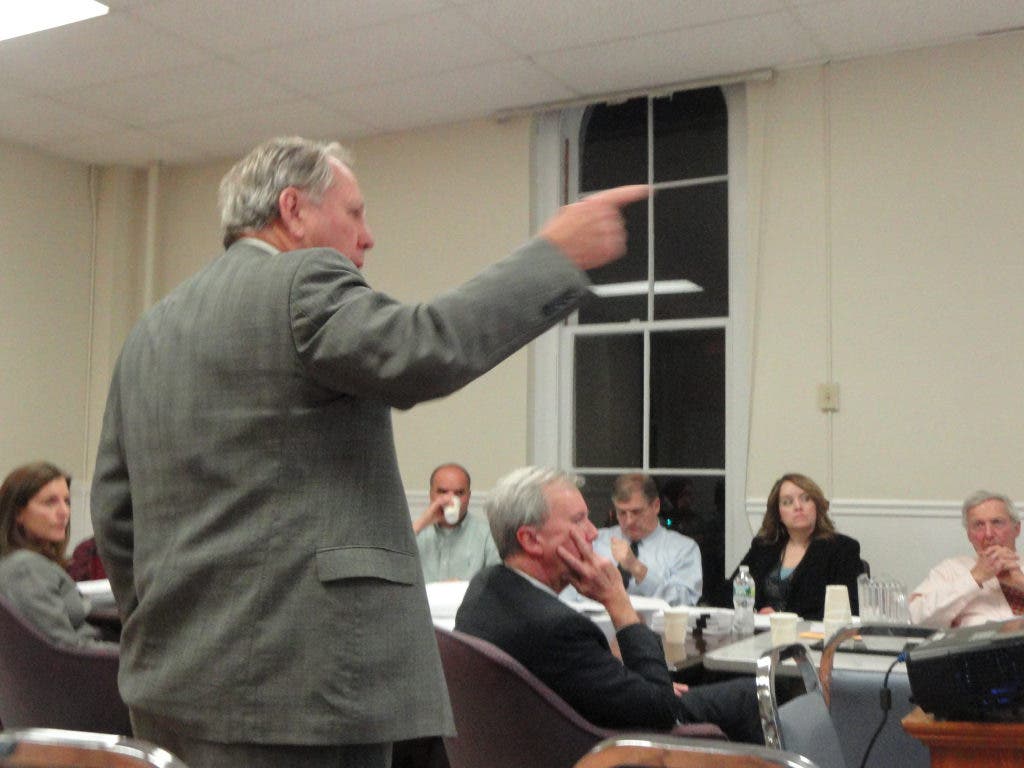
The issue was addressed at a Monday night work session with a powerpoint presentation for both returning and newly-elected members of the City Council. Consultant Paul Eisenhardt led the briefing on the Woonsocket's progress towards creating new interjurisdictional agreements (IJAs,) the contracts which govern how the city shares the facilty- and resulting costs- with neighboring communities.
Find out what's happening in Woonsocketfor free with the latest updates from Patch.
New standards by the Rhode Island Department of Environmental Management (RIDEM) require Woonsocket to upgrade the plant by March of 2014, removing phosphorous and nitrates from water discharged into the Blackstone River. The requirements are reportedly some of the most stringent in the country and the deadline comes just one year after costly upgrades in Woonsocket are expected to be completed. In February, Eisenhardt estimated that the $35-$40 million project from an average of $277 per year to $407.
The upgrades are expected to be paid for, in part, through a 20-year federal loan of up to $26 million with a 2-3% interest rate from Clean Water Finance Agency. In order to secure the funding and meet RIDEM deadlines, however, the city must first revisit the service agreements with neighboring communities. Administrators hope to set the new contracts for the life of the 20-year loan.
Find out what's happening in Woonsocketfor free with the latest updates from Patch.
The consultants proposed a continuation of the terms of the current agreements, through which the city would split the cost for improvements according to capacity. Twenty percent of the plant on Cumberland Hill Road is allotted for waste from Blackstone, Bellingham and North Smithfield, so Woonsocket users would be paying for 80% of the improvements, terms which Councilman Daniel Gendron and council-elect Albert Brien say are unfair.
"Host fees go exclusively to the City of Woonsocket and have been $4 and $5 million since 1990," said Eisenhardt. "Could you charge more, should you charge more, to these other communities? I'm not your legal counsel, but I can cite you numerous examples where you're flirting with having someone go and appeal these, either in court or to the Rhode Island PUC and when it gets there, the host fees are out." The PUC, or Public Utilities Commission, Eisenhardt explained, does not generally govern wastewater matters, but would be the responsible body should a dispute arise, and would not allow host fees.
"Using your percentages, 80% of the $5 million in host fees came from Woonsocket rate payers," said Gendron. "It's not like we got a windfall from those other communities of $4 or $5 million. I would much rather see the percentage increased on those neighboring communities."
"The cities and towns do not want to hear anything about paying more than their share of the costs," said Public Works Director Sheila McGauvran.
"Well, let them build their own plant!" responded Brien.
"We're under a signed consent order with DEM to meet a deadline. We won't get our financing until these intermunicipal agreements are in place," explained McGauvran.
"The facts say that we shouldn't be sharing the burden of this plant at an equal percentage as the rest of the community, because we host this plant," said Gendron.
When Eisenhardt again emphasized the host fees as a benefit, the conversation became heated.
"Let me try to help you. You receive $3 million in cash from Veolia," said Eisenhardt in reference to the company that operates the Woonsocket facility. "One lump sum."
"And they get their money from?" asked Gendron.
"They will get that money recouped over their 20 year service..." said Eisenhardt
"But they get their money come from?" interjected Gendron.
"But it's over the twenty years..."
"Answer the question!" shouted Gendron and Brien.
"The ratepayers," responded Eisenhardt to applause from several in the room.
"If you shift the burden from a 20/80 share to a 30/70 share, it's going to offset the Woonsocket ratepayers in a positive way," Gendron said.
The consultant and McGauvran explained that such a change would be a deviation from generally accepted principles governing cost structures, adding that the risk involved with threatening the current agreements could jeopardize financing.
"I think we need to understand that we're all on the same team here," said Mayor Leo Fontaine. "I think that we do need to take into account the repercussions. That if we single-handedly go forth and say 'we've decided that we're going to start charging you more,' that there is a very real possibility that they'll say 'we're not going to go to go to our residents and start charging 50% more.'"
Brien explained that while he did not intend to look at the consultants as adversaries, there were additional factors that should be calculated.
"There's another cost to the taxpayers of the City of Woonsocket," said Brien. "It is the loss or diminution in value of our property from us having to deal with the stench of that plant." Brien calculated that some homes on Cumberland Hill Road could be worth up to $150,000 more if they were located elsewhere. "That's the kind of thing that needs to be considered, by you," he told Eisenhardt,"outside of what you say are generally accepted conventional practices. So please do that. And if you don't do that, and I happen to be sitting on this council, I will not vote for these interjurisdictional agreements."
While the administration has indicated that they may try to delay the project, McGauvran emphasized that Woonsocket would need to show some progress in order for RIDEM to extend the timeline.
The consultants are expected to present further information to the council members this week, calculating both the potential benefits of changing the cost-sharing agreement and the risks involved with losing the low-interest loan from Clean Water Financing Agency, which could result in the city paying back a loan at a 5% interest rate. The council will vote on a resolution authorizing IJAs at their regular meeting on Dec. 19.
Get more local news delivered straight to your inbox. Sign up for free Patch newsletters and alerts.