Politics & Government
Hurricane Irene Now Setting Sights on RI, NWS Says May Be Stronger Than Expected
Initial computer models this week showed Hurricane Irene making landfall in the Carolinas and breaking apart afterwards. More recent models show Irene heading our way.

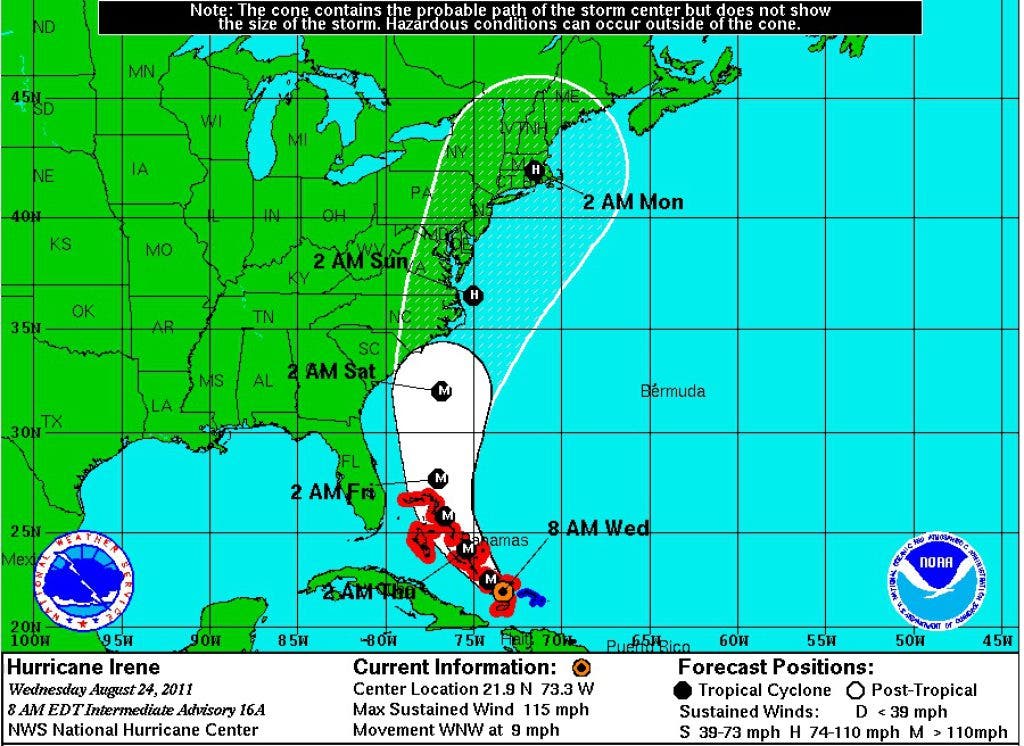
If you brushed off concerns about Hurricane Irene earlier this week, you might want to take a look at a weather map today.
The storm, which is now a Category 3 storm, is expected to arrive sometime on Sunday. Some additional strengthening is forecast during the next day or so and Irene could become a Category 4 hurricane by Thursday.
The storm is currently expected to weaken as it moves over colder waters on its approach to New England, though, so we likely shouldn't expect catastrophic conditions.
Find out what's happening in Woonsocketfor free with the latest updates from Patch.
Still, the storm could bring 60 to 80 mph winds and heavy rain. That could pose problems with downed trees, flooding and exterior damage to homes.
The Federal Government’s emergency preparedness internet resource ready.gov outlines a 3-step process for hurricane preparedness: Build a kit, Make a plan, Be informed.
Find out what's happening in Woonsocketfor free with the latest updates from Patch.
Andy Genereux is a retired lieutenant from the Bellingham Fire Dept
and past Director of Emergency Management for the Town of Bellingham. "There will be a lot of 'chatter' this week about Hurricane Irene and effects on the Eastern Seaboard, including Northern Rhode Island," Genereux said. "At this early stage, it is important to monitor the situation and a very good time to review your emergency plan and check your emergency kits."
Genereux has shared his family's checklist for a kit and a plan. Visit Woonsocket Patch throughout the week to stay informed with the most up-to-date information on specific hazards in Woonsocket, evacuation routes, emergency plans, the locations of shelters, and details of the storm and its progression.
Andy’s emergency kit
1. Shake & Standard Flashlights, large and small
2. Crank Radio, Grundig, Battery op radios
3. Light Sticks
4. Lightning Detector
5. SAME Weather Radio
6. LED Lantern
7. Fluorescent lantern
8. Butane Backpacking stove
9. Extra Butane cylinders
10. Propane Camping Stove
11. Extra Propane cylinders
12. 12 v cell phone charger
13. Various 12 volt adaptors & AC inverter
14. 3 day supply of meds (refresh every 6 months)
15. Notepads and pencils
16. 2 meter Ham Radio portable
17. Supply of extra AA, AAA, C and D cells as needed
18. Cribbage Board and cards
19. First Aid Kit
20. Supply of Bottled Water on hand
21. 12 volt mini cooler
22. Quick-Grab Bag for items if quick evacuation necessary
23. Supply of candles
24. Matches and butane lighters
25. Fuel vehicles
HINTS:
= 3 days before a storm, make as much ice as possible in your freezer, use plastic “Tupperware” containers, Zip Lock Bags, etc. to fill every empty spot. If there is an extended failure, take ice from freezer and place in lower cold foods compartment.
= Charge all rechargeable items such as cell phones, radios, lamps, etc.
= Stay aware of current conditions from Weather Radio, TV, AM/FM, etc.
= Check Gas Grill Propane Supply, REMEMBER: NEVER use outdoor cooking applicances indoors, such as gas grills, charcoal, generators etc. CARBON MONOXIDE CAN KILL
= USE CAUTION WITH CANDLES, NEVER PLACE NEAR A WINDOW WHERE CURTAINS CAN CATCH FIRE OR NEAR PAPER OR OTHER FLAMMABLES OR NEAR CHILDREN
= It is also important to KNOW where all these items are located; A few times a year check to see if you can find everything, make a list, store them in a box, a Rubbermaid container, etc for easy retrieval.
= LEARN local shelter locations, evacuation routes, etc. for your area.
=Copies of homeowners Insurance, Auto insurance and other important documents in a sturdy water proof container.
Get more local news delivered straight to your inbox. Sign up for free Patch newsletters and alerts.