Politics & Government
Kelly: Woonsocket Can Do Much A Receiver Can
Attorney advises cutting budget as much as possible before declaring bankruptcy.


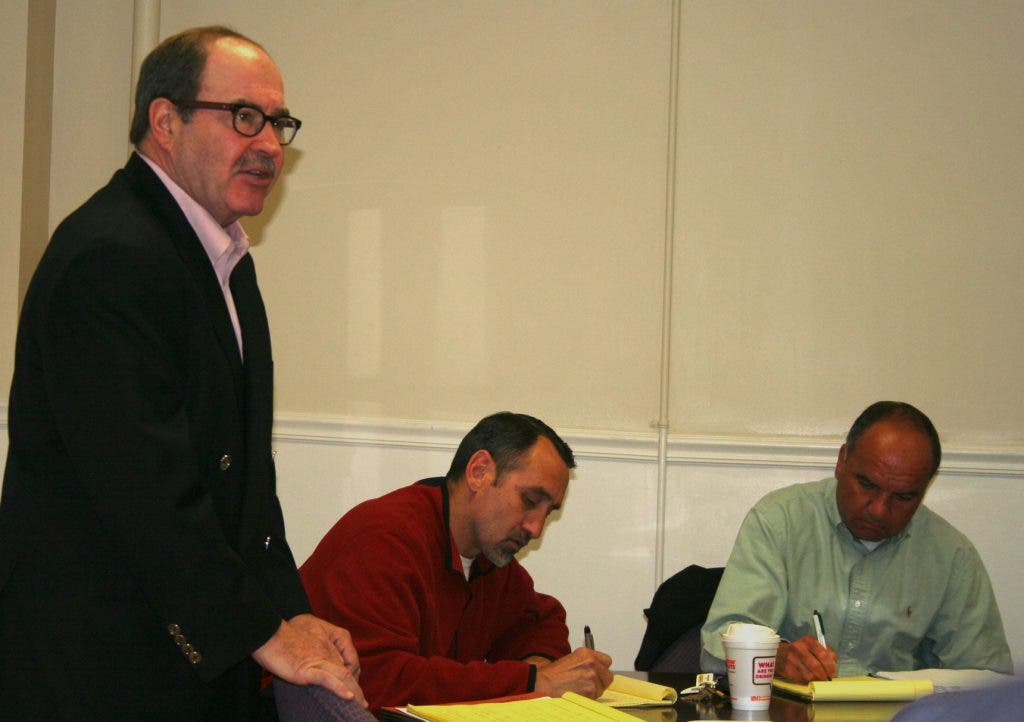
City leaders can do most of what a receiver could, attorney Michael Kelly said Monday night at City Hall, and the Council should get as much of it done as possible before Woonsocket runs out of money.
Director of Finance Thomas Bruce said without the proposed supplemental tax bills, the city's got less than six weeks. "We will run out of cash by the end of May," he said. Supplemental taxes require the support of state legislators, who have expressed ambivalence about the plan.
Find out what's happening in Woonsocketfor free with the latest updates from Patch.
Woonsocket leaders find themselves in this situation thanks to a surprise $10 million deficit at the Woonsocket Education Department.
Either the city or a receiver can negotiate with unions to help the city save on contracts, "But the state receiver can not touch them," Kelly said. The state's receivership law doesn't allow a state appointed receiver to alter contracts unless the unions are willing to negotiate, he said.
Find out what's happening in Woonsocketfor free with the latest updates from Patch.
Otherwise, the statute sets the receiver up as the sole authority in the community. Even the School Committee would answer to a receiver. "Basically, the receiver sits as everybody. He's all powerful," Kelly said.
Kelly noted handing tough decisions over to a receiver shields elected officials from the political consequences of the decisions, and may allow faster decisions as a result. But he also advised that whoever is appointed receiver should be someone well known in, and familiar with Woonsocket.
The attorney made no secret of his feelings about the receivership option. "I still think the statute violates the constitutional amendment for (the state's constitutional) home rule charter," he said, because it supersedes everything except federal law and the US Constitution.
Councilman Dan Gendron asked how the state statute differed from judicial receivership. Kelly answered that judicial receivership would allow a receiver to throw out old contracts, but that isn't possible under state law. The RI version of receivership is what they have to work with. "Right now, it's the only show in town," Kelly said.
So, Gendron said, cuts a receiver would make seem to be something the city could handle on its own at a lower cost.
Kelly replied that would work assuming the city had the time to wait for everyone to come to an agreement. He said the city should set a deadline, and tell unions and stakeholders that they have until that deadline, after which the city will go into receivership and have to deal with someone they don't know. "Otherwise, everyone's going to think you're just talking and they're not going to take you seriously," Kelly said. Also, he said, the more cost cutting the city manages on its own before it enters receivership, the smoother the process will be for the city, and the more involved city officials will be in the process.
One advantage to receivership, Kelly noted - a receiver could make the supplemental tax payments happen without the help of the General Assembly. "I think under the statute, they can do that," Kelly said.
Bruce said Citizen's Bank is working with the city to get a loan to help keep Woonsocket afloat past May, but, he said, "They need the supplemental tax bill to work with us."
After the meeting, Sharon Geving of the Woonsocket Taxpayer's Coalition said she wanted to hear from the other side of the argument - for receivership. "I wasn't impressed," she said. The WTC is hosting a speaker for the receivership process, Judge Robert G. Flanders, Jr., at 6:30 p.m. Thursday at the Elks Lodge, 380 Social St.
Get more local news delivered straight to your inbox. Sign up for free Patch newsletters and alerts.