Politics & Government
Taxpayers Help City Find Extra Revenue
Synagro Northeast to receive tangible property assessment in December of 2011.

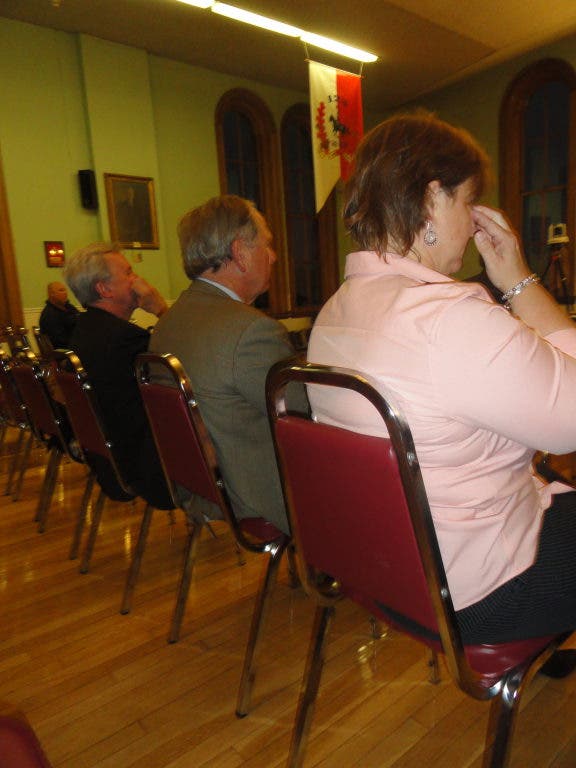
City Council hopefuls James Cournoyer, Albert Brien and Roland Michaud have been pointing out the problem for months.
Synagro Northeast, the company that operates Woonsocket's sludge incinerator on Cumberland Hill Road, has not been filing tax returns on the company's tangible property valued at more than $12 million. An assessment on a fluidized bed installed in 2007 which allows Synagro to burn sludge (shipped in from across the state) could result in significant annual income for the cash-strapped city. Although it is too soon to nail down a figure without an official appraisal, estimates of the potential tax increase have ranged from around $200,000 to $400,000 annually.
The three men, all members of the Woonsocket Taxpayer Coalition, first noticed the problem while the City Council was in the process of for the company. The system will allow the Synagro to convert gases released in the sludge burning process into electrical energy.
Find out what's happening in Woonsocketfor free with the latest updates from Patch.
Frequent speakers during the council's "good and welfare" session before each meeting, Cournoyer, Brien and Michaud each, in turn, brought up the question of tangible property taxes to be paid on the new equipment, asking if the city's new agreement with the company would exempt them from the tax. They also noted that the fluidized bed should have been taxed since the company first installed the equipment in 2007.
Representatives from Synagro and attorneys for the city, meanwhile, argued that benefits acquired by the equipment are already bestowed upon the city through cost avoidance and host fees. During a City Council meeting last May, Synagro Vice President Pam Racey pointed out that when the equipment was built in 2007, her company's host fees jumped from "$70 or $80 thousand a year to $500 thousand a year."
Find out what's happening in Woonsocketfor free with the latest updates from Patch.
After continued debate, however, it seems the city has officially sided with members of the WTC. According to City Assessor Christopher Celeste, a request for information regarding the company's obligation (or lack thereof) to pay tangible property tax was answered with evidence of payment on just $1,000 worth of office equipment.
A Sept. 1 letter signed by Celeste states that documentation provided by Synagro "does not address other tangible equipment such as the fluidized bed and other assets."
"Unless otherwise provided for," the letter continues, "the property will be assessed as of December 31, 2011."
Celeste, who has worked as the city's assessor since August of 2010, said he is unsure why the company was not previously taxed.
"No one seems to have any idea why they weren't taxed," he said. "They didn't have exemptions. They have a multi-million dollar machine that they are not paying taxes on. We have to be fair. They have to pay taxes like everyone else."
The city will use the services of George E. Sansoucy for the December appraisal. Celeste is unsure at this point if the city will bill the company for taxes from years past. By law, the city can go back up to six years in the billing cycle.
Although it is unclear if the city plans to additionally tax Synagro on the heat recovery that has yet to be built, the move is a positive sign for those hoping to see big gains for Woonsocket in the form of increased tangible property tax.
"If and when Synagro invests the $10,000,000 into the heat recovery system, which will save Synagro approximately $2.4 million per year in energy costs, the city needs to send them a tangible tax bill for that equipment, which at today's rate would raise another $465,800 of desperately needed tax revenue," explained Cournoyer in an email.
Synagro, however, is not alone their failure to pay the tangible property tax. Although the law states that businesses must file on tangible property every year, the reality, at least in Woonsocket, according to Celeste, is that "very few people do it."
In light of the issue, the assessor has lobbied for a full revaluation of city properties. Celeste believes the process, which would cost Woonsocket $100,000, would more than pay for itself, and he points out that when nearby Johnston recently undertook the process, they gained around $400,000 in annual income.
"That's when your revenue comes in," said Celeste, "when someone actually goes out and looks at everything." The process, he explained, would also help to clean-up the city's books, eliminating bad information on businesses long closed while adding new businesses and properties to the city's tax roll.
"I believe the savings would be significant."
Visit Woonsocket Patch later this week for more stories on the city's efforts to increase income through tax corrections.
Get more local news delivered straight to your inbox. Sign up for free Patch newsletters and alerts.