Politics & Government
As Gaddafi Falls, Graham Hails Opportunity to Spread Democracy
Senator faults Obama for prolonging Libyan revolution to topple dictator


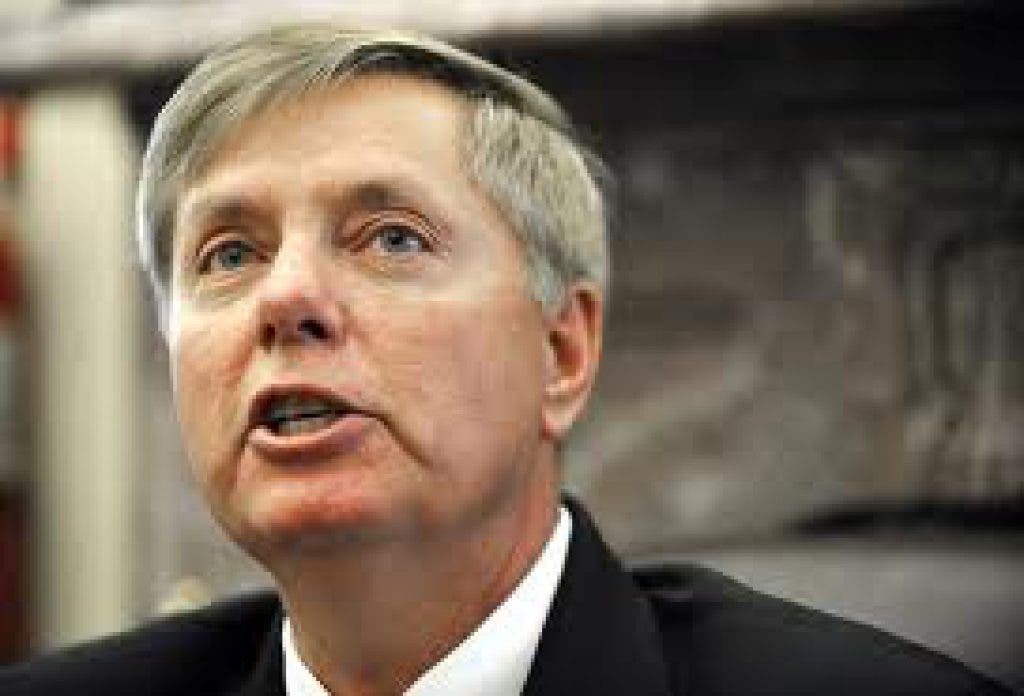
COLUMBIA -- With Muammar Gaddafi's 42-year dictatorship of Libya on the verge of collapse, U.S. Sen. Lindsey Graham, R-S.C., said Monday the time is ripe for the United States to use its influence to help forge a new democracy in the Islamic-dominated and oil-rich North African nation.
"It is my hope and belief that the Libyan people, once they get Gaddafi completely removed, they are going to take advantage of this historic opportunity to create a representative government," Graham told a gathering of Rotarians in Columbia on Monday.
"It's going to be hard. … But when we talk about 'those people,' well once upon a time, we were those people. Even though we're broke, now is the chance to help the Libyan people help themselves, free up the monies they rightly own, and get on the ground as quickly as we can and establish the institutions that will serve the Libyan people well."
Find out what's happening in Lexingtonfor free with the latest updates from Patch.
Doing so is imperative and in the United States' best interest, he said.
"Find me one instance here two democracies went to war," he said. "Democracies have a way, through the rule of law, to work out their problems. And that's the one thing that's missing in most of these countries -- the rule of law."
Find out what's happening in Lexingtonfor free with the latest updates from Patch.
Talking to reporters after his speech, Graham gave grudging respect to President Obama for making "the right call to say Gaddafi has to go."
"But I think he made a bad decision of taking American air power out of the mix," he said. "It extended the war for months. It led to people being killed and raped that didn't need to be killed or raped; but that's behind us now. There is no substitute for American air power.
"I'm glad his days are numbered. Now, the president needs to lead us as a nation, and the world at large, to making sure the vacuum is not filled by unsavory characters."
Using Afghanistan as an example -- in which the failed invasion and subsequent pullout by Russia in the 1980's led to Taliban rule -- Graham warned that in times of transition and political upheaval, such as what is happening in Libya, "vacuums can be filled" by groups that can act counter to American interests and democracy in general.
One way to avoid that, he said, is for the Obama Administration to immediately release $30 billion in frozen funds a new government can tap to "start bringing about real change."
The leadership of a new Libya is in question. But Graham said he met with members of the rebels' Transitional National Council some months ago and came away from that experience feeling good about the chances of a post-Gaddafi nation.
"The one thing that you would be pleased with is that most of the people in that council are American-educated," Graham said, noting that even his college alma mater was well represented in the mix. "I met two parliamentarians from Bahrain that were (University of South) Carolina graduates." Graham told the crowd that it is important to foster such opportunities for foreigners to study in America.
"I can tell you that this relationship that the American university community has with the world is something we need to preserve," he said. "When foreign military officers come to train with us that have a different value system, when people from overseas come to our universities and begin to see who we are -- that's good for America and that's good for the world.
"I'm quite bullish quite frankly on what's going to happen in Libya," he said.
Graham told the largely conservative crowd of business, community and political leaders that the U.S. needs to do more than just "kill people" to affect positive change in the Arab world.
The senator remarked that even if the United States is "broke," and currently struggling with a $14.3 trillion deficit and high unemployment, economics aren't the only pressing issue facing the country.
"There's a lot in this world that's going to require our attention," Graham said. "Being a broke nation doesn't mean that you have the luxury of ignoring things going on around you."
While the nation must concentrate on fixing its fiscal ills, "we're still the leader of the free world and thank God we are," Graham said. "With all our worries and all our problems, I think we are the best hope for humanity. The best thing that's ever happened to the world, I believe, is the United States of America."
Even if it means spending more money, both privately and with public funds, Graham urged that the country renew its focus on bolstering its allies, and courting and assisting potential allies that could help better ensure the nation's safety and long-term well-being.
Libya is one of those countries, as are Tunisia and especially Egypt, he said.
"Egypt is the prize to be won," Graham said. "It's the largest country in the Arab world. This is the first time in 6,000 years that democracy may take hold in Egypt. The Muslim Brotherhood is growing in influence, and that's bad for us. So, it is in our national security interest, even though we are economically challenged at home, not to disengage.
"You don't have to send a hundred thousand troops to be effective, you don't have to send $500 trillion to be effective," Graham continued. "Sometimes a little bit of money, and private sector support, where American business, American expertise, is sent to that country at a meaningful time, can change the future of humanity."
Snooping on terrorists, disrupting their financial networks, and killing them have been the major components of the war on terror, Graham said.
"But there's another point," he said. "Taking those who would live in peace with us, and then give them a chance. That takes more money, it's costlier, and in many ways deadlier -- but the payoff is enormous."
With reporters afterward, Graham said the challenges ahead for Libya are great. Though it is oil-rich and can perhaps expect to see seized riches given back to them in the near-term to rebuild their country, they still have to build new institutions that serve the people, rather than Gaddafi.
"This is a neophyte democracy," he said. "They're going to need more than money. They're going to need people who understand how to create a police force [for example] that takes care of the people, not a dictator.
"The challenges are enormous, but the reason I'm excited is, we're living in historic times," Graham continued. "I stand ready to put together an assistance package for Tunisia, Libya, and Egypt, even though we're broke," Graham continued. "The way I look at it, you either spend a little money now, or you spend a lot of money later. So let's get on the ground floor now and get to know these people and help them."
Get more local news delivered straight to your inbox. Sign up for free Patch newsletters and alerts.