Neighbor News
LEXINGTON'S 20,000 YEAR OLD HISTORY IS REDISCOVERED
The recent discovery in Lower Lexington County is anything but ordinary. It is part of the oldest known history in the Americas...

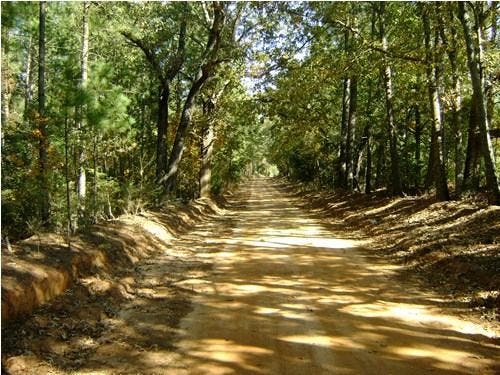
Forensic historian, Michael Jeffcoat has uncovered what might prove to be Lexington County, South Carolina’s oldest human history and a significant piece of history of some of the earliest inhabitants of the continent. In a small corner region of the county near Orangeburg and Aiken counties, historians, archaeologists and others are turning their attention to the significant and alluring discovery.
Jeffcoat, who examines his subjects forensically using a multitude of sciences, disciplines and other information and methods as overlays to a single subject, has achieved astounding results with this small geographic region, its history and its people - astounding and similar to another of his recent discoveries, the source of the rare Catawba documents that had helped the Catawba Nation gain its federal status decades ago.
Jeffcoat is first to tell you that science has been on the trail of this discovery for some time but without key elements that he now has knowledge of, archaeologist, anthropologist and other scientists were unable to “fit the pieces of the puzzle”. People who work with Jeffcoat says he has an innate gift so see and configure complex fragments of data to a whole model, a gift he has had most of his life according to some family members. “He sees and remembers every detail and can link fragments of data across subjects”, said a family member.
Find out what's happening in Lexingtonfor free with the latest updates from Patch.
Already, science is proving that the “cradle of civilization” in America began along the east coast with sites like Meadowcroft in Pennsylvania, Cactus Hill site in Virginia and the Topper site In South Carolina dating close to 20,000 BP. Jeffcoat’s research data and analysis has connected the work of many over many decades at this site and region in lower Lexington County that helps to explain much of the research conducted by archaeologists at at least three major universities, University of South Carolina, University of Georgia and East Carolina University. Jeffcoat seems eager to explain that his results are collaborative in that he has been able to use this data, some of which was generated decades ago. Many reports just had a singular focus yet, when combined with his research and others’ research and, other forensic data, a whole model appeared to verify, conclusively, the location and site of an ancient meeting place in lower Lexington County. What is also revealed is the use of this site over thousands of years.
The data generated in the analysis came from more than 5000 documents and reports. Many of these were found in local, state, federal and international archives, courthouses and libraries but a few documents came from private local sources. Some of these private documents, to date, have never been seen or shared publically. The data links archaeological, geological, geographical, historical, anthropological, genealogical, biological and other sciences and sources.
Find out what's happening in Lexingtonfor free with the latest updates from Patch.
The site has been known by different names during different periods in history. In Jeffcoat’s report and book it is known as The Indian Head, a 17th or 18th century English reference of the site of the indigenous and Native American people. The report includes the important role of Stephen Bull and his son and grandson in the preservation of this place and, so much so, that it exist today almost unaltered, as if frozen in time. The site rests along an ancient trade and travel path that traversed from the coast, near Bull’s Ashley Hall at the West Ashley near Charleston to beyond the Rio Grande near the Anasazi and south into Mexico, below Presidio and to the Yucatan near The Maya. Jeffcoat is quick to provide reference of age of these sites, stating the Anasazi are approximately 14,000 BP and The Maya to about 4,500 BP, neither civilization is close to the age of the sites along the east coast. In addition, there exist connections between the sites at Cactus Hill and Topper. While, these connections still require research, they are concrete.
Jeffcoat’s research connects the site and its history from prehistory through the revolutionary period and the civil war period, to history of the 20th century. The site has been used as a watering hole, an ancient meeting place, a landmark during the colonial and revolutionary period, a place of exile for a person of extreme influence during the end of the 18th century and, as a coveted family homeland. The site has had “keepers” for centuries that have helped to protect it, some without even knowing their role.
Jeffcoat has numerous speaking engagements, private and public before the release of his book about the site and its history in 2015.
One South Carolina-based expert has been quoted as saying that it is the most significant discovery of our time. Another says that it opens the door to reconnect older research that never found relevance. In whatever form it takes, it is a history that those in Lexington County can be proud to share with the world.