Home & Garden
What you need to know about Foundation repairs
For informational purposes, this article will give you the common signs that a home with a bad foundation shows.

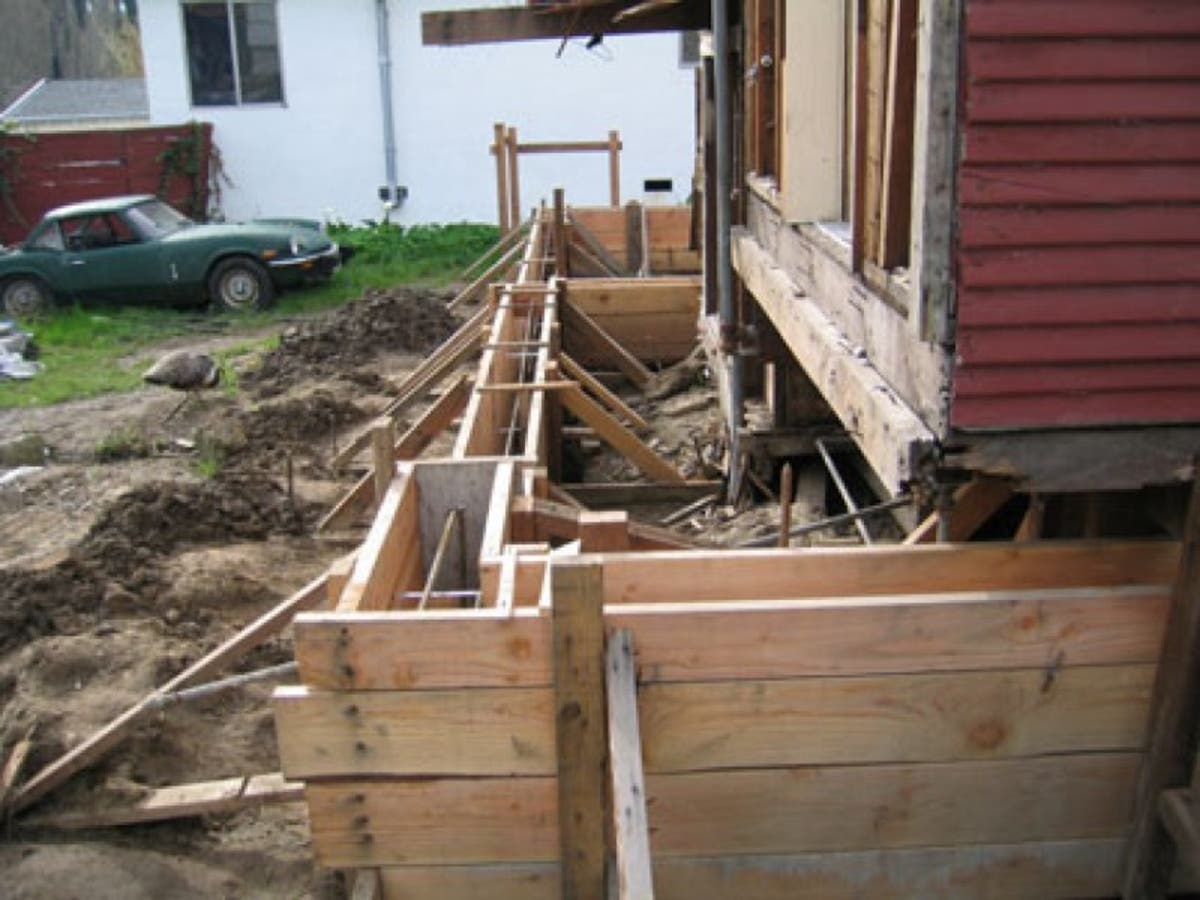
The foundation of a house is affected by many factors, such as the moisture content in the soil, the season, and the presence of trees near the house. The most common reason for damage to the foundation is the weakening of the earth around and below the foundation. It is either because of the drought that causes the soil to dry and contract, pulling at the base, or because of air voids in the soil, due to which the foundation sinks, causing the outer wall to turn, thus undermining the foundation.
The best way to check the safety of the foundation is to call a third party structural engineer, who will advise you on the next steps. For informational purposes, this article will give you the common signs that a home with a bad foundation shows, along with a description of the different repair methods that can be taken.
Foundation repair
Find out what's happening in Dallasfor free with the latest updates from Patch.
Patch is used to fill cracks in the walls. Epoxy resin is used to fill cracks. First, injection ports are attached to the cracks to allow the resin to grasp them easily. After curing, the resin hardens, which further prevents crack growth and moisture penetration. After inserting the epoxy resin, the injection ports are removed with a hammer. Polyurethane foam can also be used to protect from moisture.
Use of Piers
Find out what's happening in Dallasfor free with the latest updates from Patch.
This is a method in which a house with a weak base is supported by inserting steel pillars or piles underneath. It begins by excavating the earth around the foundation, then inserting the piles and filling the well with concrete for strength. Grout is inserted under the pillars to remove the empty spaces and give extra strength. To be stable, the batteries should reach the bedrock or load strata. There are several variants of this process, as explained below.
Push piers
Push pillars is a system in which additional support is given to the house by inserting hydraulic steel pillars underneath. The pillars move the load of unstable soil to more competent soil or rock. This method is used either to stabilize an existing structure, or even raise a structure below, making it a durable solution. It is used when the bedrock or strong layers is near the soil surface.
Steel piers
Steel pillars are used to stabilize or increase homes with weakened foundations. They are driven into the ground, like pushing the pillars, and are crushed by the load of the house. The steel pipes used may be subject to corrosion, misalignment, and bending problems, in addition to being very expensive. It requires less space for the operation.
Slab piers
Slab stacks are used to stabilize or increase concrete foundations that require support. This is a very expensive process, and has high spatial constraints. Plate stacks can be driven by propeller systems or pushed by pier-pusher systems. The method transfers the unstable soil load up into deeper, more solid layers. When breaks the slab, new bearing of the foundation becomes a challenge. The success rate in lifting slabs have been low.
Steel piling
This method is quite similar to the recessed piling method, except that instead of the concrete cylinders, steel piles are used. The weight of the house is again the driving force. This technique is intended to minimize the disadvantages of the recessed piling method, using steel instead of concrete. The time required for this method is shorter because you do not have to wait for concrete consolidation. However, the process may fall prey to corrosion of steel piles, failure to reach the point of refusal, thus compromising stability and incurring high cost of materials. In addition, because of the reduced width of the column, in this case, the stability suffers. A major disadvantage is that when heavy objects in the house are collected.
Crawl space supports
Sagging beams, uneven floor slabs and a small sanitary space may result from weakened soil conditions. To remedy this, metal support beams are installed, which raise the crawlspace to an optimal level. These metal supports can support a lot of weight.
Choice of method depends on the area of damage, the amount of damage, and whether the damage is internal or external. The average cost of foundation repair Dallas in the United States is between $ 5,000 and $ 7,000. If the foundation of your home is still strong, you can ensure that it is always the case by simply looking at the warning signs above. If the basic damage is ignored, then the problem becomes more serious as time goes on, and you may end up bombing more in the future.