Business & Tech
Landmark 9-Story Hospital In Austin To Be Demolished
University Medical Center Brackenridge towering over Interstate 35 and 15th Street for half a century will be razed for redevelopment.


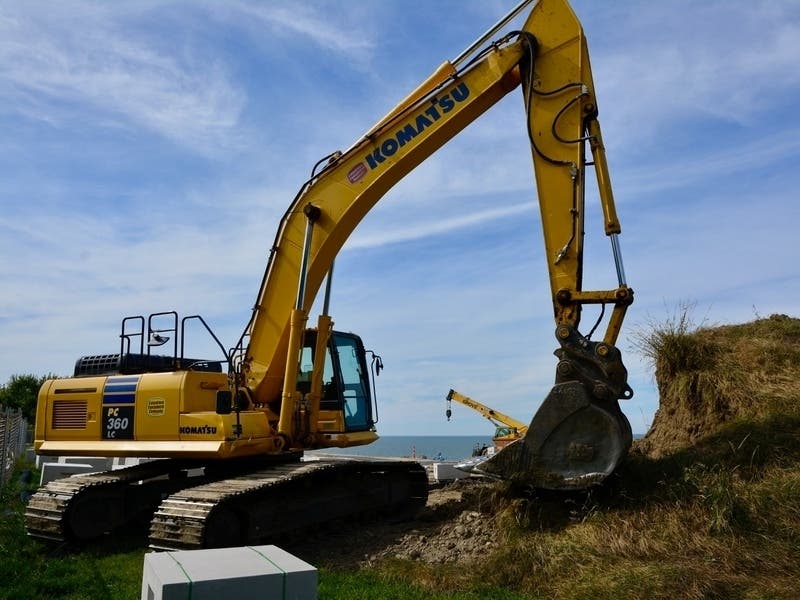
AUSTIN, TX — The nine-story University Medical Center Brackenridge hospital towering above Interstate 35 and 15th Street for half a century will be demolished this summer, officials said.
Closed since May 2017, the hospital sitting on 14.3 acres of land at 601 E. 15th St. will be razed to accommodate a redevelopment of the property, said owner Central Health. The aim is for the redevelopment to generate revenue to fund health care for low-income Travis County residents. Central Health is the Travis County Healthcare District, funding care for about 1 in 7 Travis County residents, or nearly 184,000 people.
“The former hospital tower holds so many special memories for this community,” Dr. Guadalupe Zamora, Central Health Board of Managers chair and long-time Austin physician, said. “We honor people born here, who received life-saving care here, families who said goodbye to loved ones here, and of course the staff, nurses and doctors who worked here. As the tower comes down, it’s making way for a new chapter in health care delivery in our community.”
Find out what's happening in Austinfor free with the latest updates from Patch.
On Wednesday morning, residents touched by the former University Medical Center Brackenridge tower — former patients, nurses, doctors and others — were scheduled to gather and relate their memories before the bulldozer takes to the landmark in starting demolition.
And what memories. Central Health’s downtown property was home to Brackenridge Hospital, the community’s public hospital, for 133 years—from 1884 to 2017. The 9-story tower was constructed about 50-years ago.
Find out what's happening in Austinfor free with the latest updates from Patch.
Expected to attend the gathering in discussing the impact of the site now slated for razing are Austin Mayor Steve Adler; The University of Texas at Austin President Gregory L. Fenves; Central Health President and CEO Mike Geeslin; Dell Seton Medical Center President Christann Vasquez; Central Health Board of Managers Chair Dr. Guadalupe Zamora; the former Chief of Surgery at Brackenridge Dr. Thomas Coopwood; and a former patient who credits the staff at the hospital’s trauma center for saving his life more than 30 years ago after a terrible motorcycle crash.
The Wednesday, May 15, gathering is scheduled from 10 a.m. to 11 a.m. at the top level of the Dell Seton Medical Center parking garage at 15th St. and Red River.
A brief history
The City of Austin transferred ownership of the hospital and property to Central Health in 2004, which included a lease with Ascension Seton to operate Travis County’s safety net hospital. In May 2017, Ascension Seton moved hospital operations across the street to the new Dell Seton Medical Center at The University of Texas (UT), making way for redevelopment of the property.
Officials noted the state-of-the-art Level 1 trauma center was constructed by Ascension Seton without local property tax dollars and serves as the primary teaching hospital for the Dell Medical School at UT, which is also directly across the street from Central Health’s property. Four years ago, Central Health launched a comprehensive community engagement process to help plan for the future of its downtown property, which resulted in a Master Plan guided by three overarching principles: mission, stewardship, and partnership.
"While the community made it clear its first priority was generating revenue for health care, residents also envisioned a mixed-use development with a focus on medical and health innovation, jobs, retail, and more at the heart of what is now the Capital City Innovation District," officials wrote. "Through public meetings, surveys, and facilitated conversations, the community created a vision of a development that would be walkable, sustainably built, and include access to nearby Waller Creek Park."
Mission continues
Mike Geeslin, Central Health president and CEO, said that while the company's execution has shifted, the principles behind the community-developed Master Plan will guide development: “While our execution strategy has shifted, the principles behind the community-developed Master Plan still guide our development,” Geeslin said. “Most importantly, this redevelopment project will help pay for the growing health care needs of the people Central Health serves. We’re expanding access to care, and investing the proceeds from this redevelopment in people’s health.”
The Central Health property is divided into six blocks and is considered prime real estate for companies and organizations focused on health research, innovation, community, and education.
“This is the next milestone in our collaborative plans to transform health and promote new models of clinical care in Austin,” said UT Austin President Gregory L. Fenves. “The creation of UT’s Dell Medical School, the opening of the Dell Seton Medical Center at The University of Texas, and now, working with our partners, the redevelopment of Central Health’s’ property are part of UT’s commitment to serve our community.”
After initially searching for a master developer for the project, Central Health began leasing the property parcel-by-parcel in late 2017 to start generating revenue as quickly as possible. Central Health initially leased two blocks of the property and began preparing the entire property for redevelopment. Central Health is keeping its options open to either continue redeveloping the entire property parcel-by-parcel with one or multiple developers, sell the property, or use a combination of options.
“It would have been at least 15 years until Central Health realized any net revenue if we’d stuck with a master developer strategy, and that just didn’t make sense in terms of funding our mission,”Geeslin said.
Block-by-Block Lease Approach Paying Off
In June 2018, Central Health leased two of the six blocks to a local limited partnership (LP) called the 2033 Higher Education Development Foundation, formerly The 2033 Fund, a Texas-nonprofit corporation. The foundation was created by UT alumnus Sandy Gottesman to support future growth for Dell Med and UT Austin, and has already paid Central Health $2.75 million in base rent.
Once construction begins on Block 164, targeted for June 2019, the foundation owes Central Health another $1.35 million, bringing the total to $4.1 million in Fiscal Year 2019. Over the term of the lease, the foundation will generate more than $460 million for Central Health. Ascension Seton continues to lease the Ascension Clinic Education Center (the original Children’s Hospital of Austin) and the parking garage at 15th and Red River Streets, which serves the new hospital. The remaining buildings on the property are empty and awaiting demolition, including the Professional Office Building which once housed the Central Health-funded CommUnityCare Blackstock Health Center.
Blackstock, home to Dell Med’s Family Residence Program, moved to Central Health’s Southeast Health & Wellness Center in March.
Key Issues Regarding the Central Health Downtown PropertyDemolition
Central Health is planning to demolish all unused buildings and structures, including the former hospital tower, providing future developers with a clean slate to build on. “Central Health researched multiple options to re-purpose the former hospital tower including transforming it into a rehabilitation hospital, hotel, multi-family housing, student housing, creative office space, innovation labs and more,” said Steven Lamp, Vice President of Real Estate and Facilities. “However, the building is obsolete and would have a limited lifespan after it was renovated. By demolishing the out-dated building and fully redeveloping the property, Central Health substantially increases both the land value and the revenue potential.”
Zoning
The Central Health Downtown Property is currently zoned P for public use, which limits density and potential revenue generation. Central Health would like the property rezoned as Central Business District, allowing for high density, resulting in increased land value, development potential, and City property tax revenue.
About Central Health
Central Health is the local public agency that connects Travis County residents with low income to quality health care. We work with a network of partners to eliminate health disparities and reach our vision of Travis County becoming a model healthy community.
Get more local news delivered straight to your inbox. Sign up for free Patch newsletters and alerts.