Neighbor News
The Middle Ground: How Furniture Retailers Are Navigating a Market Split Between Budget and Luxury
Furniture retail is splitting into budget and luxury tiers, forcing mid-market retailers to compete with design and digital strategy.
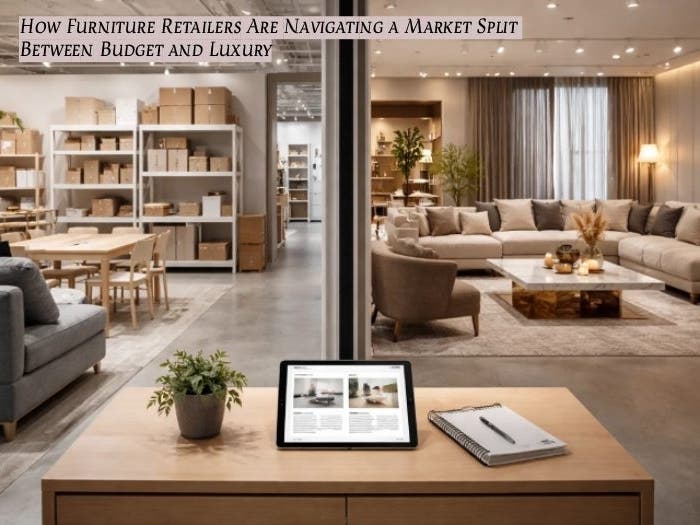
Furniture retail is increasingly becoming a tale of two markets. On one side are low-price giants built around scale and affordability. On the other are high-end design brands that sell furniture as part of a broader lifestyle experience. Between these poles sits the mid-market segment, a space that once defined much of the industry but now faces growing strategic pressure.
Consumers today often move toward either the lowest possible price or a premium design furnitures online for their homes. Retailers positioned in the middle are finding it harder to maintain a clear identity. They must balance design credibility with competitive pricing while managing the operational costs associated with selling large, bulky products.
A Market Pulling in Two Directions
This shift has created a structural squeeze across the furniture sector. Retailers competing on accessibility and design value must continually adjust their offerings to remain relevant to buyers who compare dozens of options online before making a purchase.
Find out what's happening in Houstonfor free with the latest updates from Patch.
Companies such as Sohomod operate squarely in this middle segment. The business sells modern home and office furniture through an e-commerce platform that aggregates products from multiple manufacturers. Its assortment includes items commonly associated with full-home furnishing sofas, sectionals, bedroom sets, dining tables, and office furniture targeting customers who want contemporary design without entering the luxury price bracket.
The challenges facing businesses like Sohomod reflect a broader transformation across the furniture industry.
Find out what's happening in Houstonfor free with the latest updates from Patch.
The Two Poles of Modern Furniture Retail
For decades, furniture retail existed across a broad middle spectrum. Regional stores and national chains typically offered moderately priced furniture designed to appeal to a wide audience. That landscape has gradually changed as global brands and lifestyle retailers reshaped consumer expectations.
At the lower end of the market, scale and cost efficiency dominate. Companies such as IKEA have built global supply chains designed to produce functional furniture at accessible price points. Their business models emphasize flat-pack packaging, standardized designs, and high-volume manufacturing that reduces production and shipping costs.
At the opposite end, brands such as Restoration Hardware have repositioned furniture as part of a premium lifestyle category. These companies focus heavily on curated design collections, showroom experiences, and high-end materials. Their pricing strategies reflect a different set of customer expectations, where furniture becomes an aspirational purchase rather than simply a household necessity.
The result is a retail environment that increasingly rewards businesses operating clearly within one of these two segments. Retailers positioned between affordability and luxury must navigate a narrower path.
Digital Discovery Is Reshaping Buyer Behavior
The evolution of furniture retail is closely tied to the growth of digital shopping behavior. Consumers now begin their furniture search online, browsing images, reviewing specifications, and comparing prices across retailers before deciding where to buy.
Unlike traditional showroom shopping, online discovery allows customers to move quickly between brands, styles, and price ranges. A buyer considering a sectional sofa, for example, might compare a budget option, a mid-range design, and a luxury version within minutes. This level of transparency places additional pressure on retailers that rely on value positioning rather than clear price leadership or luxury branding.
Digital merchandising has therefore become central to furniture retail strategy. Retailers must present detailed product images, clear dimensions, material descriptions, and delivery information to reduce uncertainty around high-value purchases.
For mid-market retailers, the challenge is compounded by consumer expectations around design. Many buyers now look for modern aesthetics, minimalist lines, and coordinated interior styles across their living spaces.
Furniture purchases often extend beyond a single item. Customers may search for complementary pieces such as coffee tables, bedroom furniture, or dining sets to create a cohesive look throughout the home.
Retailers positioned in the middle must deliver both design appeal and price competitiveness, a balance that can be difficult to maintain.
Where Sohomod Fits in the Market
Within this environment, Sohomod represents a model increasingly common in online furniture retail: the multi-brand aggregator.
Rather than manufacturing its own furniture line, the company works with a network of suppliers and manufacturers. Products from various brands are collected into a single digital catalog that customers can browse online. This approach allows the retailer to offer a wide selection of styles and categories without maintaining its own production facilities.
For consumers, the result is a large assortment covering multiple areas of the home. A buyer furnishing a new apartment might purchase a sectional for the living room, a dining table for the kitchen area, and a bedroom set through the same retailer.
This breadth of assortment helps position the company as a full-home furnishing destination rather than a niche retailer focused on a single product category.
At the same time, operating in the mid-market requires careful curation. Retailers must maintain a consistent design direction while accommodating the varied offerings of multiple suppliers. Modern and contemporary aesthetics often dominate these assortments, reflecting broader consumer interest in clean lines and adaptable interior design.
The Operational Reality of Mid-Market Furniture Retail
Beyond product selection and pricing, the furniture business is shaped by operational challenges that differ from many other retail sectors.
Furniture items are large, heavy, and often fragile. Shipping a dining table or sectional sofa requires specialized freight carriers rather than standard parcel delivery networks. Scheduling deliveries often involves coordinating between customers, warehouses, and local carriers to ensure items arrive safely.
Returns can also be complicated. If a customer decides to return a bed frame or dining set, the retailer may face significant reverse-logistics costs that erode already thin margins.
These operational realities affect all furniture retailers but can be particularly challenging for mid-market businesses competing heavily on price. Freight costs, warehousing expenses, and customer service coordination must be carefully managed to maintain profitability.
Multi-brand retailers also face the added complexity of supplier coordination. Each manufacturer may have its own inventory systems, lead times, and shipping processes. Aligning these elements into a consistent customer experience requires strong operational infrastructure.
For companies operating entirely online, customer service plays a critical role. Buyers purchasing furniture without seeing it in person often require additional assistance with product specifications, materials, or delivery timelines.
Design Value as a Competitive Strategy
If the mid-market faces pressure from both ends of the spectrum, design value has become one of its most important strategic tools.
Retailers in this segment often focus on offering modern or contemporary furniture styles that feel visually appealing while remaining accessible in price. The goal is to create an assortment that reflects current interior design trends without reaching luxury price levels.
This strategy is particularly relevant for urban consumers and younger homeowners who want their living spaces to reflect personal style while staying within a practical budget. A modern sectional or minimalist dining table can transform the look of a room without requiring the investment associated with premium designer furniture.
Online retailers are well positioned to present these design options because digital catalogs allow for extensive product imagery and curated collections. Customers browsing online may discover multiple pieces that share a similar design language, encouraging them to furnish several areas of the home through the same retailer.
However, design value alone is rarely enough. Pricing transparency and delivery reliability remain critical factors in converting online browsing into actual purchases.
Strategic Meaning for the Industry
The position occupied by companies like Sohomod highlights an important shift within the furniture industry: the growing role of platform-style retail models.
In this model, the retailer’s primary value lies not in manufacturing furniture but in organizing supply networks, presenting products through digital channels, and managing the logistics that connect suppliers with customers.
The catalog itself becomes a strategic asset. A retailer that aggregates a wide range of furniture—from living room seating to home décor—can serve as a one-stop destination for customers furnishing entire homes.
At the same time, this approach reduces the need for large investments in production infrastructure. Instead, the retailer focuses on supplier partnerships, merchandising strategy, and operational coordination.
The trade-off is that differentiation becomes more challenging. When multiple retailers offer similar product categories, competitive advantage often shifts toward operational efficiency, catalog organization, and customer experience.
Looking Ahead
The future of the mid-market furniture segment will likely depend on how effectively retailers adapt to shifting consumer expectations and economic conditions.
Furniture purchases remain closely tied to housing activity and household spending. When people move into new homes or renovate existing spaces, demand for items such as sofas, dining tables, and bedroom furniture tends to rise. When housing markets slow, discretionary purchases often decline.
Retailers operating in the middle of the market must remain flexible. Maintaining a broad assortment while controlling operational costs will be essential as competition intensifies.
Digital merchandising will also continue to play a larger role. As more consumers research furniture online, retailers must invest in product presentation, accurate information, and reliable delivery coordination.
The structural divide between budget and luxury segments may not disappear, but the middle of the market is unlikely to vanish entirely. Instead, it may evolve toward retailers that combine design accessibility with operational discipline.
Companies like Sohomod illustrate how this balancing act is already unfolding. By aggregating multiple suppliers into a digital platform and focusing on contemporary design categories, such retailers aim to serve customers seeking style and practicality without committing to either extreme of the price spectrum.
Whether that strategy proves sustainable will depend on how effectively mid-market retailers continue to navigate an industry increasingly defined by its two opposing ends.