Community Corner
Millions Of Periodical Cicadas Emerge For Weeks-Long Sex Party In These States
Brood XIV, among the largest of the 17-year cicada broods, may contain rare blue-eyed bug. Or, cicadas may be the entrée for your next meal.


Millions of Brood XIV 17-year periodical cicadas are noisily emerging from their underground homes in 13 Eastern states for what amounts to a weeks-long bug sex party
States experiencing the cacophony of noise as the cicadas emerge are Georgia, Kentucky, Indiana, Massachusetts, Maryland, North Carolina, New Jersey, New York, Ohio, Pennsylvania, Tennessee, Virginia and West Virginia. Cicadamania maps show where the cicadas are in the different states. Cicada Safari keeps a map, too.
Some early bloomers from Brood I, a group of 17-year periodical cicadas, may greet the sunlight ahead of their scheduled 2029 emergence in Tennessee, Virginia and West Virginia, according to Cicadamania.
Find out what's happening in Across Americafor free with the latest updates from Patch.
Typically, it’s safe for cicadas to come out of the ground when the soil 8 inches below the surface gets to 64 degrees Fahrenheit. They emerge in sunny areas first, and then in shady areas.
The cicadas are just coming out in some areas and are approaching death in states farther south. Cicadas live but for a short time above ground, but it seems joyful enough by human standards. However, the cicada sex orgy goes on for only four to six weeks before they all die, their mission to continue their species’ survival complete.
Find out what's happening in Across Americafor free with the latest updates from Patch.
Occasionally, things go awry, and the bugs get into a nasty patch of fungus laced with the same chemical found in psychedelic mushrooms and street amphetamines. They basically turn into “zombie cicadas” and frantically mate even after their genitals fall off.
Among the largest of the 17-year broods, 2025’s Brood XIV periodical cicada emergence could come close in noise and numbers to matching last year’s rare dual cicada emergence of both the 17-year cicadas in Brood XIII, known as the Northern Illinois Brood, and the 13-year cicadas in Brood XIX, the Great Southern Brood. In Illinois, both broods emerged.
Here are some things to know and do to celebrate the arrival of the Brood XIV:
What’s Behind Cicadas’ Evolutionary Strategy?
Scientists can’t fully explain periodic cicadas’ survival strategy. One theory is that their periodic emergence is timed to avoid certain predators. If they emerged every 16 years, for example, predators with two-year life cycles could easily wipe out these ungainly insects, according to Tulane University biologist Keith Clay.
He calls the emergence of periodical cicadas “one of the most unusual biological phenomena on Earth.”
It could be that cicadas, which are lousy flyers and a veritable fast-food buffet for predators like copperheads, have adapted to ensure they don’t all get eaten up, according to some research. Another hypothesis about the synchronized emergence of periodical cicadas is that the forced developmental delay was an adaptation to climate cooling during the ice ages.
Look For Blue-Eyed Cicadas

Most cicadas have red eyes, but some are blue-eyed due to a rare genetic mutation. The color variations are rare, but natural, according to the University of Connecticut.
Last year in Illinois, cicada central for the dual emergence, some kids made sport of searching for blue-eyed bugs. Among them was then 5-year-old Jason Prange, who had been waiting anxiously awaiting the blizzard of cicadas in his suburban Chicago neighborhood.
“He’s been waiting a year, he knew they were coming,” Rick Prange, Jason’s dad, told Patch. “He loves most insects and is on Cloud 9 with all the cicadas we have.”
Jason found not one but two of the blue-eyed mutants, the first on his backyard swing set and the other in his grandmother’s yard after his parents told him to look for them.
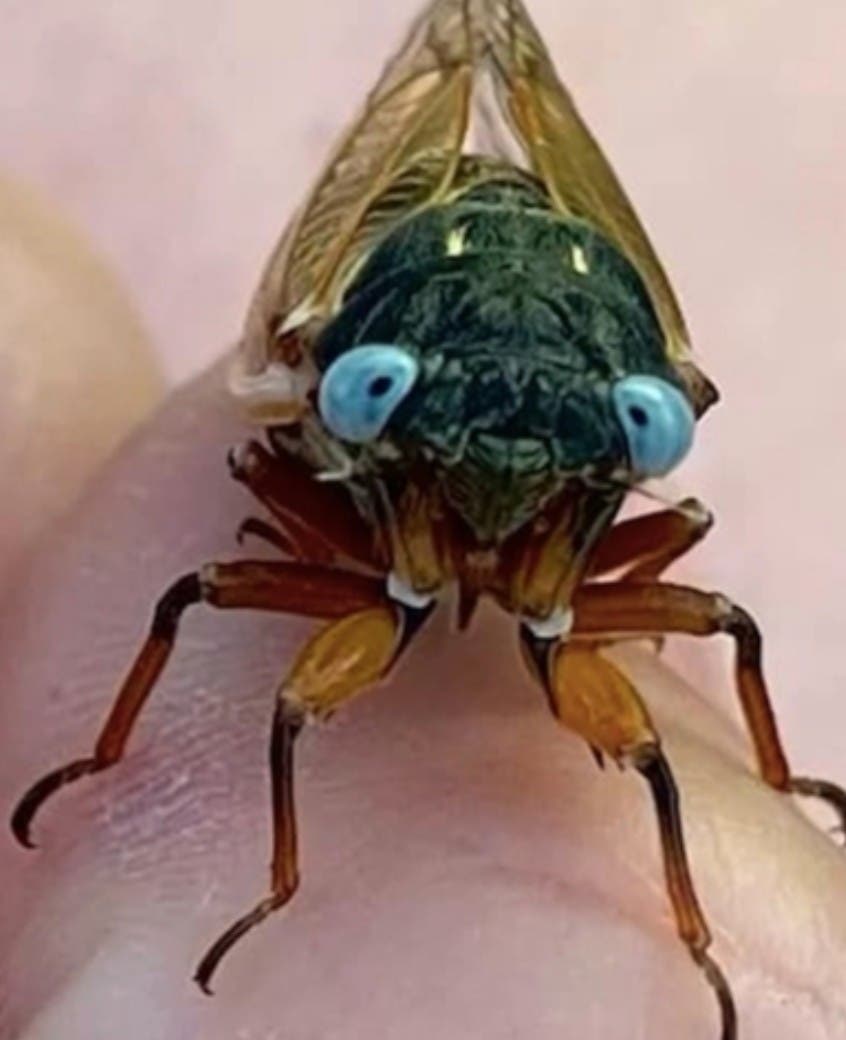
In another instance, Kelly Simkins was collecting cicadas to feed to her reptiles from an Orland, Illinois, grasslands preserve when she spied one of the blue-eyed cicadas.
Even with the dual emergence, cicada expert Gene Kritsky said the chances of finding a blue-eyed cicada were “one in a million.”
Cicada Cuisine A Matter Of Taste
Growing awareness of and perhaps enchantment for cicadas has contributed to a growing interest in cooking and eating the insects. They’re not a lot different from shrimp in many ways beyond the obvious. Both are crustaceans with exoskeletons, but one matures in the sea and the other below the ground.
When prepared, their taste is often compared to that of shrimp. These nutrient-dense bugs are high in protein and low in fat and can be prepared in a variety of ways. They can be fried like shrimp and served with a hot mustard dipping sauce; infused in wine, baked into a cake or pie.
- Cicadas Infest Restaurant Menus: Would You Eat These Dishes?
- Only In Chicago: Cicadas Infused In Malört
Cicada cuisine aficionados recommend looking for freshly hatched cicada first thing in the morning. It’s a good idea to boil them for a few minutes to make them more tender and also to kill any fungus or bacteria cicadas may have contracted during their years underground. Removing their legs and arms is a good idea, too.

How Loud Are They?
Only male cicadas sing, announcing their arrival to female cicadas by using the drum-like structures on their abdomens, called tymbals, to create a deafening chorus in areas where large numbers of these true bugs emerge simultaneously.
Their chirping can reach 100 decibels, as loud as a Harley-Davidson motorcycle with straight pipes or a jackhammer running full bore into concrete or a lawn mower cutting through tall grass.
How Do Periodical And Annual Cicadas Differ?
Periodical cicadas, which have regional broods, emerge en masse every 13 or 17 years, while annual cicadas emerge every year, usually in July and August.
Annual cicadas are typically larger than their periodical cousins, greenish to dark gray, and have black markings. They have green-veined wings and black eyes. Periodical cicadas are smaller, have black bodies, orange-veined wings and, in most cases, red eyes.
Both start underground as nymphs feeding on the roots of trees, and have similar post-emergency life cycles, and their goal during their brief time above ground is the same, to find a mate.
What Species Prey On Cicadas?
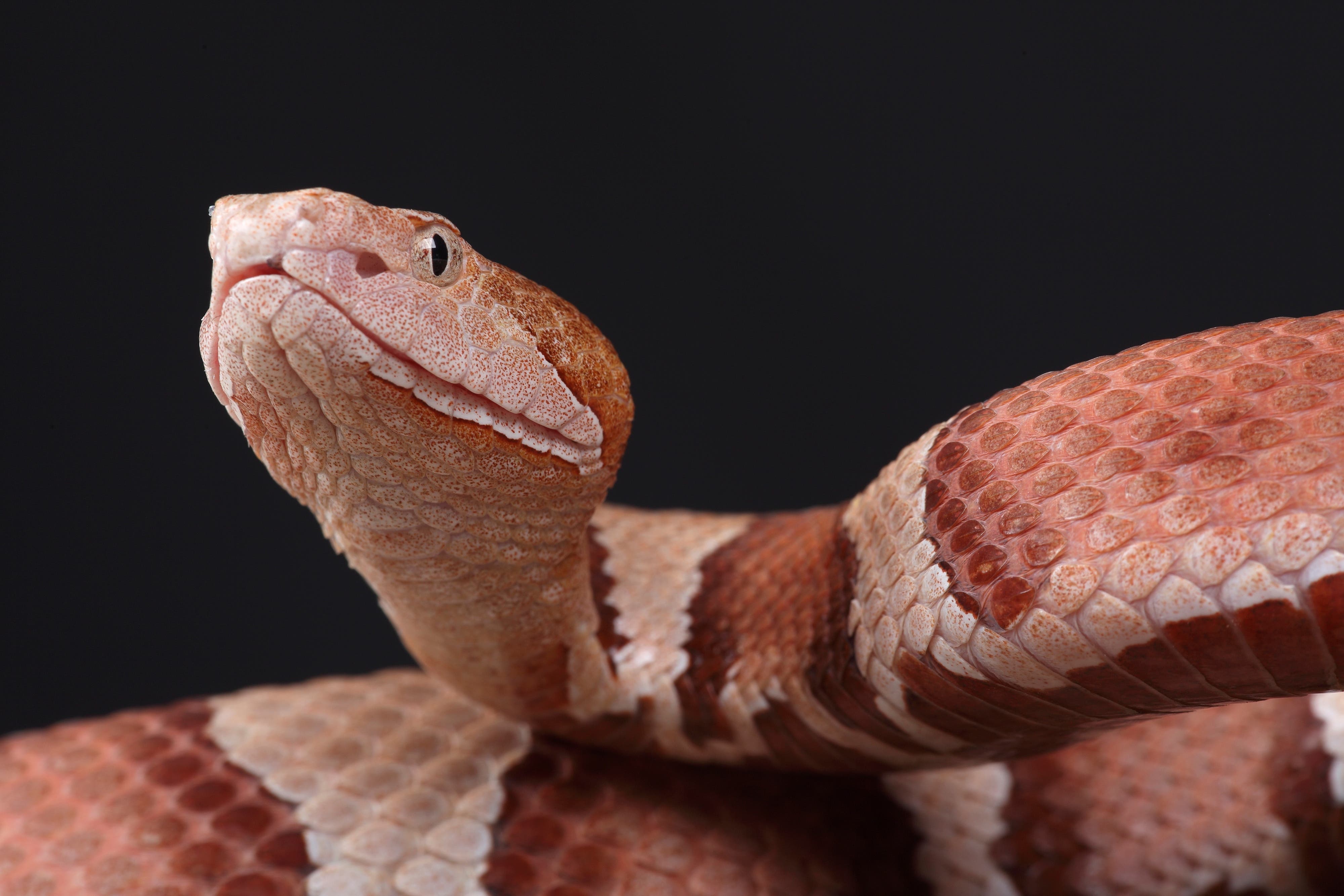
Venomous copperheads love to snack on cicadas.
Cicadas are a “pretty easy snack” for the normally solitary copperheads, Stephen Richter, an Eastern Kentucky University biology professor, told Tulsa World in 2019. He and his students were working with the U.S. Forest Service at Daniel Boone National Forest in Kentucky at the time, and were investigating what the federal agency saw as a potential conflict to campers: the convergence of copperheads coming out of hibernation and emerging cicadas.
Given the opportunity, birds and dogs will eat them, too. There’s no need to worry if your dog eats and then hacks up a cicada. The biggest problem is the exoskeletons may be a tad hard for pets to digest, so they may have upset tummies, according to the Pet Poison Helpline.
Get more local news delivered straight to your inbox. Sign up for free Patch newsletters and alerts.