Health & Fitness
Infection Rates Rise 'Steadily' Among Children In U.S.
The latest on coronavirus in the U.S.: Pandemic pummels public transit; Romney offers criticism; CDC issues new guidance.


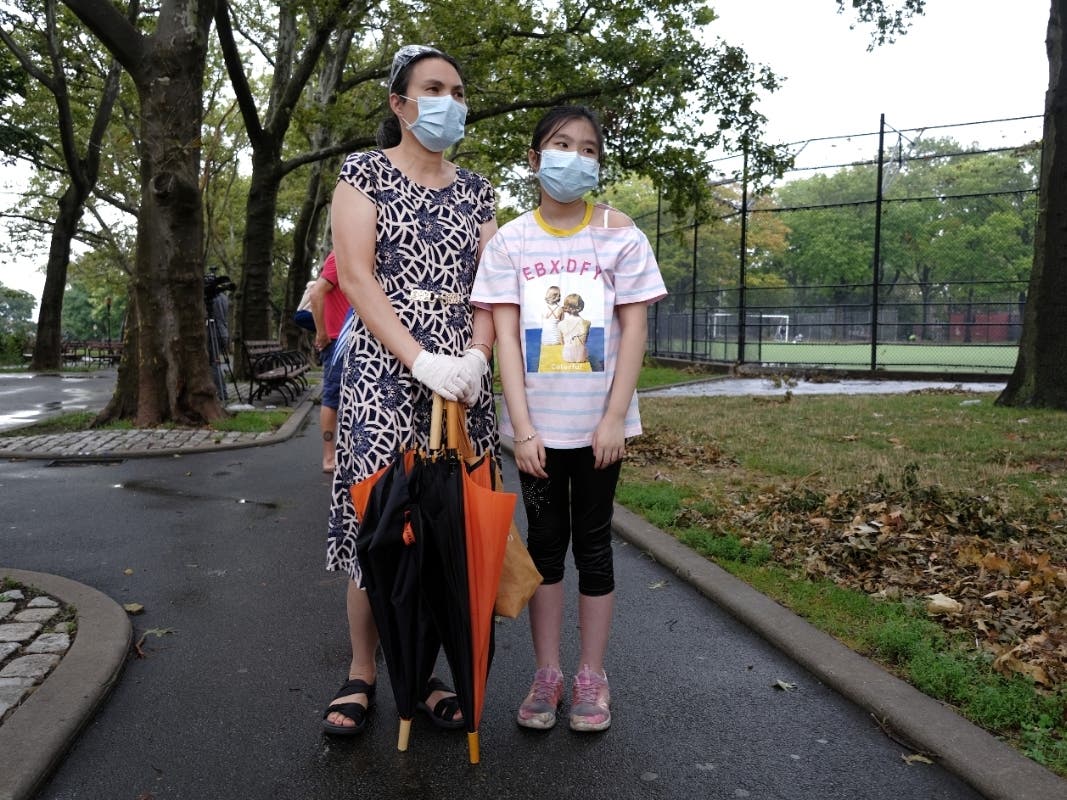
ACROSS AMERICA — Coronavirus infection rates among children in the United States have risen "steadily" since the COVID-19 pandemic began in March, new guidance from the Centers for Disease Control and Prevention states. The CDC said school closures and other community mitigation efforts that began immediately likely contributed to low infection rates among those 17 and under in the spring, the Washington Post reports. But from March until July, case numbers among the younger generation have continued to rise.
But as reported daily coronavirus tests overall trended downward for much of the last two weeks, the U.S. Food and Drug Administration gave emergency authorization this weekend to a new saliva test designed to detect the coronavirus.
The new test, SalivaDirect, was developed by researchers at Yale University with partial funding coming from the N.B.A. and the National Basketball Players Association, the university announced on Saturday in a news release.
Find out what's happening in Across Americafor free with the latest updates from Patch.
The method is still being validated through testing of asymptomatic N.B.A. players and staff members, the university said. Researchers said they hoped labs could administer the test for around $10 per sample.
SalivaDirect is not the first of its kind to secure the FDA backing. According to the New York Times, a lab affiliated with Rutgers University received emergency authorization in May for a similar test.
Find out what's happening in Across Americafor free with the latest updates from Patch.
Meanwhile, the country is falling short in administering coronavirus tests. For the first time since the onset of the pandemic, the number of known tests conducted each day has fallen.
Reported daily tests trended downward for much of the last two weeks, essentially stalling the nation’s testing response. About 733,000 people have been tested each day this month on average, down from nearly 750,000 in July, according to the Covid Tracking Project. The seven-day test average dropped to 709,000 on Monday, the lowest in nearly a month, before ticking upward again at week’s end.
The trend seems to fall in line with comments made this week by Centers for Disease Control and Prevention Director Robert Redfield, who said during an interview with WebMD the United States’ lack of investment in its public health infrastructure has left the nation “unprepared” for the "greatest public health crisis" in a century.
Republican Sen. Mitt Romney joined in on the criticism, offering a rare rebuke of the Trump administration’s coronavirus response. Romney said the federal government dismissed the virus’s threat and failed to take charge, the Washington Post reported.
“Short term, I think it’s fair to say we really have not distinguished ourselves in a positive way by how we responded to the crisis when it was upon us,” Romney said in a video interview with the Sutherland Institute. “And the proof of the pudding of that is simply that we have 5 percent of the world’s population but 25 percent of the world’s deaths due to covid-19.”
“And there’s no way to spin that in a positive light,” Romney said.
Finally, ridership on top city public transit systems has declined 70 to 90 percent during the pandemic, according to a New York Times report, and sales tax revenue, which fuels many transit agency budgets, has plummeted due to the strained economy.
Ultimately, public transit budgets are taking major hits in cities across the United States, causing passengers to endure long waits, reduced service and crowded trains or buses.

Officials on Friday reported at least 1,170 new coronavirus deaths and 59,441 new cases the day prior, according to a New York Times database.
Over the past week, there have been an average of 53,083 cases per day, a decrease of 17 percent from the average two weeks earlier.
In recently updated guidance, the CDC advises that people who have recovered from the coronavirus do not need to quarantine or seek testing for three months after they have recuperated.
As of Saturday, 37 states remain above the positive testing rate recommended by the World Health Organization to safely reopen, a two-state increase from Friday. To safely reopen, WHO recommends states remain at 5 percent or lower for at least 14 days.
Follow live coronavirus updates at The New York Times or Washington Post.
Read More From Across America:
Get more local news delivered straight to your inbox. Sign up for free Patch newsletters and alerts.


![Dogs Are Family, But They May Not Be Welcome Everywhere [The Question]](https://patch.com/img/cdn20/shutterstock/790386/20261016/012721/styles/patch_image/public/shutterstock-2270425569___16132539536.jpg)