Politics & Government
Trump Potty Mouth: How News Outlets Handled Vulgarity
Some news groups used the s---hole slur attributed to President Trump, saying it reflects his core values. Others sanitized it. Here's why.


WASHINGTON, DC — When the leader of the free world evokes a vulgarity to describe entire nations, it can stir up a certain kind of storm. The debate over whether to use the word reached into newsrooms across the country. It’s news, yes, but how to handle it under existing style guides left many news organizations departing from long-standing policies.
President Trump on Thursday reportedly used the s---hole vulgarity more commonly heard in junior high locker rooms than in official meetings on Capitol Hill. Trump was meeting with lawmakers about immigration policies and the Deferred Action Childhood Arrivals Program, and asked why the United States should accept more immigrants from Haiti, El Salvador and African nations than from countries like Norway.
Trump has since denied using the salty language.
Find out what's happening in White Housefor free with the latest updates from Patch.
“The language used by me at the DACA meeting was tough, but this was not the language used. What was really tough was the outlandish proposal made — a big setback for DACA!” Trump said in one tweet.
In another, he said, “Never said anything derogatory about Haitians other than Haiti is, obviously, a very poor and troubled country. Never said “take them out.” Made up by Dems. I have a wonderful relationship with Haitians. Probably should record future meetings - unfortunately, no trust!
Find out what's happening in White Housefor free with the latest updates from Patch.
The language was extraordinary, and news outlets differed greatly on whether to defer to decorum or fully quote it. Some danced around the word, putting in asterisks and dashes to disguise the word.
The word appeared nine times on The Washington Post's website Friday. “When the president says it, we’ll use it verbatim. That’s our policy,” Martin Baron, The Post’s executive editor, said of the newspaper’s decision to use it in both headlines and text. “We discussed it, quickly, but there was no debate.”
The New York Times used the word in text, but not in the headline. “It seemed pretty clear to all of us that we should quote the language directly, not paraphrase it,” said Phil Corbett, The Times’ associate managing editor for standards, “We wanted to be sure readers would fully understand what the story was about.”
He added: “We are still inclined to be somewhat restrained — for instance, by avoiding the actual vulgarities in headlines.”
The Pittsburgh Post-Gazette used the word in an AP story, but then removed it at the request of publisher John Robinson Block.
At Patch, we didn’t deviate from our policy of restraint. We didn’t use the word in the headline and used an edited form, “s---hole,” in our story text. Our reasoning is that we’re a family friendly website geared to appeal to people of all ages, and we don’t feel the need to be crass despite what the president has to say. (Let’s be honest: Is there any real doubt about what s---hole means? Yet somehow, the edited form seems less offensive but every bit as accurate.)
Among television networks, where the word reaches the ears of young viewers, the struggle was different. Both CNN and MSNBC spelled it out in full in their broadcasts and websites.
The debate over whether to use the word unfolded on CNN. Citing his own Italian and Irish heritage, anchor Phil Mudd used the expletive. “We’ve learned too many lessons, and history will tell you, if you don’t read history, you’ll repeat ’em,” Mudd said. “That’s what our president did for us today. I am not proud.”
His colleague, “Situation Room” Wolf Blitzer, was hesitant to use the word. But Jim Acosta, CNN’s chief White House correspondent, used it and said news organizations should quote it entirety because Trump “seems to harbor racist feelings about people of color from other parts of the world.”
NBC’s Lester Holt opened Thursday’s newscast with a warning that “this may not be appropriate for some of our younger viewers.” On “ABC World News Tonight,” anchor David Muir said only that the president used “a profanity we won’t repeat.” Along with CBS, ABC just used the word “blank.”
Trump’s use of the word was swiftly condemned by world leaders.
Haiti President Jovenel Moise said in a statement the term was a “racist” depiction of Haiti.
"The Haitian government condemns in the strongest terms these abhorrent and obnoxious remarks which, if proven, reflect a totally erroneous and racist view of the Haitian community and its contribution to the United States," the statement said.
The African Union continental body told The Associated Press it was "frankly alarmed" by the comments.
"Given the historical reality of how many Africans arrived in the United States as slaves, this statement flies in the face of all accepted behavior and practice," spokeswoman Ebba Kalondo said. Botswana's government called Trump's comment "reprehensible and racist," and said they summoned the U.S. ambassador to clarify whether the United States regards Botswana as a "s---hole."
Rupert Colville, spokesman for the U.N. human rights office, called Trump's comments "shocking and shameful" and said "I'm sorry, but there's no other word one can use but racist."
Democratic Sen. Dick Durbin of Illinois, who was in the room with the president at the time of the conversation, went on MSNBC and said Trump had tweeted falsehoods.
Trump said "things which were hate filled, vile and racist. He used those words," Durbin claimed. "The president started tweeting this morning, denying that he used those words. It is not true. He said these hate-filled things. And he said them repeatedly."
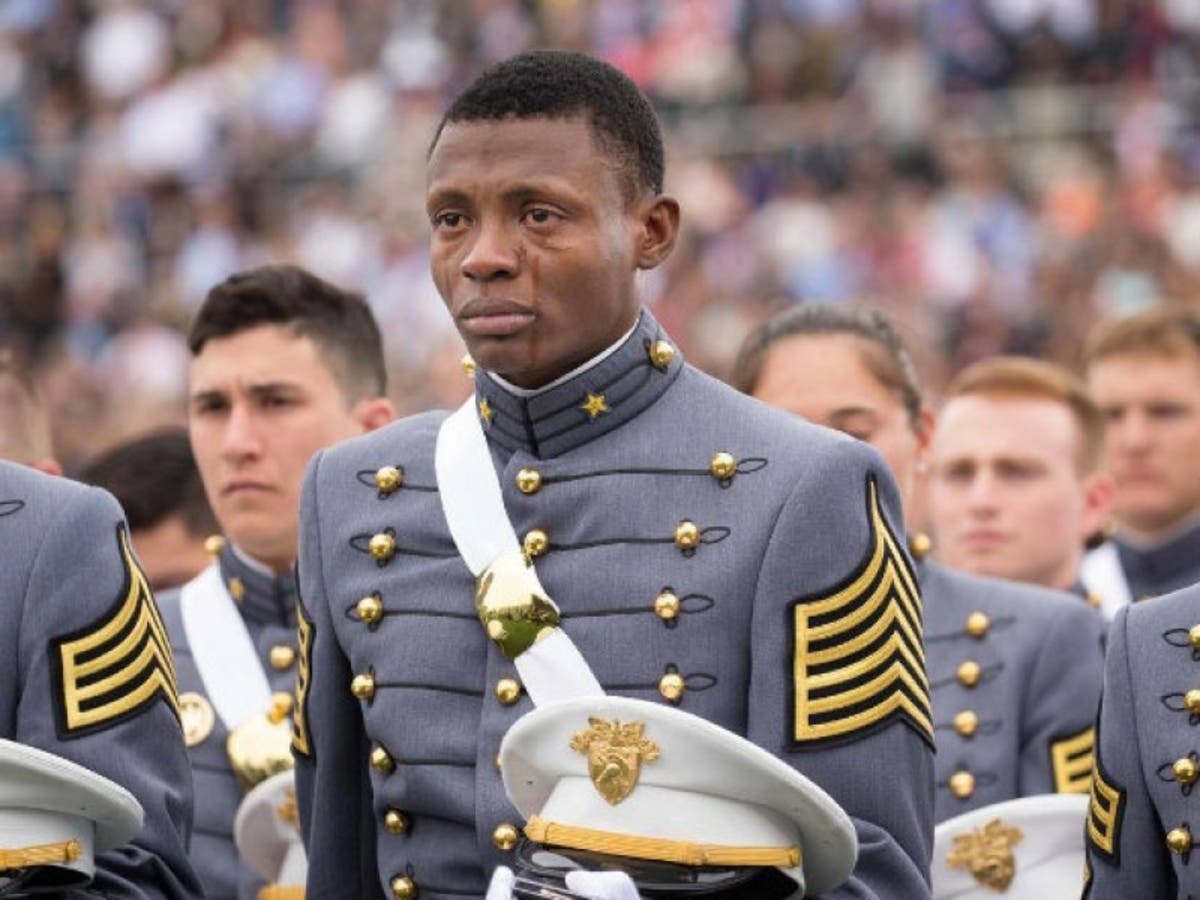
Politics aside, immigrants who come to the United States and succeed have provided great moments of national pride — perhaps none more stirring than in 2016, when Haitian immigrant Alix Idrache, tears streaming down his face, was pictured at his graduation from West Point in what became a widely circulated photo.
"I am from Haiti and never did I imagine that such honor would be one day bestowed on me," he wrote on Instagram. "I could not help but be flooded with emotions knowing that I will be leading these men and women who are willing to give their all to preserve what we value as the American way of life. To me, that is the greatest honor."
Also See: Trump Pushes Back On Vulgar Comments About Haiti
Patch’s Dan Hampton contributed to this report.
Photo: Cadet Alix Idrache at West Point graduation by U.S. Army Staff Sgt. Vito T. Bryant
Get more local news delivered straight to your inbox. Sign up for free Patch newsletters and alerts.