Traffic & Transit
Metro Ridership Outpacing Forecast, Still Far Below Pre-COVID Levels
Metro ridership by rail and bus is outpacing projections by 40 percent, but ridership is still far below pre-pandemic levels, WMATA said.


VIRGINIA/DC — Metro ridership by rail and bus is outpacing projections by 40 percent, but ridership is still far below pre-pandemic levels, according to the Washington Metropolitan Area Transit Authority’s latest quarterly performance report, released Monday.
Metro had forecast ridership on both rail and bus would total 71.6 million people during the first three quarters of fiscal year 2022, which began in July 2021. The actual number of riders on rail and bus during the first three quarters totaled 99.7 million people, according to WMATA.
“These numbers are encouraging and welcome news for our regional mobility and economy,” WMATA Board Chair Paul Smedberg said in a statement. “While the Board’s budget assumed conservative ridership forecasts in the interest of fiscal responsibility, we are delighted that people are returning to the system more often than expected.”
Find out what's happening in Arlingtonfor free with the latest updates from Patch.
However, the total number of riders during the first three quarters of fiscal year 2022 was more than 120 million below the period from July 1, 2019, to March 30, 2020, when ridership totaled 220.9 million people, according to WMATA.
Metrobus leads the way for passengers during the first three quarters of fiscal year 2022, accounting for 60 percent of overall Metro ridership, compared to about 40 percent for rail.
Find out what's happening in Arlingtonfor free with the latest updates from Patch.
Metro attributed the increased numbers to people returning to offices, higher gas prices, the return of large-scale events and a boost in tourism in D.C. The Cherry Blossom Festival may have also helped to increase ridership numbers in March.
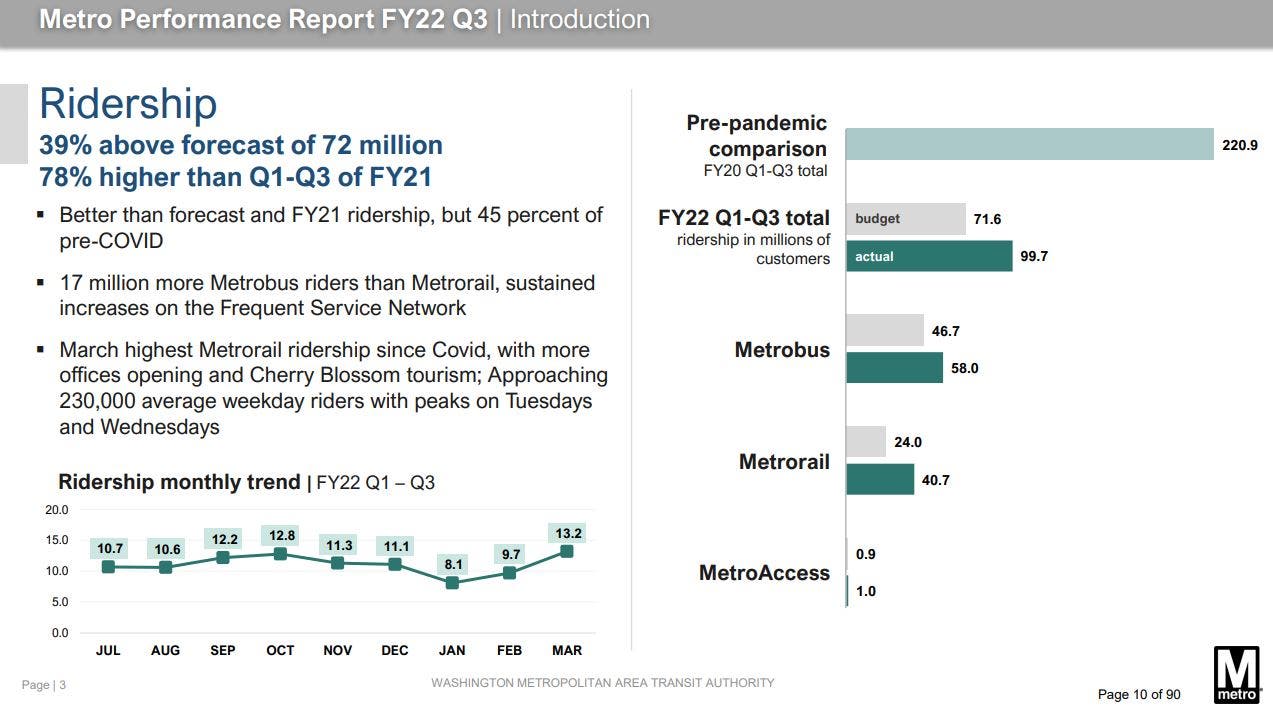
Ridership continued to climb in April, reaching as high as 300,000 on Metrobus.
“People returning to Metro reduces traffic, combats climate change, and delivers clients, customers and employees to federal workplaces and local businesses,” Paul Wiedefeld, general manager and CEO of Metro, said in a statement. “As the region transitions out of the pandemic and our services continue to improve this summer, we expect more residents and visitors will choose Metro.”
Metro said the higher-than-forecast ridership numbers are good news for its financial outlook for the fiscal year ending June 30. More riders mean more revenue from advertisers, who will pay more as the Metro’s customer base returns close to previous levels.
Advertising revenue sold in the system has more than doubled and is $2 million ahead of the fiscal year 2021 budget, Metro said.
The changing ridership levels are happening as WMATA develops a plan for the eventual return of Metro’s 7000-series rail cars, which have been removed from service since a Blue Line train derailed last October. Sixty-percent of Metro's fleet of trains has been removed amid a federal safety investigation.
Metro is the nation’s third-largest rail transit system, with a fleet of about 1,200 rail cars.
The Silver Line extension of the Metrorail to Dulles International Airport and other stops in Loudoun County also has been delayed until at least late summer.
Local congressional representatives, in a letter to the Metropolitan Washington Airports Authority, Reps. Jennifer Wexton (D-10th), Gerald Connolly (D-11th) and Don Beyer (D-8th) cited disappointment in the delay.
Get more local news delivered straight to your inbox. Sign up for free Patch newsletters and alerts.