Community Corner
Metro Silver Line Derailment: Tracks Were in Horrendous Shape, Investigators Find
A new report from the National Transportation Safety Board found "many defective crossties" near where the train derailed this summer.


The derailment of a Metro Silver Line train at the East Falls Church station this summer resulted in an investigation by the National Transportation Safety Board, and the agency has now released a damning report that indicates the tracks where the derailment occurred were in extremely poor shape thanks to bad management at Metro.
NTSB blamed the derailment on deteriorated crossties, causing the tracks to become nearly 2 inches wider than acceptable by WMATA standards, the Dec. 1 report states (PDF).
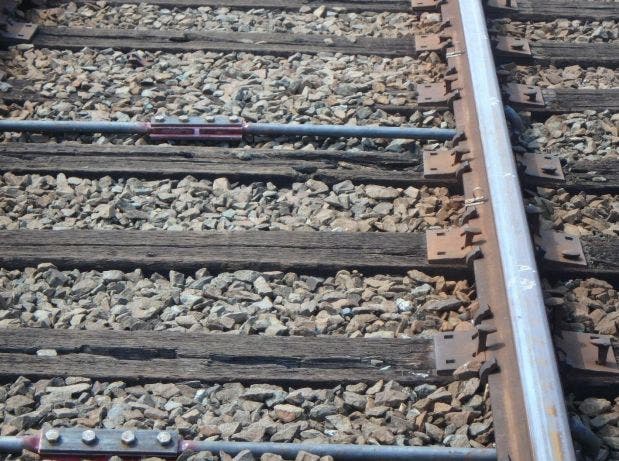
"Investigators also identified many defective crossties in the area of the derailment," it adds. "WMATA track standards require there be no more than 120 inches between nondefective rail fasteners for tracks of similar construction; however, in this accident area, investigators noted over 400 inches of track with no effective rail fasteners because of deteriorated crossties."
Find out what's happening in Arlingtonfor free with the latest updates from Patch.
While WMATA has standards to deal with defective crossties, there's no indication that the agency made any effort at all to do so, NTSB further stated.
Of the 18 crossties in 40 feet of track near the derailment, a whopping 16 of them weren't in compliance with WMATA standards, meaning that there was more than 30 feet of totally unsupported rail that passengers were unwittingly riding on. The photo above is from the NTSB report and shows the state of the crossties at the accident location.
Find out what's happening in Arlingtonfor free with the latest updates from Patch.
The fact that the crossties were in such terrible condition is a sign of poor management of the system, the report notes.
"Crossties do not deteriorate in a matter of days—to the extent they are unable to hold fasteners, restrict lateral rail movement, or maintain gage—but do so over time," the NTSB said. "The useful service life of crossties varies greatly depending on track geometry characteristics, rail vehicle interaction, and equipment axle loads exerted on the track. For this reason, proper inspection of crossties requires visual inspection and performance-based measuring with accurate records to identify these changes. These areas of noncompliance with WMATA safety standards were identified during WMATA track inspections, however no remedial action was taken at that time."
NTSB didn't mince words on Metro's performance over the past 36 years, which has involved 14 accident investigations and 18 fatalities.
"Many of the NTSB accident investigations determined that WMATA’s inadequate management of its operation contributed to the events," the report states.
Image via NTSB
Get more local news delivered straight to your inbox. Sign up for free Patch newsletters and alerts.