Community Corner
Hurricane Irma Sinks Chantilly Man's Yacht, But Not 'Charter Captain' Dream
David Green has been making detailed plans for four years to become a Caribbean charter captain. But in the last week it "all evaporated."


CHANTILLY, VA — David Green, of Chantilly, Virginia, was finally ready to pursue a lifelong dream of becoming a charter boat captain. At 58, he was ready to retire from his job as a computer systems engineer. He bought a plane ticket and planned to fly down to the Caribbean in November to embark on a new adventure.
But mother nature had other plans, and now that dream, which has been pushed off for more than two decades, is in another holding pattern.
Green first dreamed of being a charter boat captain while in the Army more than 30 years ago. Green, then 25, was stationed somewhere with a "very bucolic" bay view and watched fishing boats and scuba diving charter boats float back and forth. (For more information on Hurricane Irma's aftermath and other Chantilly stories, subscribe to Patch to receive daily newsletters and breaking news alerts. If you have an iPhone, click here to get the free Patch iPhone app.)
Find out what's happening in Chantillyfor free with the latest updates from Patch.
"I thought rather than doing what I am doing, that’s what I would love to do," Green told Patch.
He was a trained scuba diver who could put that skill to better use, but other obligations meant he couldn't pursue that goal.
Find out what's happening in Chantillyfor free with the latest updates from Patch.
A graduate of West Point, he went into the Army for 10 years. Green met his wife in Germany (she too was in the Army) and both were sent to The Gulf War. They eventually had kids and a mortgage. Life was happening, so being a boat captain would have to wait.
Green's ambitious plans didn’t really begin to pick up steam until about four or five years ago when he read Joshua Slocum's book "Sailing Alone Around the World."
"It just intrigued me so I started sailing," Green said. "I got into a sailing club, I became a racing captain, and I just thought, here it is, this is what I want to do."
He went to various boat shows, and one day a yacht company worker called him.
"I can’t believe I didn’t hang up on her immediately, but ultimately the long and the short of it was that she convinced me that I needed to buy a yacht," Green said.
She offered a compelling case. Green could use the yacht down the road for a lucrative business. It would help him with his immediate tax situation and help him with a long-term third career that he could keep doing well into his old age.
"Or not. Or just be a boat owner. So anyway, I wound up doing that," Green said.
He bought the yacht and began working toward getting the requisite qualifications to become a boat captain — all of which "kind of came together in the last six months."
Green finally had what he needed. No one was dependent on him for their "subsistence and existence" and he had the means to put resources — and time — into becoming a charter captain. He would live aboard his boat and be a "viable economic resource in the Caribbean." The yacht would become a destination that people would want to come and see. So he gave his employer six months notice of his plans to retire and prepared to hit the warm, azure Caribbean waters.
"It was all ready for me. And I had a plane ticket which I bought months ago. I was all ready to leave this geographic area, pull up my stakes and relocate down to the Caribbean and start that business immediately," Green said.
It was set to begin in November with a St. Thomas brokers yacht show. Green hoped to be placed into a fleet and to start getting bookings.
That is, until Irma began swirling in the Atlantic Ocean. Irma was a tropical storm on Aug. 30, The Associated Press reported, and just 30 hours later grew to a major Category 3 hurricane. By Sept. 4 it had intensified into a Category 4, with 130 mph winds. It became a Category 5 storm the following day with top winds of 185 mph, the highest ever recorded in the open Atlantic. Irma held those wind speeds for 37 hours — a world record for tropical cyclones — and ultimately spent 78 hours as a Category 5, the longest in 85 years for Atlantic hurricanes.
Green's yacht, the Mon Amie — French for "my friend" — sat 1,400 miles away in Paraquita Bay, a popular "hurricane hole" off Tortola, the largest of the British Virgin Islands. Boats are kept there for safe harbor when storms pass.
The company tasked with watching over Green's boat followed an established hurricane plan, tying the Mon Amie to other boats on all sides and screwing her with mooring lines into the ocean floor. Green couldn't simply fly to the island and sail the vessel to safety, because not only was it secured, his insurance wouldn't cover any damages if it wasn't properly stored in accordance with the hurricane plan.
As the vicious, 400-mile-wide storm inched closer and closer to the island, Green felt "helpless."
The storm smashed into the Caribbean — Antigua, St. Martin, St. Barts, Anguilla, the U.S. Virgin Islands, and, yes, the British Virgin Islands, among others. The once lush tropical playgrounds became blasted-out landscapes with splintered trees and crumpled sheet metal. When Irma finally left, 38 people were killed in the Caribbean and countless more lives were shattered.
Green said he knew it would take days or weeks before he learned the fate of his boat. Charter staff would be more worried about their own family's safety and rightly so, he said. Friends sent Green before-and-after photos of the ravaged bay that were circulating the internet. Eventually, he got some news.
"It was almost a week exactly before I found out the status of her. It was not good," Green said.
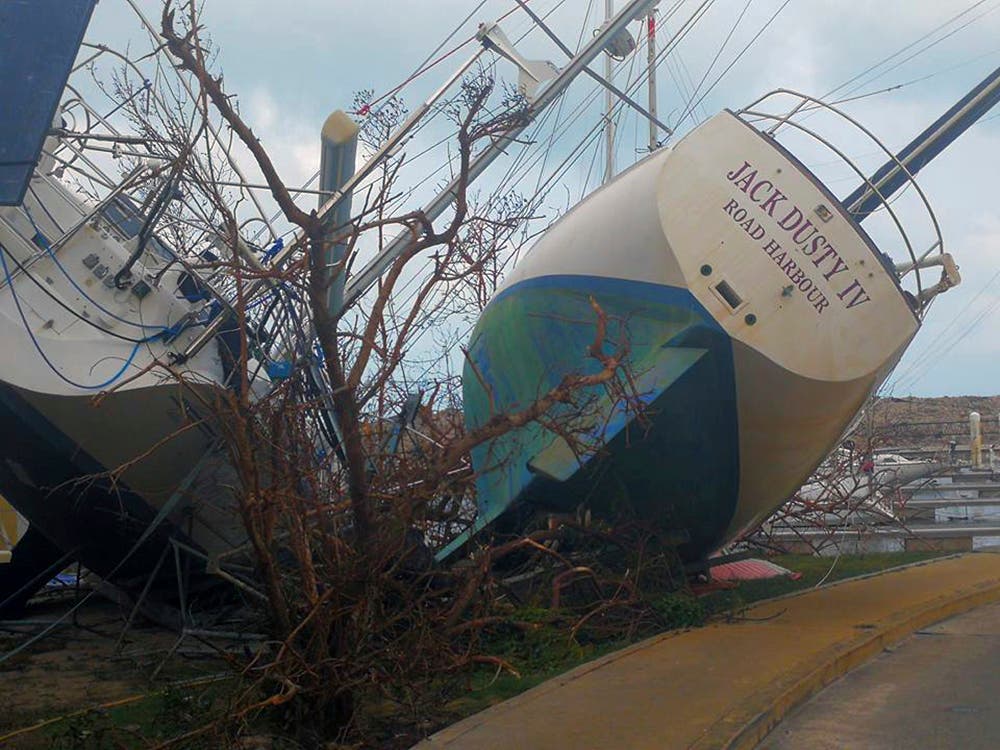
The Mon Amie was indeed in the wreckage somewhere, but staff members couldn't identify her.
"So all that’s gone. I mean, I literally have been talking to these people and making detailed plans for four years for doing this. And in the last week, it’s all evaporated because my boat is submerged," Green said. "That’s the one word that the owner of the charter company that I’m with down there communicated to me. Name of my boat, submerged."
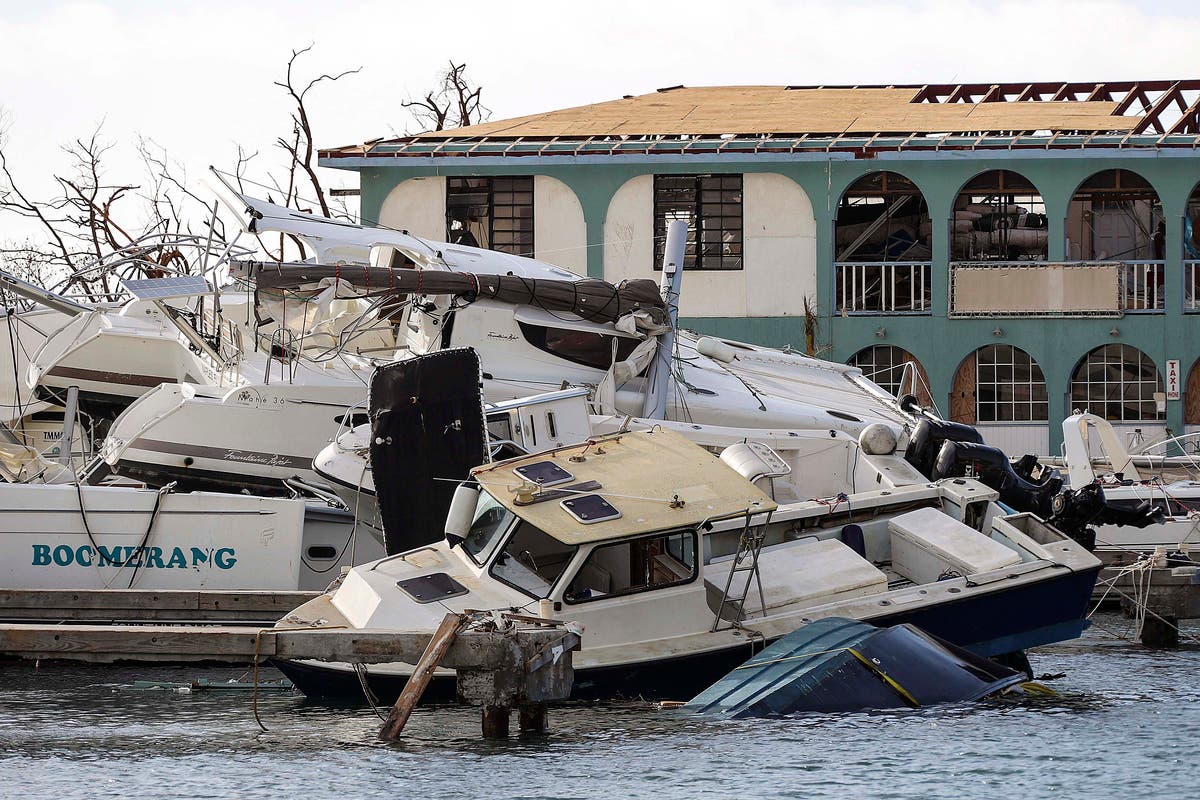
The Mon Amie is insured, but Green said he still has to pay the mortgage on a boat that isn't making any money. He hopes his insurance will allow him to break even or get a brand new similar boat.
"So many people can’t laugh at their situation. It’s impossible for me to do anything but try to keep my perspective. It’s just stuff. It was a lot of stuff. My dreams can be redreamt [sic] but other peoples' futures have been entirely lost. And I’m trying to keep that in perspective."
Once again, Green has hit the pause button on his dream. His employer agreed to let him keep working while he figures out where to go from here. It'll could be a year or longer before he can try again, he said, but he knows it could've been much, much worse — and was for everyone who lived in the Caribbean.
"The most significant part of this isn’t the well-heeled yacht owners, it's the island people who barely had anything to begin with and have less than that now," Green said. "They’re trying to scrape some sort of survival plan together. Whereas the boat owners are trying to scrape some sort of insurance plan together. Everyone’s hearts have got to go out to the people of the island who are suffering so much more. That's where all the recovery efforts and thoughts and prayers need to go."
This version has been corrected to reflect Green was in the military for 10 years, not five as previously reported. Being a West Point graduate, his obligation was five years.
Photo credit: David Green
Get more local news delivered straight to your inbox. Sign up for free Patch newsletters and alerts.