September is National Recovery Month, which celebrates people in recovery and promotes the message that recovery is possible.
By Caitlin Acosta
Find out what's happening in Falls Churchfor free with the latest updates from Patch.
At age 20 I decided one night to accept help for my drug and alcohol addictions. That decision would forever change my life.
Four and a half years later, I continue to share my story with other young people struggling with their own addictions. Doing so not only keeps me sober, but is my way of showing gratitude to those who helped me along the way.
Find out what's happening in Falls Churchfor free with the latest updates from Patch.
I started to first think about alcohol and drugs when I was about 10 years old. Around this time, my aunt Sarah, homeless and estranged from our family, was found dead from a drug overdose at the age of 27. I knew that Sarah struggled with addiction, a disease my family had been fighting alongside her for many years. When Sarah died, it seemed the battle had been lost. I swore I would never do that to my family.
Starting in middle school my friends and I had started to experiment with alcohol and occasionally marijuana. In my mind, this was completely different than the hard street drugs that had killed my aunt. I would never touch that stuff. But as the years went by I started using drugs and alcohol regularly to “deal” with life. I felt so overwhelmed by the future and my lack of direction that by 18, I somehow became a daily drinker and was experimenting with other illegal drugs. Then I tried prescription painkillers, and soon my life turned into a daily mad scramble to support my $150 a day habit of alcohol, OxyContin and Xanax. My new full-time job was getting high, and the rest of my life became almost nonexistent.
As my life and behavior spun more and more out of control, it didn’t occur to me that again my family and I were fighting a battle against addiction. My family confronted me, but I wrote them off as hysterical over-reactors. I was 20 years old, how bad could it be? I sometimes suspected pretty bad, but immediately assured myself it would be okay. I would fix it myself. I didn’t need help. Things had gotten out of hand, but I would sort it out. These were the lies I convinced myself of. I couldn’t see my life had become a nightmare.
But on a Wednesday night in April of 2009, by some divine intervention, I saw myself for who I really was. I was incapable of believing all the usual lies I told myself, and I knew in my heart that I was in no better shape than my aunt Sarah had been. I was not going to be able to “fix it myself.” If I didn’t accept help, I would die this way. This new truth stuck with me the next day and every day after.
I admitted to my family how bad things really were. They supported me while I went through a two-week detox and started regularly attending 12 step meetings. I sat in rooms full of strangers, admitted I was an alcoholic and an addict, that I was scared and that I needed all the help I could get. Those strangers soon became my friends, and they provided me with more love, kindness, and patience than I could ever repay. The more I was open to their help, the more I received. And the more I received, the more comfortable I felt living in my own skin, without any pills or a bottle. I started to feel like a normal girl, doing normal things instead of running from life.
In an effort to pay back the gift of recovery I received, I reached out to other young people, got involved in my community, started more 12 step meetings, and did volunteer work.
Giving back to the people who saved my life is one of the most fulfilling things for me today. I was given a new life -- I went back to school, bought a car, met a great guy, moved into a new house, and started my own business. I’ve repaired relationships with my family, and one of the greatest joys I know today is that we did not lose this battle. Together we had survived. I had admitted defeat; that I couldn’t “fix it myself,” and in so doing we had all won.
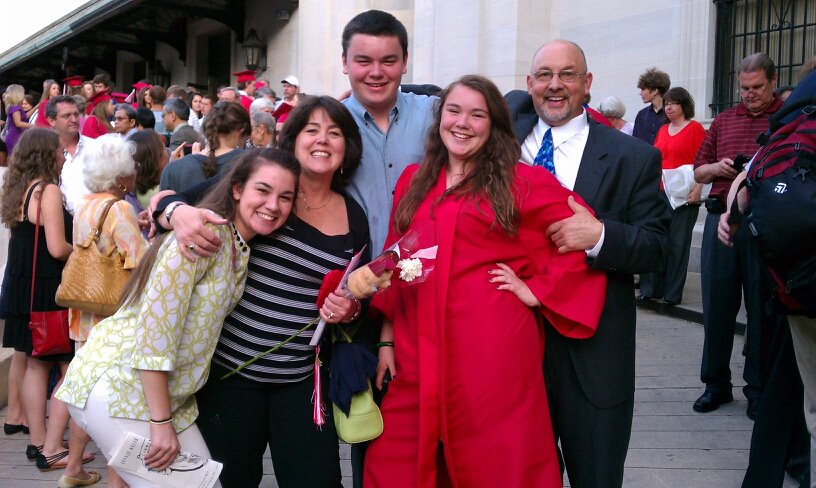
Caitlin Acosta, 25, (left in top photo with her family), runs her business out of Falls Church and volunteers with local recovery groups and the Unified Prevention Coalition of Fairfax County.
The Unified Prevention Coalition of Fairfax County is a nonprofit organization with more than 50 community partners working together to keep youth and young adults safe and drug-free. Visit www.unifiedpreventioncoalition.org and www.facebook.com/unifiedpreventioncoalition. Follow the group on Twitter at www.twitter.com/keepyouthsafe.