Politics & Government
Rappahannock Tribe Reacquires Sacred Land Taken By English Settlers
The Rappahannock Tribe has acquired 465 acres at Fones Cliffs in Virginia, a sacred site to the tribe on the Rappahannock River.


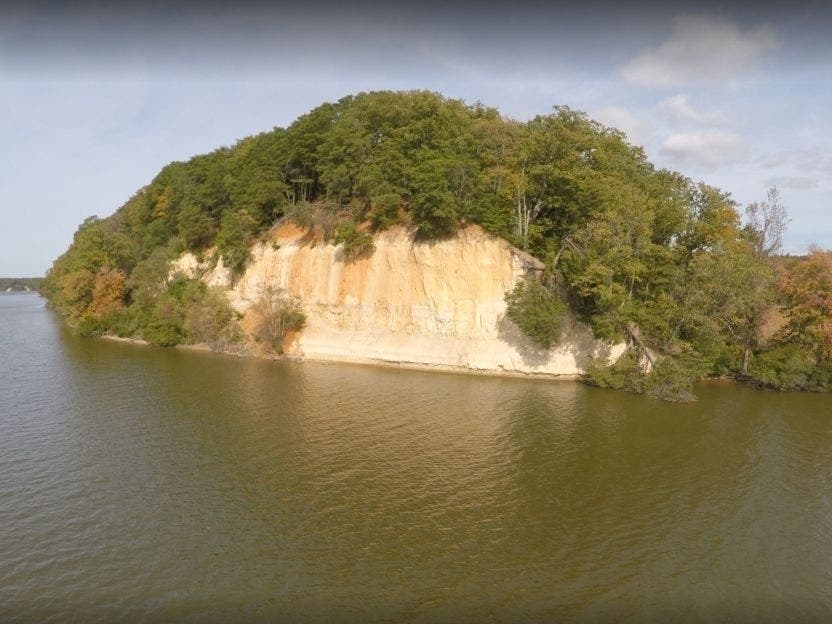
VIRGINIA — The Rappahannock Tribe has acquired 465 acres at Fones Cliffs, a sacred site to the tribe on the eastern side of the Rappahannock River in the Northern Neck of Virginia, the tribe announced Friday.
Fones Cliffs, north of the town of Tappahannock, is where the Rappahannock Tribe first defended its homeland against English settler Captain John Smith during his explorations in 1608. The tribe was eventually forcibly removed from Fones Cliffs after 1649 by English settlers, who took control of the area.
Prior to the battles with the English settlers, the Rappahannock Tribe lived in at least three villages on the Cliffs: Wecuppom, Matchopick and Pissacoack.
Find out what's happening in Falls Churchfor free with the latest updates from Patch.
“We have worked for many years to restore this sacred place to the Tribe. With eagles being prayer messengers, this area where they gather has always been a place of natural, cultural and spiritual importance,” Rappahannock Tribe Chief Anne Richardson said at Friday’s event.
Friday's event was attended by U.S. Interior Secretary Deb Haaland, who said the Department of the Interior is “honored to join the Rappahannock Tribe in co-stewardship of this portion of their ancestral homeland.”
Find out what's happening in Falls Churchfor free with the latest updates from Patch.
“This historic re-acquisition underscores how Tribes, private landowners and other stakeholders all play a central role in this administration’s work to ensure our conservation efforts are locally led and support communities’ health and well-being,” Haaland said.
The land will offer opportunities to the tribe to expand its Return to the River program, which trains tribal youth in traditional river knowledge and practices and conducts outreach and education for other communities interested in the Rappahannock River.
The Rappahannock Tribe is a federally recognized sovereign nation headquartered at Indian Neck in King & Queen County in Virginia. Areas surrounding the Rappahannock River are the ancestral homelands of the tribe.

The tribe plans to preserve the land and the wildlife, including migratory birds and waterfowl. Fones Cliffs is home to bald eagle nests and has been designated by the National Audubon Society as an Important Bird Area with global significance. Eagles are sacred to the Rappahannock Tribe.
The land will be publicly accessible and held with a permanent conservation easement conveyed to the U.S. Fish and Wildlife Service.
Chesapeake Conservancy donated the easement to the Fish and Wildlife Service, which then donated the fee title to the Rappahannock Tribe. The tribe intends to place the land in trust with the Bureau of Indian Affairs.
“Through the generosity of the family of William Dodge Angle, M.D., Chesapeake Conservancy is honored to facilitate the return of Fones Cliffs to the Tribe, and to partner with them to bring Indigenous-led conservation practices back to the Rappahannock River,” Chesapeake Conservancy President and CEO Joel Dunn said.
“This is a significant step forward in the overall goal to save approximately 2,000 acres at Fones Cliffs, a haven for wildlife and waterfowl and one of the most beautiful places in the Chesapeake and in fact, the world,” Dunn said.
Additional funding for the Rappahannock Tribe to conserve the 465 acres of indigenous ancestral homelands was provided by a grant from the National Fish and Wildlife Foundation through Walmart’s Acres for America Program.
The tribe plans trails and a replica 16th-century village, where tribal citizens can educate the public about their history and indigenous approaches to conservation and connect future generations of Rappahannock youth to their tribal traditions and the river which bears their name.
U.S. Sen. Tim Kaine (D-VA) introduced legislation in 2018 that passed to recognize six Virginia Tribes, including the Rappahannock Tribe.
“We have a lot of work ahead to undo many wrongs inflicted on Tribal communities, but milestones like this one are a powerful reminder that meaningful steps are possible and necessary," Kaine said in a statement.
Get more local news delivered straight to your inbox. Sign up for free Patch newsletters and alerts.