Weather
Hurricane Michael Now Cat 4; NoVA, DC Likely To Get Soaked
Hurricane Michael should hit the Gulf Coast Wednesday as a category 4 storm and dump rain on NoVA and DC by Thursday.


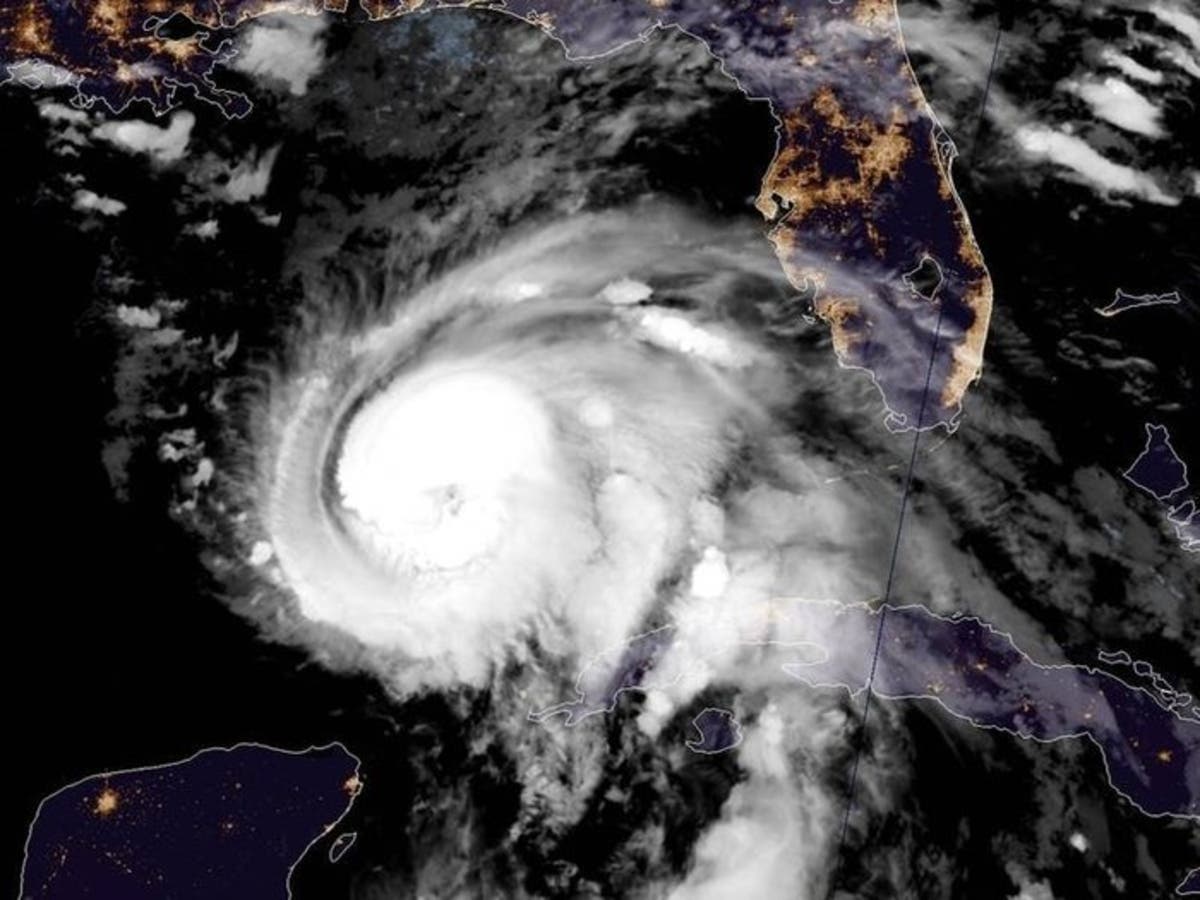
WASHINGTON, DC — The leftovers of Hurricane Michael are expected to dump rain on northern Virginia and Washington, D.C., late Wednesday into Thursday after striking the Gulf Coast, forecasters say. The storm has strengthened to an "extremely dangerous" Category 4 storm. Shortly before 2 p.m., it made landfall just northwest of Mexico Beach, Fla. Experts say the monster storm could be the strongest hurricane ever in the month of October and the most powerful to hit the U.S. mainland this year.
The storm is churning about 140 miles southwest of Panama City, Florida, with winds of 140 mph. Tropical-storm-force winds of up to 76 mph were already whipping off the coast Wednesday morning, the hurricane center wrote in a Facebook post Wednesday morning.
Florida, Alabama and Georgia declared states of emergency and numerous evacuations have been ordered. Residents have boarded up homes and businesses and flocked north to avoid Michael's wrath.
Find out what's happening in Fredericksburgfor free with the latest updates from Patch.
According to the Washington Post's Capital Weather Gang, by Wednesday night and into Thursday, heavy rain will rapidly move through Georgia and into the Carolinas, with rainfall of 3 to 6 inches likely to affect areas recovering from Hurricane Florence. The Post also reports parts of eastern Georgia and southern Virginia could receive 3 to 6 inches.
In the Northern Virginia area, a coastal flood advisory has been issued until noon Wednesday. Water is expected to approach the curb near the intersection of King Street and Strand Street in Alexandria. Minor shoreline inundation up to one foot above ground is possible elsewhere.
Find out what's happening in Fredericksburgfor free with the latest updates from Patch.
Maryland Task Force One and the Fairfax County-based Virginia Task Force One headed to the Southeast coast Tuesday morning, reports WTOP, to help in rescues as needed, as it did during Hurricane Florence in North Carolina. Each team travels with rescue equipment, boats and medical equipment.
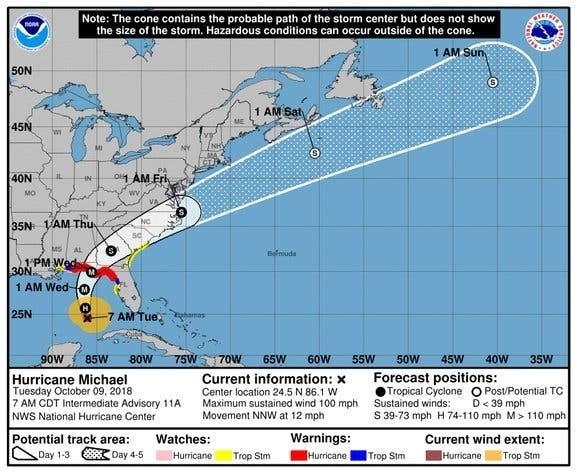
Tropical storm force winds — in the 40 to 70 miles per hour range — are possible in southeast Virginia late Thursday into Friday, according to the National Weather Service office in Wakefield. The office says there's a lot of uncertainty in the storm's path at this point, and it urges Virginians to remain alert to updates.
SEE ALSO: Hurricane Michael: NoVA Water Rescue Team Heads To Gulf Region
(For more news like this, find your local Patch here. If you have an iPhone, click here to get the free Patch iPhone app; download the free Patch Android app here. And like Patch on Facebook!)
A hurricane warning is in effect from the Alabama-Florida border to the Suwannee River, and a hurricane watch is in effect from the Alabama-Florida border to the Mississippi-Alabama border.
Heavy rain could produce deadly flash flooding from the Florida Panhandle and Big Bend region into portions of Georgia and South Carolina, the center warned.
"We are projecting a major hurricane to affect the Florida panhandle coast over the next few days," NHC Director Ken Graham said in a Facebook Live video.
Hurricane Preparation Tips
- Get Prepared: Take action now to be prepared for hurricanes. As the storm approaches, it is often too late to get ready. Make sure you have family evacuation and communications plans, update your emergency supply kit, and evaluate your flood insurance needs.
- Complete a family communication plan. Plan how you will assemble your family and loved ones and anticipate where you will go for different situations. Get together with your family and agree on the ways to contact one another in an emergency and identify meeting locations.
- Create or restock your emergency kit. Being prepared means having your own food, water and other supplies to last for at least 72 hours. A disaster supplies kit is a collection of basic items your household may need in the event of an emergency, including an all weather radio.
- Check your insurance coverage. Most homeowner's insurance policies do not cover damage or losses from flooding. Review your policy, ensure you're adequately covered and understand exclusions, and contact your agent for any changes.
- Stay Informed. Know where to go for trusted sources of information during a hurricane event. Monitor local news resources for hurricane watches and warnings and follow directions of local officials.
- Determine Your Risk. Find out what types of wind and water hazards are likely in your area. Hurricanes are not just a coastal problem and their effects can reach hundreds of miles inland. Since the U.S. has not been hit by a major hurricane (category 3 or higher) in over a decade, "many people are suffering from hurricane amnesia in the forms of complacency, denial and inexperience."
- Develop an Evacuation Plan. Find out if you live in a storm surge hurricane evacuation zone or if your home is unfit to keep you safe in a hurricane. Speak with family and friends and work out a plan to use their home as an evacuation destination. Be sure to account for pets, since many shelters do not allow them.
- Assemble Disaster Supplies. Supplies are necessary not just for the storm itself, but for the often long and grueling aftermath. Stock up on non-perishable food, water and medicine to support your family for at least a week. Other recommended items are cash and battery-powered radios and flashlights. Since many of us use cell phones, have a solar-powered or hand-crank USB charger.
- Know Your Risk and Plan Ahead for an Evacuation:
- Know how to receive information including recommendations or orders to evacuate.
- If you plan to go to a shelter, notify staff of any special needs you or your family have.
- Do not return to the evacuation area until the evacuation order is lifted.
Get Tech Ready
Technology has made it easier to prepare for emergencies, but it can be unreliable during big storms if you haven't planned to keep your gadgets protected and powered up. Here are some tips to make sure you are tech ready:
Be Informed
Here are basic commands to get started:
- Download the FEMA app. Receive weather alerts from the National Weather Service for up to five different locations anywhere in the United States.
Make A Social Media Plan
Use text messages, social media and email to connect with friends and family during emergencies.
- Mobile networks can become overwhelmed during emergencies, making it difficult to place and receive phone calls. Text messages require less bandwidth, which means they are able to be transmitted more reliably.
- Social media channels such as Facebook and Twitter can also be an effective way to update family and friends during emergencies.
Graphics courtesy of the National Hurricane Center
Get more local news delivered straight to your inbox. Sign up for free Patch newsletters and alerts.