Business & Tech
Virginia Attorney General Says Affordable Care Act Repeal No Longer Impossible
Virginia Attorney General Kenneth Cuccinelli said the Supreme Court of the United States' ruling did not provide much certainty to the debate of health care reform, which makes the coming elections pivotal, not only nationally, but in Virginia.

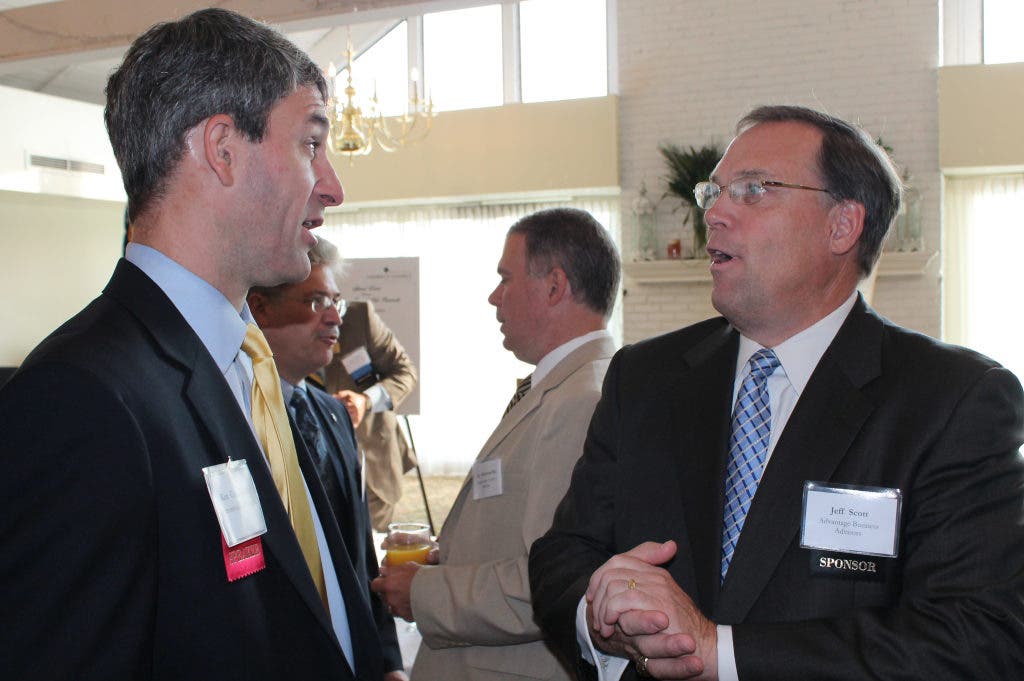

Virginia Attorney General Kenneth Cuccinelli said there will be four more months of waiting before the country has more clarity with the direction Congress will take with health care reform.
The Republican attorney general spoke this morning at the Fredericksburg Regional Chamber of Commerce's breakfast meeting at the —the third time he has spoken to the group since he was elected in 2009. He has already announced that he is running for governor in 2013.
Cuccinelli said the Supreme Court of the United States' —which he called an "utterly unique opinion"— didn't end the political debate or the uncertainty of the legislation. The highest court ruled that the health care reform act is a constitutional exercise of the federal taxing power. But he said he was pleased the court agreed with one of the key arguments he made in his own unsuccessful lawsuit, which is that the government cannot use the Constitution's Commerce Clause to force people to buy health insurance or pay a penalty—federal spending limits he said haven't happened since the New Deal.
Find out what's happening in Fredericksburgfor free with the latest updates from Patch.
Cuccinelli also said another positive sidenote to the ruling is that the federal government cannot force states to expand Medicaid with the threat of taking away federal funds for the program if states refuse to expand it. He said if Virginia decides to expand Medicaid, it could cost upwards of $200 million a year over 10 years.
"You don’t get to repeal anything if someone doesn’t get a bill to you out of Congress that says 'repeal,'" he said.
Find out what's happening in Fredericksburgfor free with the latest updates from Patch.
He said because the U.S. Senate does not allow a filibuster on revenue bills that raise or lower taxes, it will only take 50 senators plus the vice president to repeal the law, down from 60 senators.
"It has gone from impossibility to a 50-50 chance," he said.
"On top of that, we have a two ex-governors running for the U.S. Senate spot and will play a key role if that 50 number is going to be reached in the Senate," Cuccinelli said, referring to GOP candidate George Allen and Democrat Tim Kaine. "So, Virginia is playing an unusually significant role this year."
Virginians and Americans will face four months of not knowing how this health care reform will pan out because of the upcoming elections, Cuccinelli said. He said Virginia lawmakers will have to make the hard decision of whether to expand Medicaid, which serves about 700,000 state residents. If it is expanded, another 400,000 people could be added to the program, he said.
"Virginia may have to find $200 million in our budget for Virginia's portion at a time when we are underfunding transportation and have been for years," he said.
"I would not do this," Cuccinelli said. "This has been the most explosive part of our budget and it is eating away at everything else."
Another challenge is whether Virginia should enter into a health care exchange versus letting the federal government set one up. The natural instinct for states is to have them create an exchange, but legislation's uncertainty makes it difficult to decide which would be the best for residents. He said there appears to be a legal dispute that relates to the business community if Virginia does not create an exchange, which is that a business owner cannot be fined for an employee not coming online with health insurance under the law.
"The text of the law, if the court implements it as it is written, it does appear to shield you all from that per employee fine," he said.
Cuccinelli said he would rather roll the dice and not have an exchange over exposing businesses to a $2,000 to $3,000 penalty. Cuccinelli said from a liberty standpoint, having the legislation called a tax is better because the federal government's taxing powers are the most accountable powers in the Constitution and more people will likely pay attention to the consequences of lawmakers' decisions on the reform legislation.
"If everyone had to admit what they were voting on was a huge tax bill, it would have never passed," he said.
Related content:
Get more local news delivered straight to your inbox. Sign up for free Patch newsletters and alerts.