Health & Fitness
Great Things have Small Beginnings
The Japanese principle of Kaizen is impacting the treatment Diabetes and Obesity at the local community level.
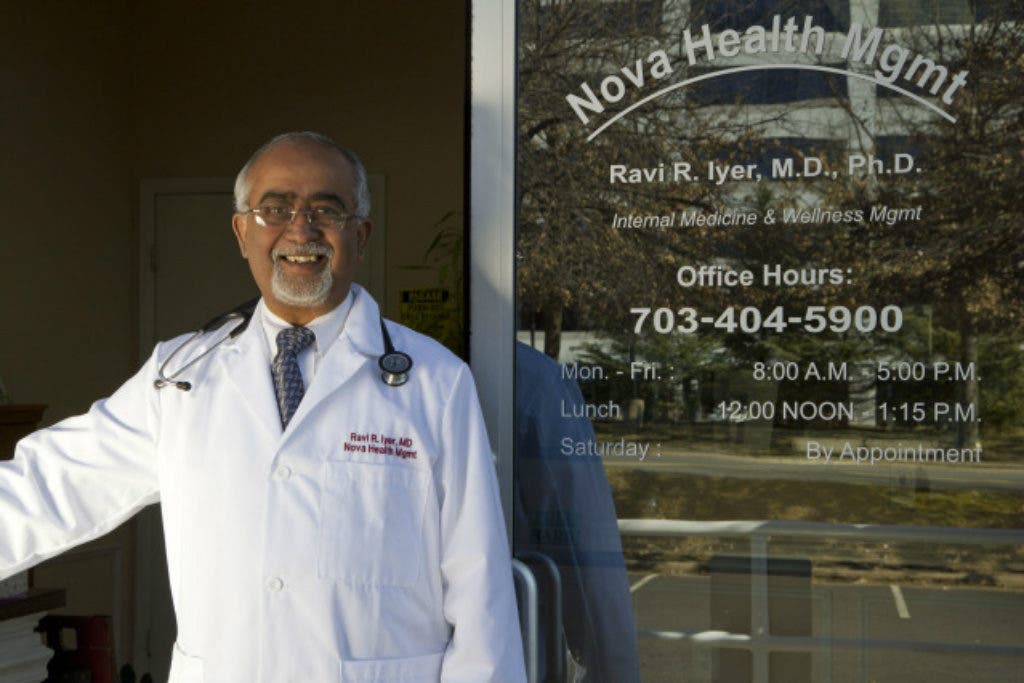
(From Life & Living Series -- @ THE IYER CLINIC )
Collectively society values the big over small, the grandiose over insignificant. We grow up with this prejudice in our value system so much so, that we become conditioned to seeking answers to our biggest problems only in large, big and usually expensive solutions. The bigger the strategy the better and if it doesn’t cost a huge sum then it simply cannot be good enough!
However after spending nearly 20 years trying out various approaches to solving health problems, I have come to the inescapable conclusion that small and simple strategies are by far the most effective in 99 cases out of 100.
Take for example the problem of diabetes. After years of trying various solutions, we now use a management strategy for Type 2 diabetics that we developed in house by trial and error in our clinic called “The 6-in-6 Program”. Simply put we work with patients to get them to a HbA1c goal of 6.0 in 6 months regardless of where their current HbA1c reading may be when they start with us. The most important tool in this program is not medications, even though I do prescribe all the standard anti-diabetic drugs.
Find out what's happening in Herndonfor free with the latest updates from Patch.
It is actually a combination of daily blood sugar monitoring and logging in a diary along with fortnightly office visits where I review these logs as well as their logs of food choices and exercise patterns. But that is not all. The real motivator is a contract wherein each patient understands that if he/she does not perform their part in this program they are encouraged to seek their health care elsewhere. The coach-trainee relationship in this program is what makes this program have a greater than 99% success rate.
The national average HbA1c score among diabetics is about 8.0. In our clinic it is 6.2! That is almost at the non-diabetic level!
Find out what's happening in Herndonfor free with the latest updates from Patch.
A simple daily diary with 15 minutes of counseling every 15 days for 3 months and holding patients accountable for their performance produces results that outclass the most expensive medication regimen available!
The value of small incremental interventions is not restricted to diabetes. I have found the same principle applies to weight loss also. In this area, I find that those patients who perform intense exercise and drastic diets do not achieve the best results. Instead the patient who does no more than walk 2 miles in about 30 minutes, 5 days a week and insists on getting up from every meal before he/she is completely full always produces the most dramatic reductions in weight. One hour of gardening a small vegetable plot on your hands and knees does more for your health than that expensive gym membership. What is more, these reductions are always sustainable too.
The greatest impact is not that these strategies are simple, even though they often are. It is not that they are inexpensive, though the best are usually so. But the profound revelation in all this is that invariably the most successful solutions are so because they empower the patient to directly influence the outcome. The act of developing the daily discipline of checking your blood sugar 2 hours after dinner every day and then writing it down in a diary creates a framework for a different dialogue in your daily life. Remembering to bring it with you to your doctors office every 2 weeks and knowing that you will be sent home if you show up for your appointment without your log creates over time a different mindset of accountability in you. An accountability that spills over into the choices that you make in what you eat and how you eat and how you go about your life.
Similarly, walking is far superior to running as a form of exercise not because it burns more calories, but because even though you burn only 85 calories by walking for every 100 you burn by running, you do so at less expense. You pay a much lower price in terms of wear and tear on joints. You burn calories at a more steady state that results in a more sustained elevation of your basal metabolic rate for longer periods even after you stop the exercise….. and finally the pace of walking allows you to notice the birds and the butterflies in a way that slows the incessant mental chatter that keeps all of us in the vibrating high strung state that characterizes today’s lifestyle.
Indeed this is not new. The Japanese have a word for this: Kaizen, which means improvement in small steps. “Rather than a single intense burst of effort, Kaizen is a daily activity, the purpose of which goes beyond simple productivity improvement. It is also a process that, when done correctly, humanizes the entire endeavour, eliminates unproductive, inefficient and wasteful work, and teaches people how to perform experiments on their work using simple measuring tools and how to learn to spot and eliminate waste in work processes”…. (source: Wikepedia).
The amazing success of the “6-in-6” diabetic management program in our clinic is rooted in Kaizen and in the way it allows patients to identify and eliminate unproductive behavior… the Muda (activity that is wasteful and doesn't add value or is unproductive), Mura (unevenness, inconsistency in actions) and Muri (action that is burdensome relative to the value produced by it) that was made famous by Japanese automakers.
The results are inescapable. The number of diabetics in our clinic that require insulin to control their diabetes is less than a dozen. Less than 1 percent of diabetics in our clinics that completed the “6-in-6” program have a HbA1c greater than 6.5. And over 85 percent of successful graduates maintain their HbA1c below 7.0 three years after program completion.
After all I see no reason why a process that is used by successful companies cannot be used to help someone avoid a heart attack, preserve their kidney or protect himself or herself from a paralytic stroke…. Do you?
---- Ravi R. Iyer, MD
The Iyer Clinic
13505 Dulles Technology, Suite 1A
Herndon, VA 20171
703-404-5900