Community Corner
Remembering Herndon's History: 1850s Life Before the Railroad
Historian Barbara Glakas documents the arrival of the railroad and how Herndon could've been called "Hazard."


By Barbara Glakas
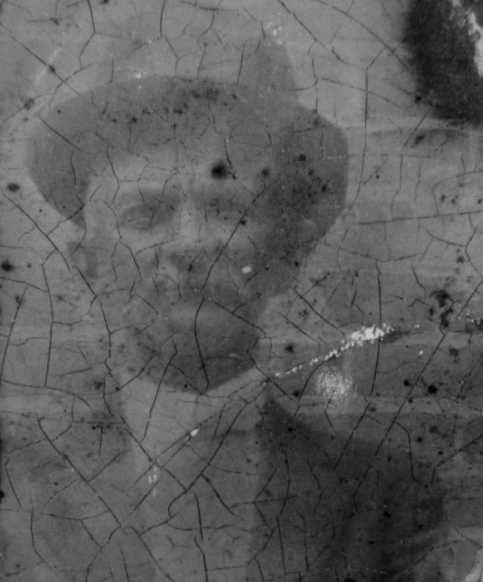
Recently discovered in the Herndon Depot Museum files was a memoir written in 1910 by John Ford Hazard. He was a member of the Hazard and Cox families, who had once owned some land in the Town of Herndon in the 1850s. His memoir gives some insights as to how the location of the Herndon Depot (or train station) may have been determined, and also what life was like in Herndon during that time period.
John Ford Hazard was born of a Quaker family in 1844 in the Town of Wheatland in Monroe County, New York. His father was named Thomas Hazard. He had an uncle on his mother’s side named Thomas Cox.
Find out what's happening in Herndonfor free with the latest updates from Patch.
John Ford Hazard explained in his memoirs that three things were going on in 1850: “Foreigners began to come into the country. The Irish came in droves. Owing to the potato rot they were starving at home and America seemed paradise to them.” Also, immigration was being encouraged to help “settle and develop the resources of our great west.” Additionally, Hazard’s mother was being encouraged by her doctor to go to milder climates in the south. She had a chronic cough and “the rigorous climate of Western New York seemed too strong for mother.” This all marked a turning point in young Hazard’s life.
In 1851, John Ford Hazard’s father, Thomas Hazard, his Uncle Thomas Cox, and some other friends, looked at the land in Virginia, in the vicinity of Washington, D.C. Thomas Cox bought about 380 acres of land from Thomas Carper, in an area that would later be called Herndon. Meanwhile, Thomas Hazard returned to New York to take care of the business of selling his farm there. The farm that Cox had bought is generally surrounded by what is now Centreville Road, to south Elden Street, continuing on Elden Street to Van Buren Street. This property now includes areas such as the Chandon neighborhood, the Herndon Middle School property, and the neighborhoods along the west side of Van Buren Street. A corner of this land was located where the present-day Elden Street intersects Spring Street and the Washington & Old Dominion (W&OD) trail.
Find out what's happening in Herndonfor free with the latest updates from Patch.
That same year, Thomas Cox joined in with several other neighbors, including Benjamin Caywood, Henry Kipp, Martin Irish, Ebenezer Ford and Nicholas Farr, to support a motion to the Fairfax County government to create a road that would connect the Frying Pan Church on Centreville Road to the Liberty Church near Leesburg Pike. The road request was approved and the section of roadway that was built in the 1850s and ran through the town would later be named Elden Street.
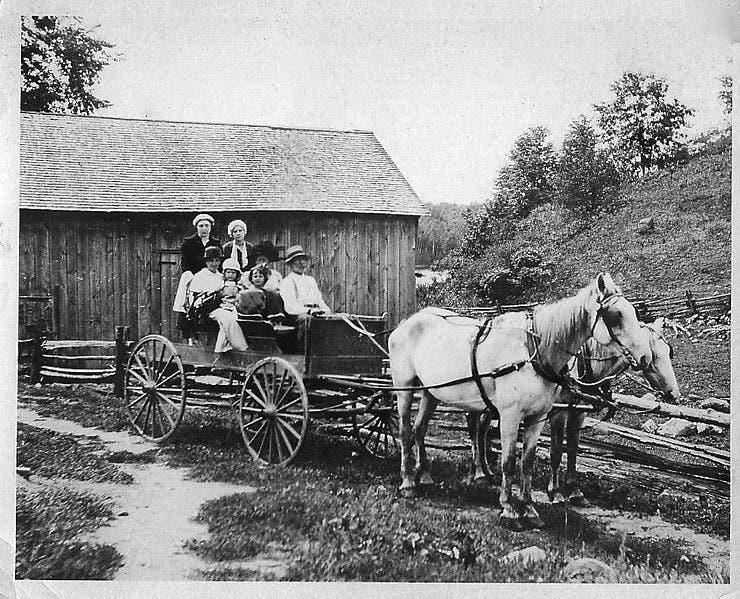
After selling his farm in New York, Thomas Hazard bought a couple teams of horses, hooked them up to a carriage and two wagons, and moved his family south. John Ford Hazard said that his father “hitched the light team to his carriage and behind that hitched a very light spring open ‘Democratic ...’” and to another team his father “hitched to it two spring market wagons … on these were loaded furniture, and the lighter goods, and three pigs of best Western N.Y. breed, as Father was not favorably impressed with the wild hogs of Virginia.”
From western New York they moved through Pennsylvania, to Maryland, to Leesburg, and then traveled the last 20-mile leg to Herndon. (At that time Herndon was not yet called Herndon, as it was still an unincorporated, unnamed village within Fairfax County). About their travels, John Ford Hazard spoke of eating eels for breakfast while in Pennsylvania that had been caught in the close by Susquehanna; how it took all day long to climb the Allegany Mountains; how they saw their first rattlesnake in the mountains; and how, when they reached the “wide and lazy stream” of the Potomac in Maryland, they crossed it using a flat boat at Nolands Ferry.
They stopped at Uncle Thomas Cox’s house in Herndon where they stayed for a while. John Ford Hazard described the house as being “a bigger house than they needed, in two equal parts, with a hall through the middle, so they gave us one-half, which we had all to ourselves and spent a pleasant winter.”
John Ford Hazard continues: “Uncle Thomas had bought the farm of Thomas Carper, as he wanted to keep his Negroes in their quarters until hiring time, New Year’s Day. Carper had six slaves, Lewis, a full-grown man worth probably $1,000; Ann, a full-grown woman worth $500-$600; Joe, a boy about fourteen; and Puss, a little older. There was Uncle Sam and Aunt Chloe, whose ages were indefinitely old … but New Year’s Day came and the Negroes went, and then we children had their quarters for a play house.”
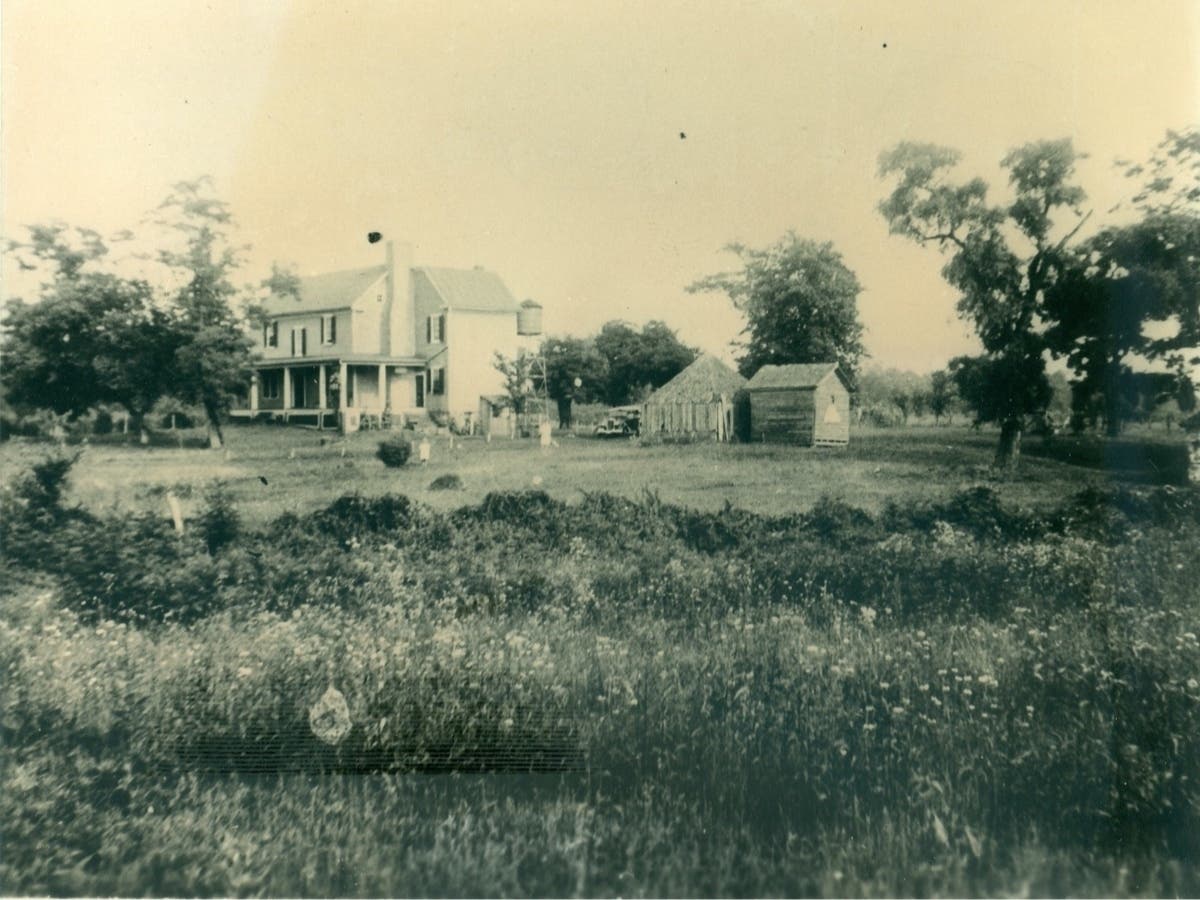
In 1853, Thomas Hazard bought half of Cox’s land, leaving each with about 190 acres. There were no buildings on Hazard’s land when he first bought it so Hazard started building himself a house, barns and other buildings he would need for his new farm, while his family continued to live with the Cox family.
Hazard hired three carpenters from Rochester, New York. He also hired a “six-foot, skinny New England Yankee” as a painter. The barn was built entirely from timber on Hazard’s land. It was “30’ x 40’ with 16-foot posts all rough.” The house was also made from timber on the land, except for the sashes and doors that were made of white pine from Amsterdam, N.Y. “The planing was handwork, and while the timber was fine, it was hard to work. The pine was real long leaf yellow pine, the oak genuine white oak.”
John Ford Hazard also said that the cellar was a novelty to the Southerners and they could not see why it was needed. “Father was fortunate enough to have a quarry of red sandstone under the house, so it could make the walls. When first quarried, it was soft and could be shaped as desired, but, after being exposed to the weather for some time, became hard rock.” They also had a cistern in the cellar which he described as being “an unknown thing in those parts.” Given they had no spring he described the cistern as being “indispensable.” John Ford Hazard said the house his father built “was a real Northern house, hence looked down upon by the Southerners as a Yankee arrangement.”
About the land, John Ford Hazard recounted how Virginia had once been a tobacco state, a cash crop. “The method was to cut the timber from a fertile piece of ground, then plant it to tobacco year after year, until its fertility was exhausted, then turn it out to grow up to ‘old field pines,’ the only thing besides ‘broom sledge’ that would grow on this exhausted land. I have seen old field pines twenty feet high growing on this farm of Father’s where the ridges of the old tobacco rows could be plainly seen.”
A new fruit that the Hazards discovered was wild persimmon that “when green would pucker one’s mouth until he could not whistle.” But when fully ripened was “sweet and agreeable.”
About schooling, John Ford Hazard said that he attended two private schools and,m“then Mr. Orrison built a log school house on his land which I attended until we moved [back to New York]. The small schools had slab benches; the larger ones sat on plank seats facing a board desk built against the sides of the house.” Joseph Orrison owned 541 acres of land on the western side of Herndon in the vicinity of the golf course and Bond Street.
After about a year, people in the area were excited with the rumors of a coming railroad line. “The advantages to the community were heralded in every way.” Land near the railroad track increased in value and “things in general began to look up.” Residents were encouraged by the railroad company to buy stock in the railroad with the inducement that a station house would be located near them. One of John’s grandfathers bought five shares of stock. John Ford Hazard’s father, Thomas Hazard, bought three shares on the condition that the railroad depot would be located no further than one mile from his house. John Ford Hazard said that there were many stock holders. Indeed, a station house was built in what would later be named the Herndon station, not too far from Thomas Hazard’s property. John Ford Hazard said: “They offered to call it Hazard, but we did not care for the celebrity. The station was called Herndon in honor of a gallant sea captain who went down with his ship at about that time.”
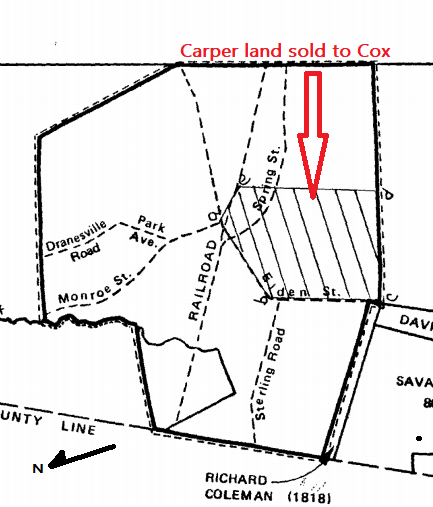
It is hard to believe that Thomas Hazard’s small purchase of three shares would have been the sole deciding factor that determined the location of the station house. But no doubt many other local citizens must have invested in stock as well. Author David Guillaueu, who has written books about the history of the W&OD railroad, said,“I have no issue with believing that the railroad's right of way centerline was influenced by the local citizens, especially those willing to either donate land or invest in the company. The country around Herndon doesn't have any particularly controlling topography that would ‘force’ the centerline on a particular path.” Another factor that may have influenced the location of the Herndon Depot was the existence of active surrounding farm land whose owners would be able to take advantage of the depot to ship their goods and thus have a positive effect on commerce.
John Ford Hazard then explained what later happened to the many railroad stockholders. “The money from the stockholders soon ran out, and to complete the [rail]road, a blanket mortgage was given, but the little company could not meet the payments, the mortgage was foreclosed, and the stockholders wiped out.”
Luckily for John Ford Hazard’s family this did not cause them injury. “It enabled father to sell his farm for $30 an acre, which he could not otherwise have done, to say nothing of getting clear of Virginia before the Civil War, where our neighbors who remained lost everything.” Thomas Hazard had originally bought the land from Cox for $10 per acre. Hazard sold his 190 acres to John M. Donn in 1855. John Ford Hazard said, “Donn bought everything on the place, except bedding and clothing, so we had comparatively little to move.” The Hazard family moved back to Monroe County, New York, where they had a little 48-acre farm in Brighton. “Now our happiness seemed complete, for we were among our old friends and land of our birth.”
John Ford Hazard’s father had gone to Virginia with about $3,500 and returned to New York with about $9,000. Back in Virginia, by the late 1850s, the rail had been laid, the post office in the new depot was named “Herndon,” and the trains started running on a regular schedule in 1860. By 1861 the Civil War broke out and Virginia seceded from the Union.
About this column: “Remembering Herndon’s History” is a regular Herndon Patch feature offering stories and anecdotes about Herndon’s past. The articles are written by members of the Herndon Historical Society. Barbara Glakas is a member. A complete list of “Remembering Herndon’s History” columns is available on the Historical Society website at www.herndonhistoricalsociety.org.
The Herndon Historical Society operates a small museum that focuses on local history. It is housed in the Herndon Depot in downtown Herndon on Lynn Street and is open every Sunday from noon until 3:00. Visit the Society’s website at www.herndonhistoricalsociety.org, and the Historical Society’s Facebook page at https://www.facebook.com/HerndonHistory for more information.
Note: The Historical Society is seeking volunteers to help keep the museum open each Sunday. If you have an interest in local history and would like to help, contact HerndonHistoricalSociety@gmail.com.
Get more local news delivered straight to your inbox. Sign up for free Patch newsletters and alerts.