Community Corner
Remembering Herndon's History: Former Mayor Darrell Funded Education
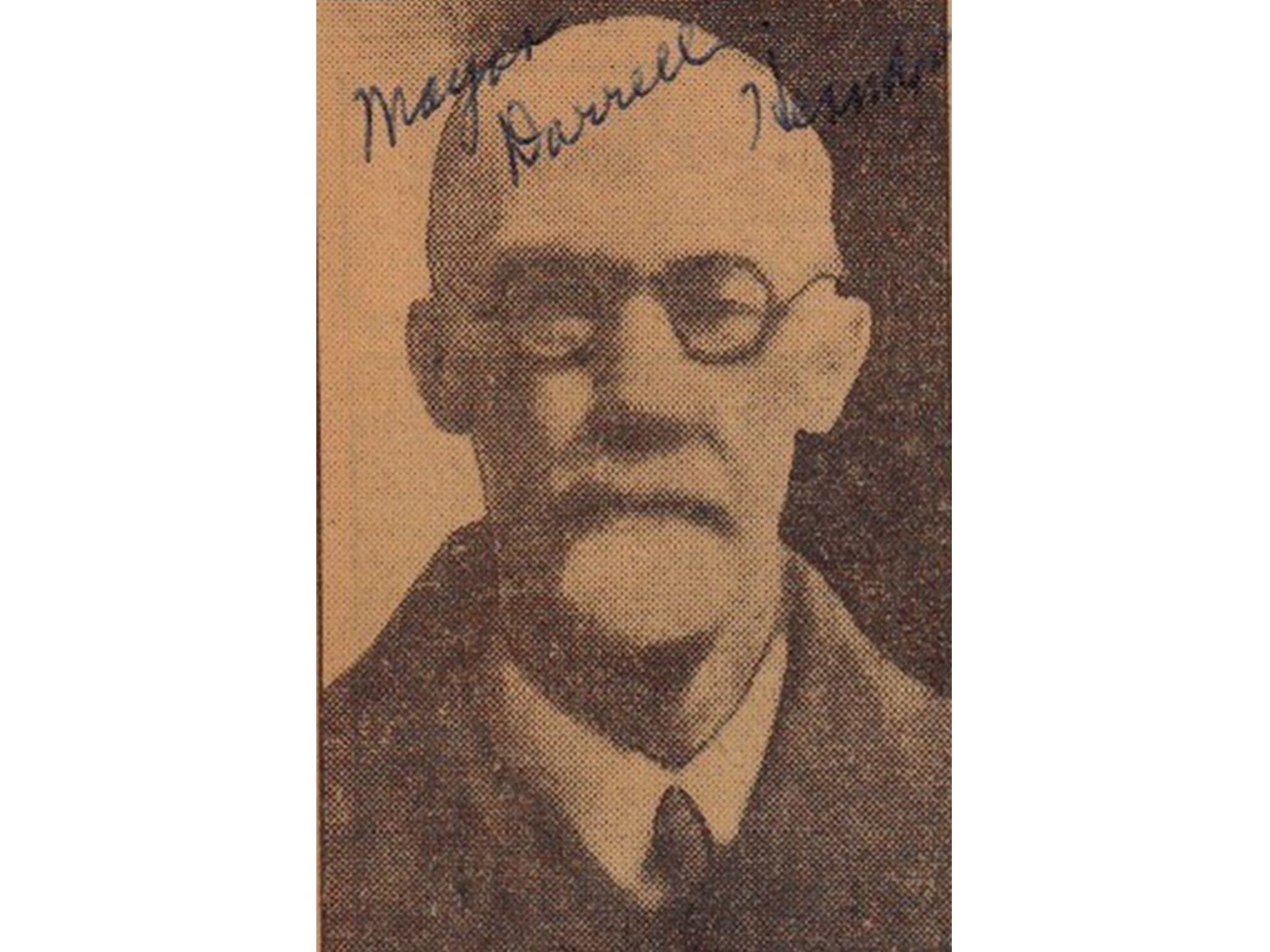
Former Mayor George Augusta Darrell endowed funds dedicated to supporting education in the Town of Herndon.


By Barbara Glakas
HERNDON, VA — George Augusta Darrell served as Herndon Mayor in 1929-30. He endowed funds to be used in the town of Herndon for educational purposes.
Darrell was born around 1859 in the Broad Run area of Loudoun County. In his early life he lived with his parents and was a farm laborer. He married Georgia Lee Darrell in 1883. Their son, Guy, was born in 1884. In 1899 he was listed as being employed as a Quartermaster packer for the War Department in Alexandria. Census documents show that the Darrell family lived in the Dranesville area in 1900 and Darrell continued working as a laborer. By 1910 he was working as a clerk and was renting a home in Herndon. He continued his job as a government clerk into the 1920s and ultimately owned a home on Station Street in Herndon. In 1927 Darrell was elected by the Town Council to fill a vacancy on the Council.
Find out what's happening in Herndonfor free with the latest updates from Patch.
Before we go further about Darrell and his trust, first we will review some history about The Herndon School and the Herndon School Board.
The Herndon School on Center Street was first established in 1868 and was operated by Herndon residents. The residents set up the Herndon School Association, a private entity that operated in what was then referred to as the village of Herndon Station, before the town was incorporated. The Association raised money to build the school and to provide for the school’s other needs, such as furniture, fire wood and books.
Find out what's happening in Herndonfor free with the latest updates from Patch.
The Fairfax County Public School system (FCPS) was organized in 1870. The Herndon School Association agreed to allow FCPS to use their school, although the town still owned the land and the school building. Each district in the county had its own school board, and the Dranesville District School Board continued to operate the public school on Center Street which was attended by children who lived in the village of Herndon Station. At that point, some residents of Herndon Station served on the Dranesville District School Board.
The Town of Herndon incorporated in 1879, after which the Herndon Town Council appointed members to the School Association. At some point, the town’s charter included a provision for the formation of a town school board to function as part of Fairfax County Public Schools.
“The town council shall appoint three citizens of the town to the Town of Herndon School Board, one for a term of one year, one for a term of two years, and one for a term of three years. The Town of Herndon School Board is authorized to take and receive sums of money by gift, bequest, or otherwise, to be kept invested and the income therefrom used to assist persons in obtaining an education or for the educational purposes for which said donation, gift, or bequest shall have been made.”
By 1922, the individual magisterial district school boards were abolished, but incorporated towns were permitted to retain their school boards. The new Fairfax County School Board was comprised of one appointed representative from each district and one representative from each of the town school boards. By the 1940s/1950s time frame, rules changed whereby the town school boards were no longer permitted a voting seat on the county school board. Residents were then represented by the district in which their towns were located.
Now back to Darrell and his involvement in Herndon schools.
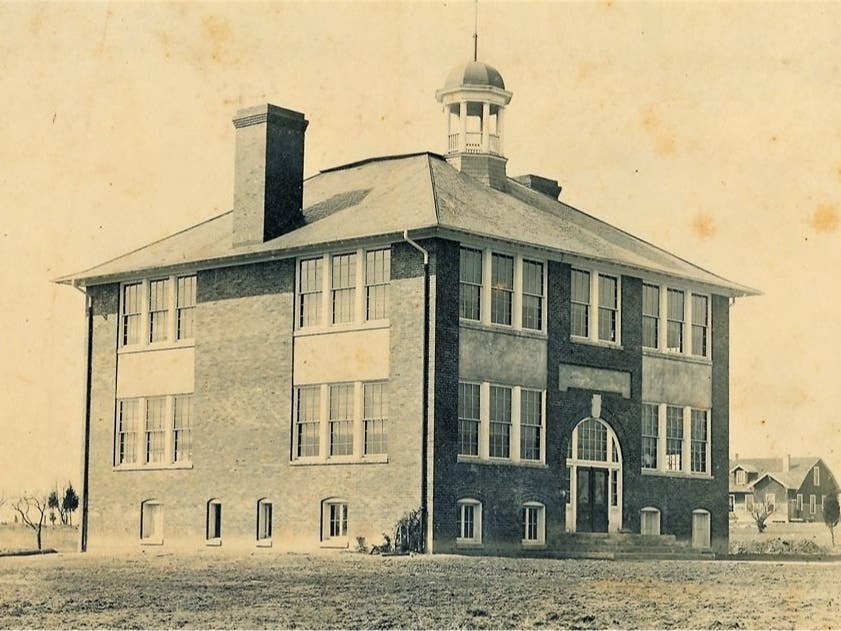
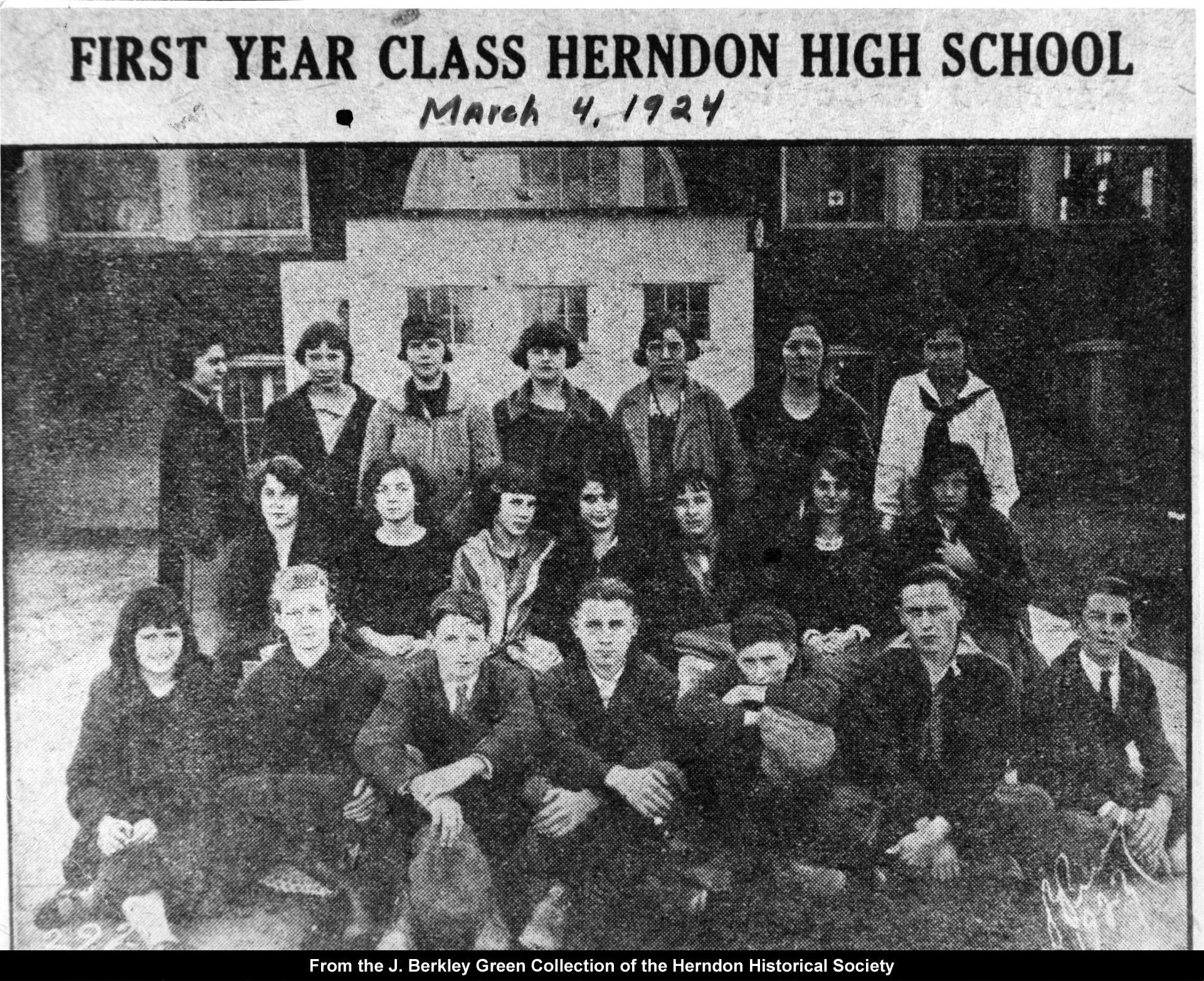
In 1912, a new school was dedicated in Herndon on Locust Street. The school was known as Herndon High School, although it served all the White students in town, from elementary through high school age. (The school was integrated in the 1960s). It was during Darrell’s first term on Council in 1927 that the school on Locust Street burned down and the town and county worked together to build and equip a new school. A new Herndon High School was built on Locust Street that same year.
In 1929, Darrell was elected mayor. He submitted his resignation as mayor in 1930, but it was denied. He served one term as mayor until 1931. During his term, the Herndon Town Council authorized the Town School Board to borrow money to construct a gymnasium and Home Economics building on the school property.
By 1930, Darrell had retired from his clerk job. His wife and son still lived with him. His home was valued at $8,000 that year and the census noted that he had a radio in his home. Sadly, Darrell’s wife, Georgia, died in 1933 just a short time after celebrating their 50th wedding anniversary. Tragically, Darrell’s son died the following year in 1934. They both died of nephritis.
Darrell served again on the Town Council during the 1933 and 1934 terms. Mayor Darrell died in 1937 at the age of 77. He, along with his wife and son, are buried in their family cemetery, the Union Cemetery in Leesburg, Virginia.
Having no direct heirs due to his wife and son predeceasing him, he left his entire estate to the Town of Herndon School Board, in memory of his wife and son, to be used for educational purposes. Specifically, his will laid out that as long as there was a public high school in Herndon, his endowment funds were to be used primarily for:
- providing the food, lunches and clothing for indigent White pupils attending the high school including its primary grades and,
- providing loans to aid and assist the college education of any student graduating from the high school who may desire to attend college.
Later, the Town of Herndon made legal changes to the original provisions of the trust fund to allow the funds to be used to assist all students, regardless of race.
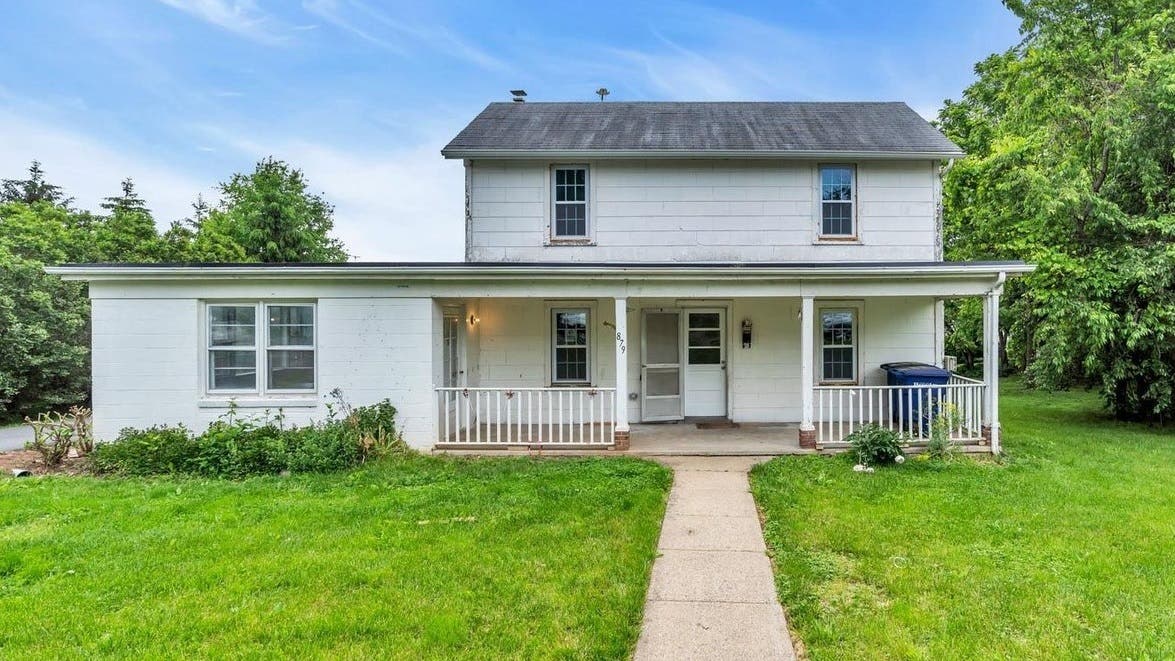
On April 14, 1941, the chairman of the Town Council Finance Committee reported on the status of the funds derived from the Darrell estate. These funds were handled in two accounts, a checking account and a savings account. The Darrell Fund checking account was started with a deposit of $61.42 and by June of 1939 had added and additional $27.70 from bank interest. An additional $25 was deposited into this account each month from the rental of Darrell’s home. The savings account was reported to have a balance of $476.99, representing income received from a first trust loan investment of $6,000, yielding $150 semi-annually and the accumulated back interest.
A 1986 Herndon Observer newspaper article indicated that:
“Although the school board of yesteryear did buy lunches clothing and shoes for children whose families could not afford them, today’s board focuses in the latter part of the request [student loans].”
Each year, the School Board would interview students and award small loans to those who needed a supplement to help them begin or continue their college education. All monies were to be paid back when the student finished his or her education. The Observer also said:
“The early boards also supplemented the salaries of teachers and principals, aiding them in providing a few extras for the students.”
The Observer added:
“But Darrell’s will left nothing to chance. If for some unforeseen reason Herndon should ever be left without a high school, the funds will be directed to a specified home for the aged.”
That situation never came to pass and up through the early 2000s, the money Mayor Darrell endowed was still being used by the Town of Herndon’s School Board committee to award student loans.
With the retirement of the last three School Board members, the Town of Herndon decided to donate the Darrell Trust Funds to Educate Fairfax, a 501(c)3 foundation of Fairfax County Public Schools that accepts monetary gifts from the community and uses 100 percent of the funds to directly support students, schools, and programs within the school system. In 2022, the Herndon Town Council passed a resolution to make this donation official. It said in part,
“The Town Council of the Town of Herndon, Virginia, hereby approves the donation of $101,761.37 to Educate Fairfax who agrees to disperse funds to students residing in the Town of Herndon and enrolled in Fairfax County Schools in the Town of Herndon, and hereby authorizes the Mayor to sign any instrument to effectuate this donation.”
About this column: “Remembering Herndon’s History” is a regular Herndon Patch feature offering stories and anecdotes about Herndon’s past. The articles are written by members of the Herndon Historical Society. Barbara Glakas is a member. A complete list of “Remembering Herndon’s History” columns is available on the Historical Society website at www.herndonhistoricalsociety.org.
The Herndon Historical Society operates a small museum that focuses on local history. It is housed in the Herndon Depot in downtown Herndon on Lynn Street and is open every Sunday from noon until 3:00. Visit the Society’s website at www.herndonhistoricalsociety.org, and the Historical Society’s Facebook page at https://www.facebook.com/HerndonHistory for more information.
Note: The Historical Society is seeking volunteers to help keep the museum open each Sunday. If you have an interest in local history and would like to help, contact HerndonHistoricalSociety@gmail.com.
Get more local news delivered straight to your inbox. Sign up for free Patch newsletters and alerts.