Community Corner
Remembering Herndon's History: Slavery In Our Area
Barbara Glakas of the Herndon Historical Society documents enslaved people and the enslavers who lived in the Herndon area.


By Barbara Glakas
The Town of Herndon was not incorporated until 1879, several years after the Civil War and the Emancipation Proclamation. Nevertheless, in the late 1700s through the mid-1800s, when the institution of slavery was still legal, there were many people who lived in and around the area that would later become known as Herndon, and some of those people were enslavers.
During the pre-war time, many Fairfax County residents enslaved people. Information on individual enslaved people is sparse, since those who were enslaved were considered property, were not allowed to own property themselves, usually did not appear on census records, and their births, deaths, and marriages were often not recorded. Their sale and relocation were poorly recorded as well.
Find out what's happening in Herndonfor free with the latest updates from Patch.
There were free African Americans who lived in Fairfax County during that time period as well. According to Curtis L. Vaugh’s paper, “Freedom is Not Enough: African Americans in Antebellum Fairfax County,” in the year 1800 the number of free blacks in Fairfax County was 204, and the number of enslaved blacks was 6,078. In 1830 there were 311 free blacks and 4,001 enslaved blacks. In 1860 there were 672 free blacks and 3,116 enslaved blacks. Vaugh said:
“In Fairfax County like the rest of the state, the heart of authority rested with property ownership. This concept was most evident in the ownership of human property where slave holders’ dominion over their bondsmen remained absolute. Freed African Americans occupied an uncertain space between slavery and full citizenship which is shown through the lens of property ownership.
“When free African Americans were able to have access to the labor of their entire family, they were more likely to become self-reliant, but the vestiges of the slave system often stymied independence particularly for free women. Antebellum Fairfax had many families who had both slave and free members and some families who had both white and African American members. These divisions in families more often adversely impacted free African American women who could not rely on the labor of an enslaved husband.”
There are some people who lived in the Herndon area who were known to be enslavers. Some information on Herndon's enslaved residents can be gathered through their owner’s records. And some of the information on the enslaved can be found in the 1850 and 1860 "slave schedules" that were added to the Federal census those years. The census takers were not required to list each enslaved person my name. Instead, only the names of the enslavers appeared on the schedules, along with a brief description of each of the enslaved individual's age, sex, and color (black or mulatto).
Find out what's happening in Herndonfor free with the latest updates from Patch.
In this article we will review just a few of the Herndon area residents who were enslavers.
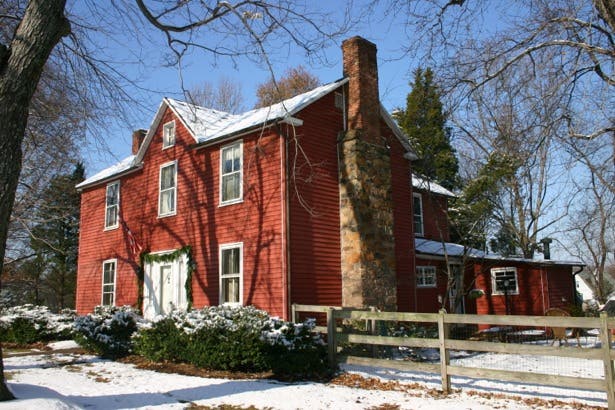
George Payne
The earliest house still standing in the Town of Herndon is located on Dranesville Road, nestled within some trees. The house was built by George Payne, presumably in 1783. Payne’s uncle, William Payne, was one of George Washington’s closest friends. George Payne was a renter of the land. A 1798 Loudoun County Militia Journal said, “George Payne exempted from Militia duty during inability.” This “inability” may have caused his death as he died in 1799 at the age of 36 without having a legal will of his own. After his death when his property was being appraised for settlement, it showed that Payne had a fair amount of livestock and tools, as well as two enslaved girls named Charlotte and Mary.
Charles and Ann Ratcliffe
In the early 1800s Charles Henry (b. 1793) and Ann M. Ratcliffe (b. 1795) owned many acres of land on what is now the east side of the Town of Herndon that generally stretched from Dranesville Road to the Sugarland Run Stream, which now includes Herndon’s Runnymede Park. Charles died in 1835. In his will, he bequeathed all of his estate to his wife for the duration of her natural life. Ann later moved to Kentucky and died in 1857. In her will, she bequeathed different parts of her estate amongst her various children. In part of her will she wrote:
“As I heretofore given to each of my children a portion out of my estate I desire that in the division they be charged severally as follows for money & property given them by me, viz. John R. Ratcliffe [one of her sons] to be charged the sum of four thousand two hundred dollars and in this charge I include Laura a negro girl given him by me last year … ; my sons Charles T. Ratcliffe & George William Ratcliffe and my daughters Mary B. Helm & Anna M. Buckner each to be charged with three thousand three hundred dollars for negroes given them by [me] for which they have bills [of] sale for deed of gift signed by me.
“I desire all the slaves of which I die possessed as well those bequeathed to me by my late husband Charles Ratcliffe of Fairfax County Virginia as those otherwise acquired by me after making portions of each of my children before-mentioned equal to be decided amongst my said children by commissioners to be appointed by the County Court of Christian County. And as amongst my slaves there are some which I consider valueless on account of old age or disease I desire that said commissioner award a reasonable sum of money out of moneys not otherwise appropriated to be paid for the care and support of each valueless slave to such my child or children as shall have the care and support of such slave or slaves for life.”
An 1820 census document noted that Charles Ratcliffe enslaved one male under 14; four males between 14 and 25; one male between 26 and 44; three females under 14; two females between 14 and 25; one female between 26 and 44 — a total of 12 enslaved people. An 1850 "slave schedule" showed that Ann M. Ratcliffe enslaved four African Americans — all females aged 80, 30, 4, and 1. In 1860, she enslaved five, again all females — aged 93, 40, 8, 7, and 4.
William and Mildred Barker
After Ann Ratcliffe moved out of the area, William Barker bought over 300 acres of that same land from Ann’s son, John Ratcliffe. Barker’s wife was named Amelia Maris “Milly/Mildred” Barker (1830-1885) and they had two daughters, Sarah and Catherine. The Barkers lived in the same house that the George Payne once lived in on Dranesville Road.
According to records in the Fairfax County Historic Records Room, Barker (born c. 1790), served in the cavalry in the War of 1812. For a while, he was a farmer and he also owned a sawmill (formerly owned by the Ratcliffes) that was located along the Sugarland Run Stream. In an 1850 "slave schedule," Barker is shown as enslaving three males (ages 28, 21 and 12), and two females (ages 25 and 20). At some point in his life, Barker took an oath as Justice of the County Court but resigned in 1853. In 1859 and 1961, he voted in Dranesville for secession. In about 1860, he was listed as a tanner, although he still owned much acreage and many livestock.
At various times Barker enslaved different numbers of people. The Northern Virginia Slave Database shows a man named William Barker enslaved four people: Martha (b. 1853), Franklin and Francis (b. 1857) and Eliza (b. 1859). The mother for all four was listed as Maria Brown.
However, the 1860 "slave schedule" (associated with the census record of that year) showed that Barker enslaved 10 people. Although the names of the enslaved people were not listed, their ages and gender were. He enslaved five adults that ranged in age from 22 to 52 (three males and two females), and he enslaved five young people who ranged in age from 1 to 11 (four females and one male). He also had one house on his on his property for enslaved people.
Barker also used his enslaved people as collateral on debts. In a deed of trust dated 1845, Barker put his land, milling equipment, and enslaved people in trust to secure a debt. This deed included the mention of,
“Negroes James and Frederick and Edmund who are young men, and Maria, who is a young woman, all now in the possession of said Barker.”
Barker died without a will in 1863. In 1866 and 1867, papers were filed with the county court that included an appraisal of Barker’s possessions as well as a list of his belongings sold by his wife, Milly. No enslaved people were included on any of those lists. Milly died in 1885.
Joseph Orrison
In 1842, Joseph Orrison (born c. 1809) bought hundreds of acres of land on the north end of what is now Herndon. The land was generally bound by what is now the Washington & Old Dominion Trail, Crestview Drive, Hiddenbrook Road, and Dranesville Road. Some of the land he owned is now Herndon’s Centennial Golf Course and the Kingston Chase subdivision that is north of the Town of Herndon’s corporate boundary. Joseph and his wife, Jane E. Whaley Orrison, had many children. Like many others of that time, Orrison was a dairy farmer. And like William Barker, Orrison also voted for secession in 1859 and 1861.
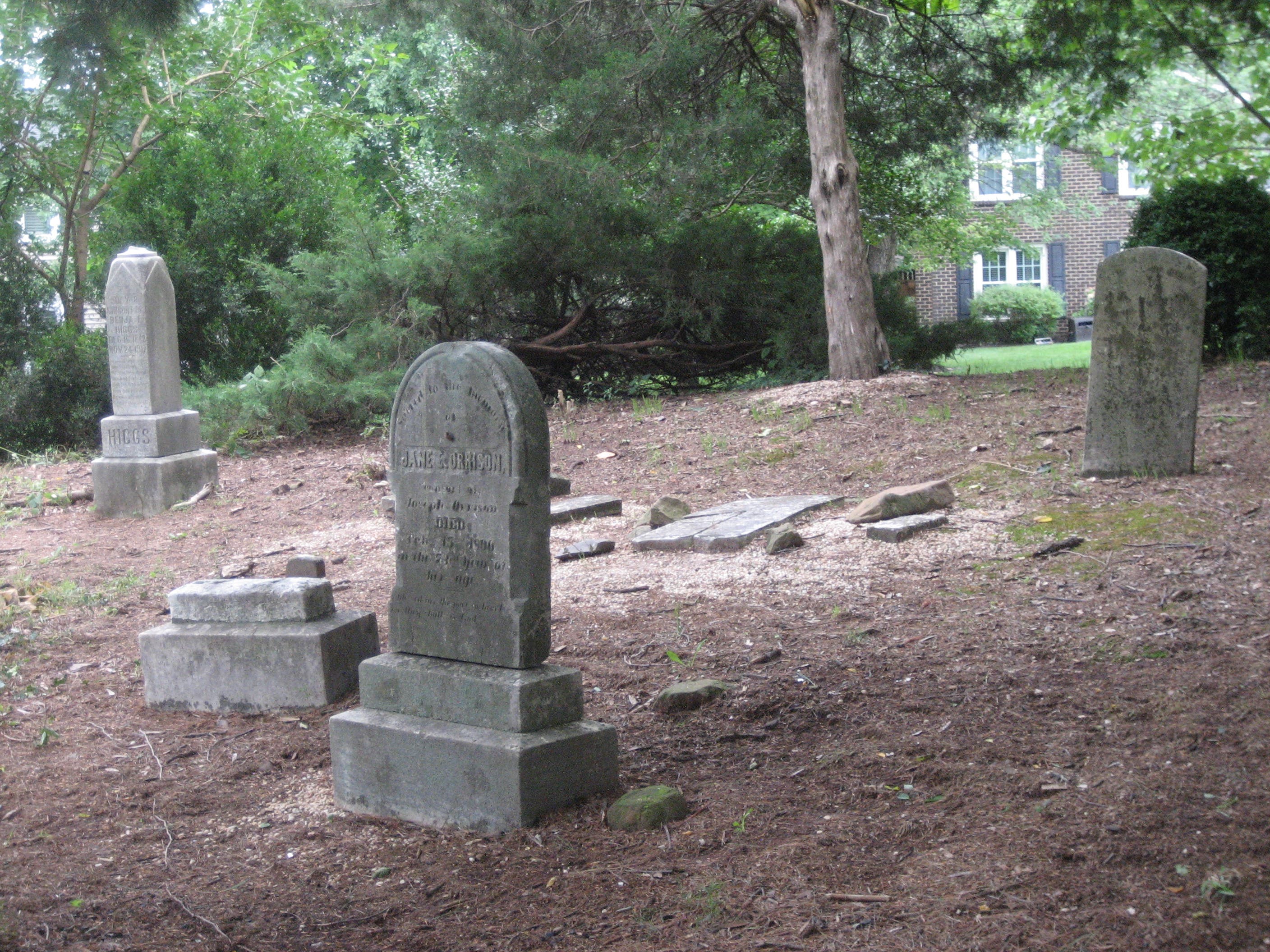
In 1847, Jane’s father, James Whaley, died. In his will, he specified that one-third of the people he enslaved were to go to his wife and the other two-thirds were to be distributed to his 10 children. James left to his daughter Jane “a servant girl who has since given birth to a child.” Ultimately, a dispute arose over ownership of the child. In the end, an 1857 court decision held that “one-third of the said negros according to their value be laid off for the widow (James’s wife) to be held for the time of her life and that the remaining two-thirds be sold at public auction and thirty days’ notice of the time and place of sale in one of the newspapers published in Leesburg.” Although some auctions were famously held in Alexandria, auctions of enslaved people were also held on the steps of the Loudoun County court house in Leesburg.
An 1860 "slave schedule" showed that Orrison enslaved two females (ages 32 and 7 years old), and two males, (ages 15 and 9). According to Edith M. Sprouse (Fairfax County in 1860: A Collective Biography), all four enslaved people were housed in the same quarters.
Joseph Orrison died in 1875. The Orrisons set aside some land for a family cemetery. The Orrison Family Cemetery, with remaining headstones and other grave makers, was preserved by the developer of Kingston Chase and is now located in the cul-de-sac of Permit Court. It is maintained by neighbors and local scout troops, with technical expertise provided by the Fairfax County Cemetery Preservation Association.
The Orrisons also had a cemetery for the people they enslaved, located 200 feet west of the Orrison Family Cemetery, under an old black walnut tree in the back yard of one of the homes on Permit Court. Former Herndon resident Freeland Young, who later operated a farm on some of the former Orrison land, remembered the cemetery from his boyhood. A book entitled “Fairfax County Virginia Gravestones, Volume IV, 1997” recounted this story:
“Freeland Young remembers Mr. Brown, an elderly black man who visited the cemetery when he walked through the farm to his home in Oak Grove. In about 1939 or 1940, Mr. Brown explained to Freeland that his parents, who had been slaves on the plantation, were buried in the Slave Cemetery. He took the boy to the cemetery and showed him where his parents were buried. Mr. Brown told Freeland that his brother, although never a slave, was also buried there, because he wanted to be near their parents in the plantation cemetery.”
It is unknown if Mr. Brown may have been a descendent of Maria Brown, an enslaved woman once referred to in William Barker’s records.
John and William Day
John T. Day (b. 1828) was a physician who provided medical services to the people who lived in the village that was later named the Town of Herndon. He lived on Leesburg Pike in the Dranesville area. One former Herndon resident recalled how she would often see “Dr. Jack,” riding into town.“I see him so plainly — tall and straight with iron-gray hair and beard. He drove a span of horses with several dogs barking at their heels.”
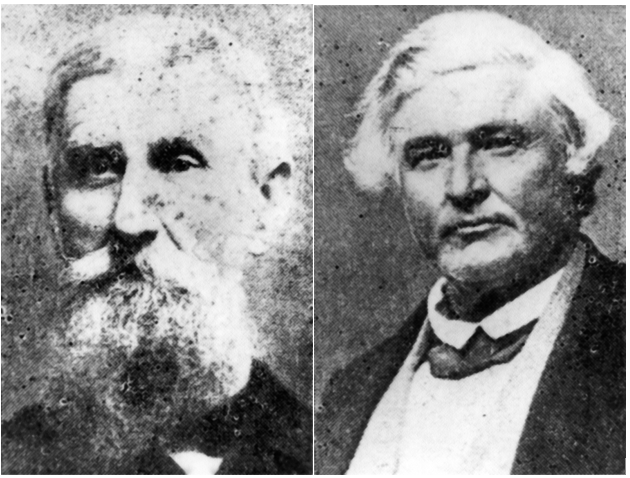
John’s older brother, William B. Day, was also a physician who lived on Leesburg Pike. The Day brothers, who originally came from Maryland, were known to be avid secessionists. An 1860 "slave schedule" showed that John Day enslaved three people: a 15-year-old female, an 8-year-old male, and a 3-month-old female. William Day was also known to be an enslaver. He enslaved two females (ages 44 and 17) and six males (ages 19, 13, 11, 9, 7 and 4).
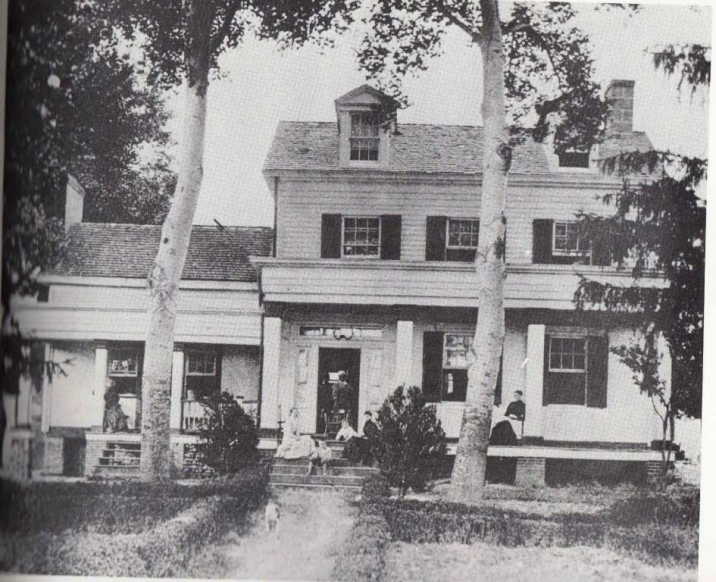
One famous affair that the Day brothers were involved in during the Civil War occurred when they — and some other like-minded Dranesville residents — were accused of seeking out and attacking four Union pickets (that is, soldiers on guard) in the vicinity of Lowes Island, about six miles north of Herndon. Two of the Union pickets ended up being killed. Recounted from statements on the General Records of the Department of State, one witness reported that William Day had stripped the clothes off of the dead bodies, boasted about having taken them from the “damn Yankees” and gave the clothes to his own enslaved people. The Day brothers spent some time in the Union’s Old Capitol Prison. Later in his life, John Day would become an active member and senior warden of the newly established St. Timothy’s Episcopal Church on Elden Street.
James Purdy
James S. Purdy (b. 1825) owned a few acres of land and one of the earliest businesses in what would later become of the Town of Herndon — a steam sawmill that was once located in the vicinity of Locust and Center streets. The mill was believed to have been built circa 1856. Purdy and his wife, Annie, lived in a house on Elden Street, on the lot where the Main Street Bank now sits.
Former Herndon resident, Kitty Kitchen Hanna, lived near the Purdys and often spoke of them when she was interviewed in 1905-06. She said that Purdy “come from the North with his wife,” saying that the Purdys “bought a lot of land ‘round here when it was dirt cheap.” Kitty said Purdy “put up a mill where Reed’s livery now is.” Kitty’s husband, Nat, ran the mill for Mr. Purdy. She said, “We had two servants to help cook for the hands.”
The Purdys did not stick around Herndon for too long. They moved within about three years. But on the 1860 "slave schedule," J.S. Purdy was listed as enslaving two people — a 40-year-old female and a 36-year-old male. Ironically, Purdy, who was from New York, was one of four who voted in his precinct against Virginia’s Ordinance of Secession. Purdy had a farm in the Annandale area. That area was fortified by a stockade-type of fort to help protect Washington, D.C., from Confederate attack. But Purdy’s family was constantly harassed by Confederates and his property was often used and ruined by Union troops. Purdy ultimately returned to New York an impoverished man and became a baker. It is not known what became of the two people he enslaved. It was not unusual for northerners to be enslavers.
Thomas Carper
Thomas J. Carper (b. 1818) bought about 380 acres of what is now Town of Herndon land in c. 1841-1842. Part of this land is now in the vicinity of Herndon Middle School. In 1850, Carper was listed as being a single farmer. He sold this Herndon land in 1852, but remained close by in Fairfax County as a farmer for the rest of his life. He married a woman named Lydia in 1856 and together they had several children. The 1860 "slave schedule" indicated that Carper enslaved 10 people — seven males (aged 87, 60, 26, 23, 10, 8, and 1) and three females (aged 30, 27, and 5).
There are stories of manumission (the release from enslavement) as well. Vaugh writes:
“In 1858, Warren Cartwright, age thirty-eight, purchased four acres of land from Thomas Carper, age forty-one, for $100. The property sold was a small part of Carper’s land holdings. Warren Cartwright was not registered as a free African American in Fairfax County records, and the origin of his freedom is unknown. Three years earlier in 1855, Thomas Carper had freed two slaves named William and Daniel. In his manumission deed, Carper explained that they were the children of a slave named Mary whom he acquired in 1844 along with another woman named Anna Maria. In 1860, Carper still owned ten slaves, nine of whom were listed as mulattoes. Carper’s reason for the manumission of William and Daniel and their ancestry is unclear, although they may have been related to Warren Cartwright. In 1860 Cartwright gave a deed of trust in the amount of $110 in favor of Carper, even though he and 11-year-old Daniel Cartwright are listed in that year’s census as living in the Carper’s household. Unlike most of Carper’s slaves, the census describes the two Cartwrights as “black” indicating that they were not related to Carper. One possible explanation is that William and Daniel were Warren Cartwright’s children by the slave named Mary. If the freedom of Cartwright’s mother dated prior to 1806, he would not have been threatened with deportation from Virginia; however, if Mary had been manumitted, she may not have gained permission to remain in the state. If still living in 1860, William would have been around fourteen, an age at which he may have felt compelled to leave the area, but eleven-year-old Daniel might not have felt the same pressure to leave. Warren Cartwright may have been able to feed a family with the products from his small farm but his co-residence with Carper suggests that Cartwright’s four acres of land did not allow him full independence.”
Vaugh stated above that, “In 1860 Cartwright gave a deed of trust in the amount of $110 in favor of Carper, even though he and 11-year-old Daniel Cartwright are listed in that year’s census as living in the Carper’s household.” However, when I look at the actual census document it was Warren Cartwright’s name that was listed at the top of the residence list, which likely indicated that Cartwright was the head of household. Could it be that it was Carper’s family who was living in the Cartwright household?
Thomas Cox
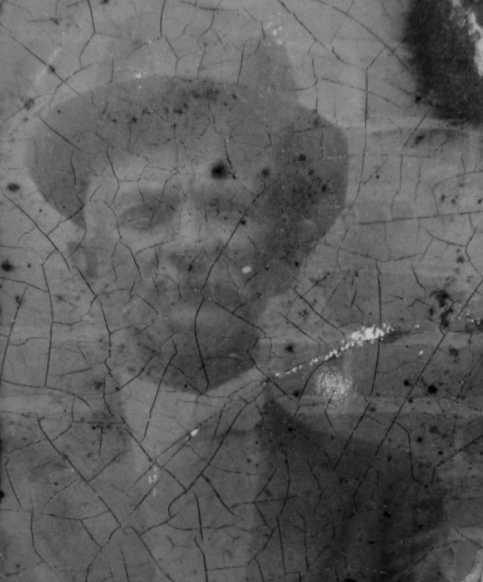
In 1852 Thomas Carper sold his 380 acres of Herndon land to Thomas Cox, a New Yorker who came south in invest in Virginia land. In a 1910 memoir written by John Ford Hazard — a nephew of Thomas Cox whose family soon joined the Coxes in Virginia — recalled that his uncle Tom Cox was an enslaver. John recalled:
“Uncle Thomas had bought the farm of Thomas Carper, as he wanted to keep his Negroes in their quarters until hiring time, New Year’s Day. Carper had six slaves, Lewis, a full-grown man worth about $1,000; Ann, a full-grown woman worth $500 to $600; Joe, a boy about fourteen; and Puss, a little older. Then there was Uncle Sam and Aunt Chloe, whose ages were indefinity old… New Year’s Day came, and the Negroes went, and then we children had their quarters for a play house. There were two of them each with a big fireplace where they cooked for their masters and themselves in the coals and ashes. They thought no other place equal to bake the cornbread in the bake kettle covered with hot ashes and coals. It was their principal food.”
John went on to explain his view of the enslavement that he witnessed as a boy:
“Slavery, as conducted there, was not oppressive. The Negroes were not driven to work and were usually well fed. Their main dread fear of being sold into the South, but their labor was not oppressive. Under no circumstances were they to have any education, the penalty of $50 fine and imprisonment being over the head of any person guilty of violating this law or even teaching them letters.”
Closing
The number of enslaved people listed on Fairfax County’s 1860 "slave schedule" is many, recorded on many pages. It is unknown how many of those enslaved people lived in the area we now call Herndon because the Town of Herndon and its corporate boundaries did not exist until 1879.
In 1880, the incorporated Town of Herndon had its first official federal census. That year, there were 422 people who lived within the town limits. Of those 422 people, 88 of them were listed as heads of households — 73 were white and 15 were black or mulatto. The occupation of a few of the African American women who were wives were listed simply as “keeping house.” But all other African Americans who were of age were either laborers or servants, with the exception of Henry Simms who owned his own blacksmith business, and Frank Weaver who was a farmer.
About this column: “Remembering Herndon’s History” is a regular Herndon Patch feature offering stories and anecdotes about Herndon’s past. The articles are written by members of the Herndon Historical Society. Barbara Glakas is a member. A complete list of “Remembering Herndon’s History” columns is available on the Historical Society website at www.herndonhistoricalsociety.org.
The Herndon Historical Society operates a small museum that focuses on local history. It is housed in the Herndon Depot in downtown Herndon on Lynn Street and is open every Sunday from noon until 3:00. Visit the Society’s website at www.herndonhistoricalsociety.org, and the Historical Society’s Facebook page at https://www.facebook.com/HerndonHistory for more information.
Note: The Historical Society is seeking volunteers to help keep the museum open each Sunday. If you have an interest in local history and would like to help, contact HerndonHistoricalSociety@gmail.com.
Get more local news delivered straight to your inbox. Sign up for free Patch newsletters and alerts.