Community Corner
Remembering Herndon's History: Tomb of the Unknown Soldier
The story of Herndon's "Tomb of the Unknown Soldier," located near the entrance to the Town cemetery.


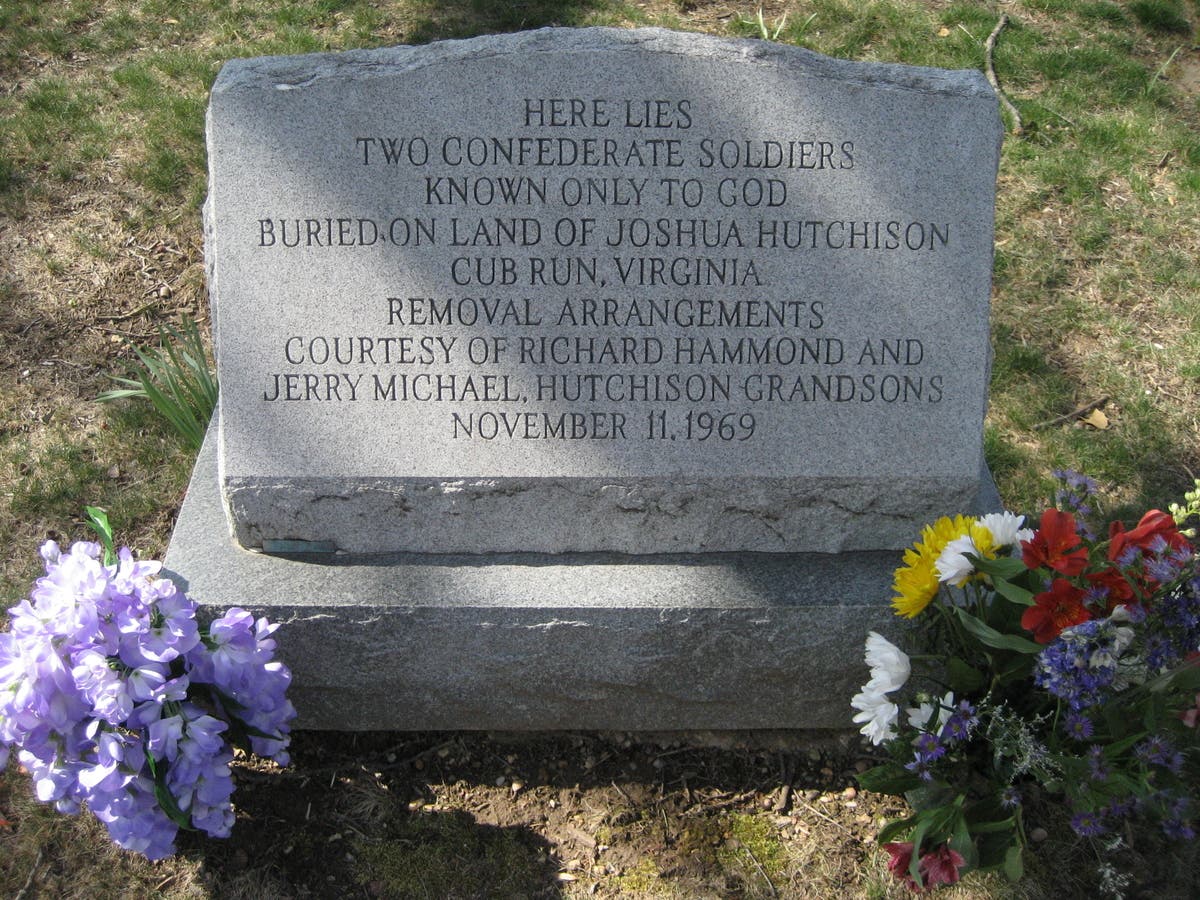
Main image: Tombstone at the grave of the two unknown Confederate soldiers. Photo by Barbara Glakas.”
By Barbara Glakas
Herndon has its own “Tomb of the Unknown Soldier” of sorts, located not too far from the entrance of the Town cemetery, Chestnut Grove. In the gravesite lay two soldiers from the Civil War. The tombstone bears no names but is engraved with an inscription:
Find out what's happening in Herndonfor free with the latest updates from Patch.
“Here lies two Confederate soldiers, known only to God, buried on land of Joshua Hutchison, Cub Run, Virginia. Removal arrangements courtesy of Richard Hammond and Jerry Michael, Hutchison grandsons. November 11, 1969.”
Each Memorial Day the Commander of Herndon’s American Legion Post 184 sets a wreath at the gravesite, after which Taps is played by a Legion member, with the Herndon High School color guard standing nearby at attention.
Find out what's happening in Herndonfor free with the latest updates from Patch.
The story behind this gravesite was described in a 1990 issue of the Herndon Observer newspaper. The two soldiers had been buried in the front yard of a farmhouse once owned by Civil War veteran Joshua M. Hutchison who lived in the Pleasant Valley community along Route 50. Joshua Hutchison died in 1931 and is buried in Chestnut Grove Cemetery. His tombstone says, “None knew him but to love him. None named him but in praise.” Strikingly, the Southern Cross of Honor symbol is also etched into his tombstone.
Hutchison’s grandson, Richard M. Hammond – a Civil War buff – lived in Herndon. Hammond recalled how his mother, Christie Hutchison Hammond, always remembered how she and her sister were taught as children to respect the ground “as if it were sacred,” and to never walk over the spot where the soldiers were buried. Hammond said some type of flower or bush had been planted there to remind them where the grave was located.
Hammond speculated that the buried soldiers may have once been war comrades of his grandfather, who once served with Col. John Singleton Mosby’s Rangers. Hutchison served in Company G of Virginia’s 8th Infantry Regiment, but then later joined Mosby’s 43rd Virginia Cavalry. Hammond thought his grandfather would not have been “so particular in having them buried” if they were not his grandfather’s comrades. But later Hammond said he was not sure that his grandfather had personally buried the two soldiers, but only that he was particular about the gravesite.
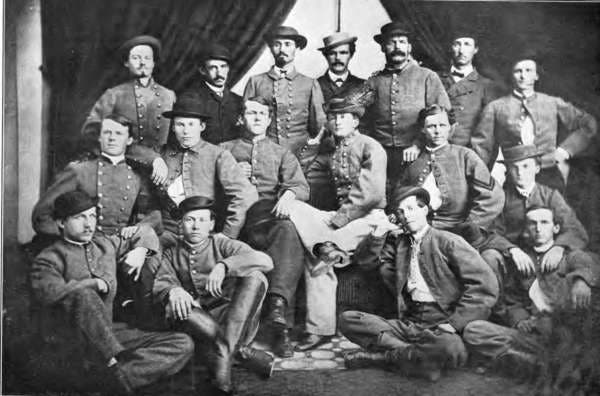
John S. Mosby (center) and some of his men from the Virginia’s 43rd Cavalry. Wikipedia.
Nevertheless, the gravesites were located on Hutchison’s land. It was not uncommon for farmers to have their own family burial grounds.
Many years later Route 50 was widened from two lanes to four lanes. When Hammond learned that a new lane on Route 50 would cover the unmarked graves, he contacted Herndon’s Funeral Director, who was J. Berkley Green at the time, to make arrangements for the bodies to be moved to Chestnut Grove Cemetery. Also involved in these arrangements were Hammond’s cousin, Jerry Michael, and his uncle, Lawrence Michael. Mr. Green, who passed away in 1998, had once recalled how he had moved many graves from the Dulles airport grounds in 1959.
Hammond speculated that the two unknown soldiers may have died at what was known as “The Skirmish at Saunders Toll Gate,” which occurred on March 23, 1863. The toll gate was formerly located near the present day intersection of Centreville Road and Route 50. Confederate John S. Mosby and about fifty of his rangers encountered a larger unit of about seventy New York Cavalry troops. Mosby feigned a retreat and fled westward on Route 50 where he and his men stopped and hid behind some fallen trees. When the New Yorker’s got close, Mosby’s men opened fire, charged and chased the northerners. Mosby reported that at least five northerners were killed and 35 captured. Although none of Mosby’s Rangers were killed in that skirmish, Mosby and his men did engage in other nearby skirmishes that year.
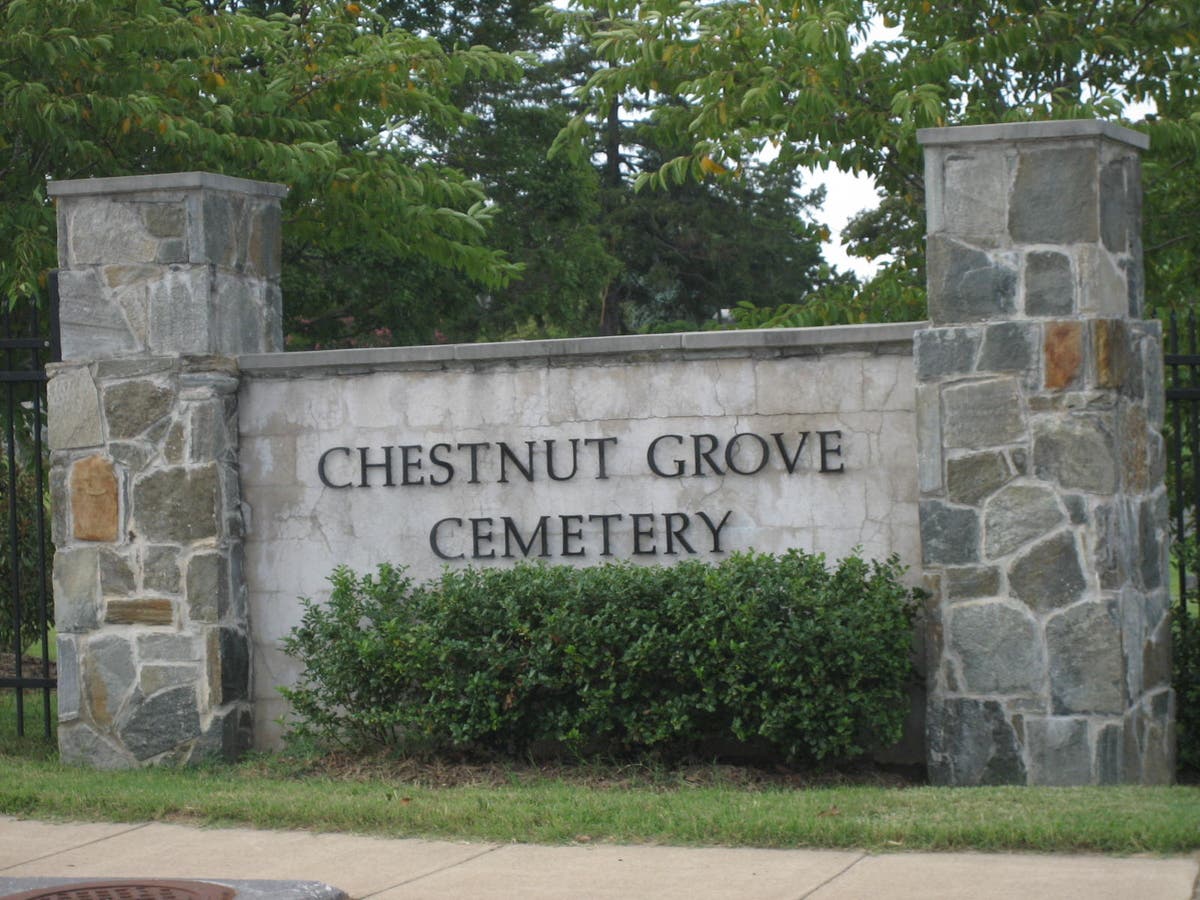
Herndon’s Chestnut Grove Cemetery. Photo by Barbara Glakas.
Lewis Leigh, a member of the Northern Virginia Relic Hunters Association, was one of several people present at the time of the disinterment. He said that there were two prevailing theories at the time about how the two soldiers in Hutchison’s yard may have died. One theory was the Saunders Toll Gate Skirmish. The second theory, however, was death by eating too many green apples.
As far-fetched as it may seem, it is true that eating an excess of apple seeds can be toxic. Seeds in apples contain a cyanide-releasing chemical. A 150 pound man would have to ingest about 200 apple seeds (or about 20 apple cores) to receive a fatal dose. It was common for Civil War soldiers to forage food off the land.
Whether in a skirmish or by eating poisonous food off the land, or by some other reason that is unknown to us, we may never know how these two soldiers died.
Hammond said when the two bodies were disinterred in 1969 there was little left of them except for buttons that identified one as a Confederate staff officer and the other as a Virginia Staff officer. No bullets were found. Hammond said, “There were no belt buckles, just the buttons and a big brass key like people used to have for the front door of their houses.” Hammond still has that key today.
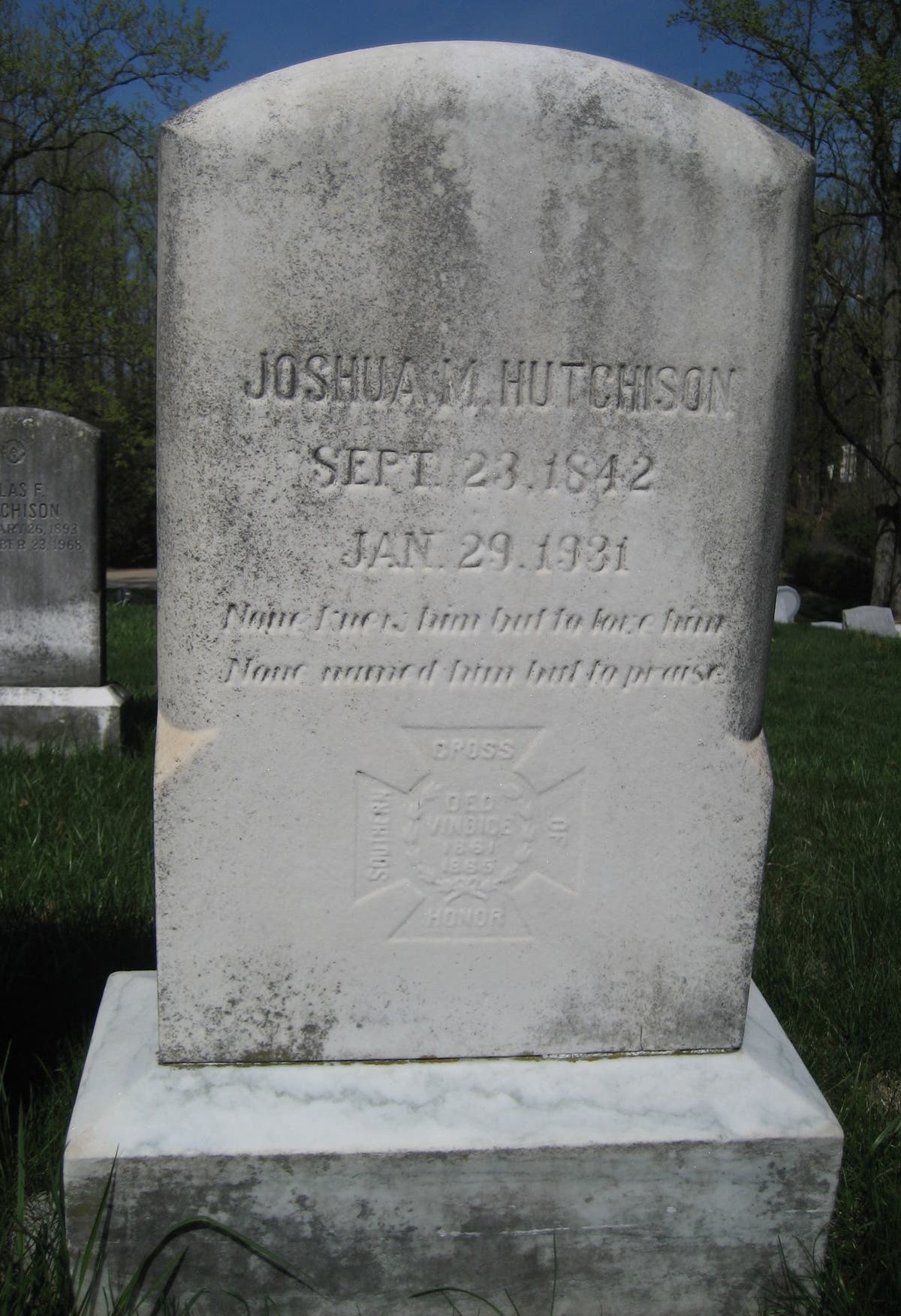
Tombstone of Joshua Hutchison showing the etching of the Southern Cross of Honor. Photo by Barbara Glakas.
Leigh said that the two bodies had been wrapped in a sheet and had been in a wooden box. He clarified, however, that he used the word “bodies” loosely. There were no bones and it was just looked like jet black wet earth or black dirt. John Jackson, who was the grave digger, explained that when the earth is wet, it deteriorates to the bodies and leaves a black substance. Leigh said, in addition to the uniform buttons, nails were found to the wood box, as well as a sad iron, which Leigh could not explain.
Certainly, there are many Civil War soldiers buried in Chestnut Grove, some whose identities may not be fully known. But these two unknown soldiers were treated with particular reverence, a reverence passed down to through the Hutchison family by their grandfather. The two reinterred unknown soldiers were placed in a section of the cemetery called “The Park,” an area surrounded by walkways, benches and stand of grand old trees, and not too far away from the soldiers’ old friend, Joshua Hutchison.
------------------------------------------
About this column: “Remembering Herndon’s History” is a regular Herndon Patch feature offering stories and anecdotes about Herndon’s past. The articles are written by members of the Herndon Historical Society. Barbara Glakas is a member. A complete list of “Remembering Herndon’s History” columns is available on the Historical Society website at www.herndonhistoricalsociety.org.
The Herndon Historical Society operates a small museum that focuses on local history. It is housed in the Herndon Depot in downtown Herndon on Lynn Street and is open every Sunday from noon until 3:00. Visit the Society’s website at www.herndonhistoricalsociety.org, and the Historical Society’s Facebook page at https://www.facebook.com/Hernd... for more information.
Note: The Historical Society is seeking volunteers to help keep the museum open each Sunday. If you have an interest in local history and would like to help, contact HerndonHistoricalSociety@gmail.com.
Get more local news delivered straight to your inbox. Sign up for free Patch newsletters and alerts.