Politics & Government
Could Downgrade of U.S. Debt Hinder Local Governments?
Downgrade could have ripple effect, make local governments vulnerable, GMU Mercatus Center professors say.

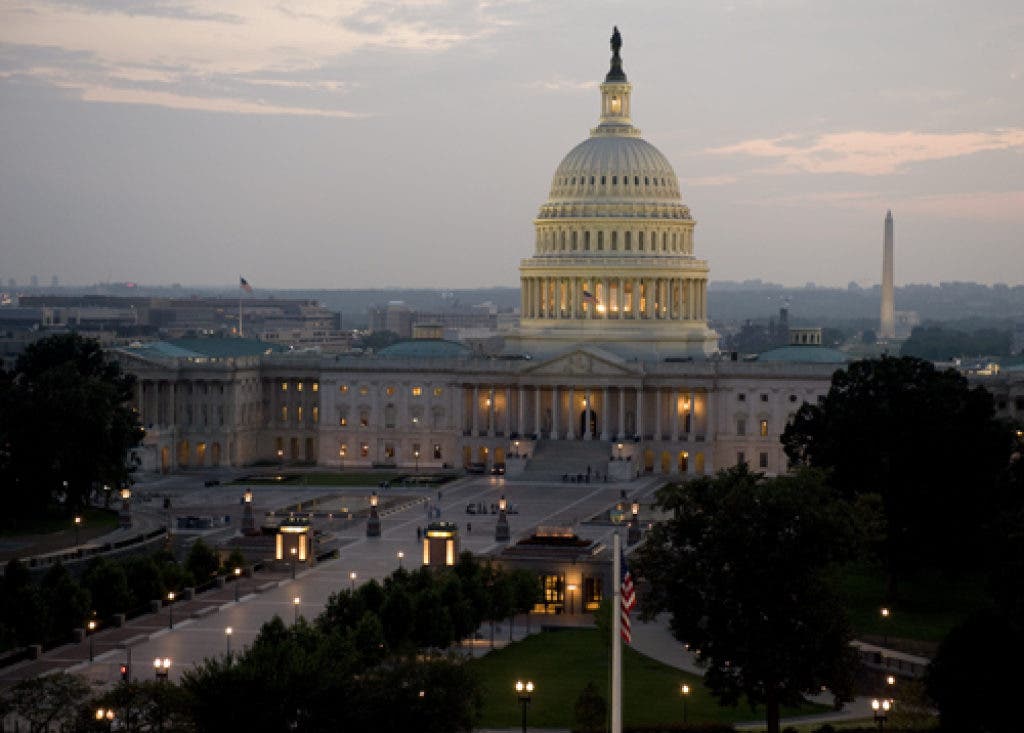
The downgrade by Standard & Poor's of the U.S. debt from AAA to AA+ could make it more expensive down the road for local governments to borrow, according to two professors from George Mason University's Mercatus Center.
State and local governments that are otherwise doing well, but are carrying the risk of a lot of federal projects on their balance sheets may find it more expensive to borrow,” said Eileen Norcross, a fellow at the Mercatus Center at George Mason University in Fairfax.
Northern Virginia is home to a high concentration of government contracting firms that represent more than $23 billion in government contracts and provide critical services like defense support, information technology, accounting and much more to the federal government.
“The federal downgrade also affects private companies that contract with those governments and local governments financing projects with debt,” Norcross added. “The decision to downgrade the federal government injects uncertainty into these decisions.”
Find out what's happening in Manassasfor free with the latest updates from Patch.
, are among the 161 local government credit ratings reaffirmed at Moody’s top AAA rating but assigned a “negative outlook” because of indirect and direct financial and economic relationships of these localities with the federal government.
This current rating action was based on the characteristics that these local governments shared as a group and will be followed by separate case-by-case reviews of each affected jurisdiction.
Find out what's happening in Manassasfor free with the latest updates from Patch.
A Wall Street Journal story Saturday points out that the state of Virginia is vulnerable to a downgrade due to its reliance on federal spending, especially if Congress reacts to the U.S. debt downgrade with cuts to the federal workforce. Then, Virginia, which found out it too retained its AAA rating from Moody's on Thursday, could face acute fiscal strains that warrant a downgrade the article said.
"Moody's placed Virginia on notice," said Rep. Gerry Connolly (D-11th), in a telephone town hall meeting Thursday night.
Connolly noted that any cuts in Defense may not hurt Northern Virginia: "We specialize in intelligence and the use of gathering intelligence," he said in the town hall meeting. "That expertise is going to be more in demand as Pentagon sees a shrinking budget. We have to continue to diversify our economy."
A "super committee" made up of members of both parties in Congress is expected to come up with a list of cuts by November.
While Virginia's Republican Gov. Bob McDonnell likes to point to a healthy state surplus of more than $300 million, a Washington Post editorial points out that it's only achieved by withholding payments to the state pension fund, and that the state will lose its "surplus" just as McDonnell is exiting the governor's office.
“One thing we should keep in mind is that the ratings are really just signals or indicators of a problem,” said Matthew Mitchell, a research fellow at the George Mason center. “The real problem is our long-run fiscal outlook and that remains a problem whether or not some ratings agencies choose to signal it.”
Still, Mitchell says the good news is that U.S. debt doesn’t have to look perfect, just better than the alternatives.
“Compared to investing in Greece, Italy, Japan, the state of Illinois, or even in the U.S. stock market, U.S. Treasuries may still look like a good deal to lots of investors,” Mitchell added.
The Mercatus Center at George Mason University is partly funded by oil billionaires David and Charles Koch, who are major donors to the national tea party movement.
Get more local news delivered straight to your inbox. Sign up for free Patch newsletters and alerts.