Politics & Government
Bob Marshall Says Tri-County Connector Road Staves Off Development
Bob Marshall says in Question 2 that the Tri-County Connector Road doesn't open up more land to development, which means it wouldn't cost as much to build. Marshall is seeking re-election against Carl Genthner.

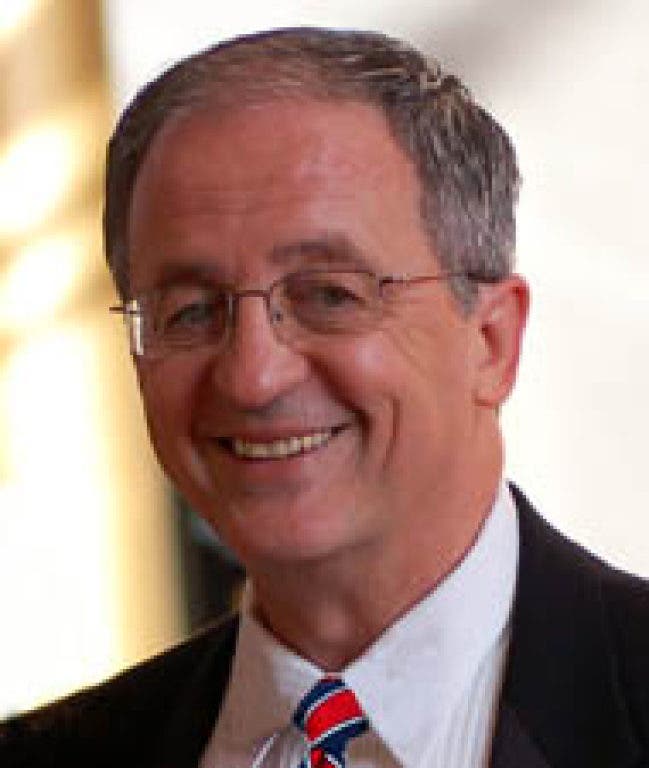
Candidate provided profile:
Robert G. “Bob” Marshall was born in Tacoma Park, MD on May 3, 1944. He is married to Catherine Ann Fonseca. He is the father of Teresa, Christopher (deceased), Mary Clare, Joseph and Thomas. Delegate Marshall is a member of All Saints Catholic Church and the Knights of Columbus. He is also a member of the Prince William County Republican Committee. Delegate Marshall received a Bachelor of Arts Degree in History (1969) from Belmont Abby College in Belmont, NC, and Master of Arts in Humanities (1991) from California State University.
In addition to his job as delegate, he has his own independent research business. He had previously worked for Shenandoah Electronic Intelligence, George Mason University as an adjunct professor, Director of Congressional Information for the American Life League, Staff Director of a U.S. Senate subcommittee, Legislative Assistant for two U.S. Congressmen and one U.S. Senator, and in the Executive Office of the President as a “cost-cutter” reviewing grants for waste and efficiency.
Delegate Marshall was first elected to the Virginia House of Delegates in 1991. His new district will include parts of Western and Central Prince William County as well as Manassas Park. Delegate Marshall is the sponsor of HB 10, the Healthcare Freedom Act which passed the 2010 General Assembly, was signed into law by the Governor and gave standing to the state of Virginia to sue the federal government over the health insurance mandate.
Delegate Marshall was the lead plaintiff in his successful 2008 Marshall vs. NVTA suit, in which the Virginia Supreme Court ruled 7-0 that taxes could only be levied by office holders specifically elected to a governing body.
Find out what's happening in Manassas Parkfor free with the latest updates from Patch.
Delegate Marshall is the author of the one-man, one-woman Marriage Virginia Constitutional Amendment approved by voters in 2006.
In 2011, Delegate Marshall introduced a constitutional amendment to prevent hiding fee and tax hikes in the budget, as well as two measures to challenge Obama's federal Cap and Trade legislation. He also introduced legislation to help citizens being treated unjustly by banks during the foreclosure process. He is a member of the Counties Cities and Towns, Finance, and the Science and Technology Committees. He chaired for three years the General Assembly’s Joint Subcommittee Studying Medical, Ethical, and Scientific Issues Relating to Stem Cell Research. He was also the sponsor of the legislation creating the Virginia Commission on Immigration. He has served on the Agriculture, Claims (Co-Chair 2000-2001), Privileges and Elections, and Interstate Cooperation Committees over the course of his term in office.
Find out what's happening in Manassas Parkfor free with the latest updates from Patch.
Bob Marshall's Official Campaign Website
Question 1: What is the top issue facing residents of the 13th District and how do you plan to address this if elected?
While several issues have come up in door step conversations as I walk through neighborhoods, one is prevalent in all parts of the new 13th District, and that is the mortgage issue. Almost half of PW area homeowners owe more than their home can be sold for. This has personal effects on local families and economic effects on the investments of the Virginia Retirement System which has more than $3.2 Billion in investments which may be completely worthless. I say this because if the banks failed to legally transfer the mortgage notes to the Real Estate Mortgage Backed Security (i.e. RMBS) trusts within the time allowed by the trust documents, then the trusts are empty and the RMBS securities nearly worthless.
Almost all the RMBS trusts were created under NY law which stipulates that any action not specifically outlined in the trust papers is a “void act”. The governing docs for the trust is the Pooling and Service Agreement (PSA). Almost all of these PSAs require that the notes be endorsed showing a complete chain of title and that they be in the custody of the trust within a certain period of time (usually 60-90 days) of the trust closing and securities in the trust sold. These requirements have very good legal and tax reasons such as the bankruptcy remoteness of the assets and REMIC status.
Adam Levitin at Georgetown Law explains this in his article The Big Fail. (http://www.creditslips.org/creditslips/2010/11/securitization-fail.html )
Many of the real estate mortgage servicing banks have somehow also managed to lose a great deal of the original paperwork. Even if they found the paperwork, the PSA would not allow for the transfer of the notes to the trust after the close date. There is your “void act”. This of course would mean that the trust has no standing to foreclose.
I have written the Attorney General about this and the Virginia Secretary of Finance regarding my concerns in this area.
Question 2: What ideas do you have to help improve traffic in the Rt. 28 corridor?
The long range Comprehensive Plan has had a right of way preserved for the Tri-county connector from Rt. 234 Business in Manassas to Rt. 7 west of Rt. 28 running along the perimeter of Dulles Airport. This is the ONLY route that does NOT open up more land for development, and so this Tri-County Connector Route carries the lowest immediate capital costs and also virtually no additional development costs. The statute which I authored several years ago which passed allows Prince WIlliam, Fairfax and Loudoun Counties to build and operate such a road as a toll road. A parallel route to Rt. 28 would significantly reduce Rt. 28 traffic and travel time in that corridor
Question 3: This fiscal year, Prince William County will contribute 15.54 percent to employees' retirement funds or $13.6 million. But the VRS advised PWC officials that future contribution rates will rise to 20.9 percent in fiscal year 2013 and more than 23 percent in fiscal year 2015. What plans do you have to try and remove the financial burden from all employee pensions without destroying morale?
First of all in 2010 I voted NO to the budget which reduced the state matching payment of roughly $620 million to the VRS system. The Assembly should seriously look at a different formula for new hires who would be enrolled into the VRS.
The question of funding the rates based on the VRS Board of Trustees recommendations has been an issue of significant discussion which apply to all local governments VRS enrollees as well as the state employees.
Any discussion of the role of funding the Virginia Retirement System must start with the Constitution of Virginia, Article X, section 11, which states that the “General Assembly shall maintain a retirement system for state employees and employees of participating political subdivisions and school divisions.” This paragraph goes on to state that “benefits shall be funded using methods which are consistent with generally accepted actuarial principles.”
The General Assembly, as the stewards of the Retirement System, has delegated some responsibilities for the system to the VRS Board of Trustees. One of the Boards responsibilities is to adopt rates based on a set of policy assumptions they propose and forward them to the Governor and General Assembly for consideration in the Budget process.
The primary difference over the past 15 years between the rates that have been funded by the General Assembly and those recommended by the VRS Board of Trustees has been the policy assumptions used in calculating the rates. The General Assembly has consistently used an 8 percent rate of return (ROR), 3 percent Cost of living adjustment (COLA) and a 30-year amortization period as basis VRS contribution rate setting.
These assumptions are within the range of generally accepted actuarial practices. Also, the assumptions related to the rate of return and inflation are conservative compared to the actual plan experience since 1990. Since 1990, a period which includes 3 recessions, the annualized ROR has been 8.63 percent and the average COLA has been around 2.75 percent. While the General Assembly has been consistent in the policy assumptions used for rate setting, the VRS Board of Trustees has changed their policy assumptions on a continual basis. For example, over the past 15 years the Board has made incremental changes to certain policy assumptions: Decreasing the assumed rate of return from 8 percent to 7.5 percent in 2005 and to 7 percent in 2010, and incrementally decreasing the amortization period from 30 years to 20 years from 1996 through 2006.
The VRS Board's policy assumptions do result in higher proposed contribution rates, but that does not mean funding rates based on the 8 percent ROR, 3 percent COLA and a 30-year amortization period are necessarily inappropriate. These assumptions are consistent with industry standards and are conservative compared to the plan experience over the past 22 years. Furthermore, the different policy assumptions produce not only different contribution rates, but also significantly different funded status’. The funded status for the VRS is significantly higher when calculated based on 8 percent ROR and 3 percent COLA assumptions than the funded status as calculated based on the VRS Boards policy assumptions, which is the only funded status generally scene by the public. For example, the funded status of the regular state employee plan (as of June 30, 2010) is almost 81 percent when using the General Assembly’s assumptions compared to 75 percent when using the VRS Board’s assumptions.
For the reasons stated above the General Assembly has continued to fund the VRS rates based on the consistent set of policy assumptions (8 percent, 3 percent and 30 years). If the General Assembly did elect to fund the Board recommended rates, the additional fiscal impact would vary on an annual basis. Based on the most recent data, the difference between funding the rates using the VRS Boards current assumptions (a 7 percent ROR, a 2.5 percent COLA and a 20-year amortization) and the General Assembly policy assumptions (8.0 percent, 3.0 percent, and 30 yrs.) is $660 million all funds per year, including around $260 million in state General Funds and around $300 million in local school division funds. This estimate is based on the actuarial analysis of the fund as of June 30, 2010. The VRS actuaries will complete their valuation of the fund as of June 30, 2011, in the next month at which time the estimate will change.
Question 4: Foreclosures continue to be a problem for the district. What new ideas do you have that would protect residents from losing their homes?
Answer 4: See my answer to question one above.
Get more local news delivered straight to your inbox. Sign up for free Patch newsletters and alerts.