Health & Fitness
Fatal Opioid Overdoses Hit 10-Year High In Virginia: New Stats
Fentanyl is behind more than half of fatal drug overdoses, but heroin-related deaths had a notable increase last year.


The opioid epidemic continues to show no mercy as the latest fatal overdose report released by the Virginia Department of Health shows a 10-year high of fatal opioid overdoses across the state. In 2017, Virginia saw 1,534 fatal drug overdoses, most of which were related to opioids; 1,227 opioid overdoses were reported last year, a 7.8 percent increase from 1,138 in 2016.
Fentanyl was the culprit of more than half of fatal overdoses. 2017 fatalities were up to 770 from 624 the year prior. Fentanyl, a synthetic opioid that is more potent than heroin, can be fatal if you come in contact with just a few grains of the powder.
Heroin and prescription drug overdoses were also on the rise. Heroin was responsible for 558 deaths last year, while prescription opioids aside from fentanyl caused 504 deaths. Both were 10-year high numbers of overdoses as reported by the Virginia Department of Health.
Find out what's happening in McLeanfor free with the latest updates from Patch.
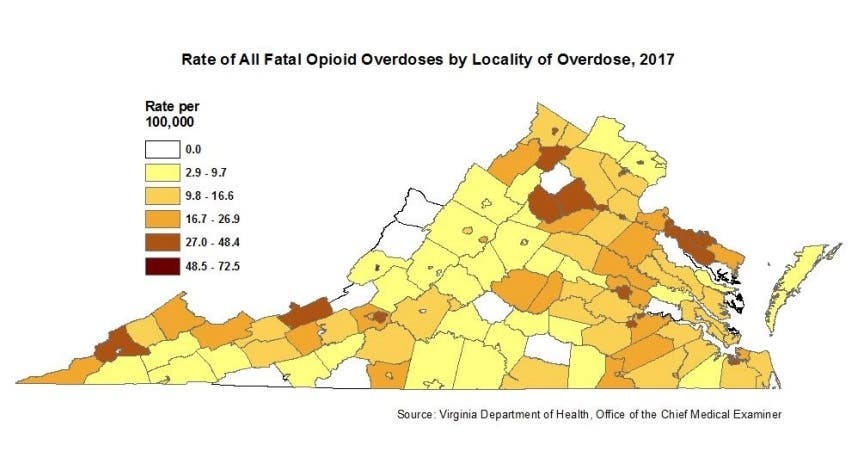
The report breaks down overdose rates by drug in each county. Fairfax County, Arlington County, Loudoun County and Alexandria had rates of 2.9-9.7 overdoses per 100,000 people, and Prince William and Stafford Counties had 9.8-16.6 overdoses per 100,000. Prescription drugs inflicted more overdoses generally in rural areas, while illegal drugs like heroin took a larger toll on urban areas such as Richmond.
Find out what's happening in McLeanfor free with the latest updates from Patch.
Fatal drug overdose has been the leading method of unnatural death since 2013 and
the leading method of accidental death since 2014 in the state. Data indicated fatal drug overdoses surpassed gun and motor vehicle-related deaths for the fifth consecutive year.
Despite a 7.8 increase in fatal opioid overdoses over the last year, Virginia saw the largest spike in overdoses from 2015 to 2016. The 2017 numbers are not final, as 40 cases remain open and could be identified as fatal drug overdoses.
For addiction, prevention and recover resources visit VaAware.com.
Signs of Overdose:
- Person is not responsive.
- Fingertips or lips turn blue or grey.
- Breathing is slow, shallow or has stopped.
- Person is gurgling or making snoring noises.
What can you do if you see an opioid overdose?
- Call 911.
- If you have naloxone, give the person naloxone and perform rescue breathing.
- If no response after 2-3 minutes, give a second dose of naloxone.
- Do not leave the person alone. Help will arrive.
- If the person starts to breathe or becomes more alert, lay the person in the recovery position; put the person slightly on the left side so that their body is supported by a bent knee with their face turned to the side and bottom arm reaching out to stabilize the position.
How can I lower my risk of overdose?
- Carry naloxone with you at all times and inform others where it is.
- If you haven't used in a while, start slowly. You are at a high risk for overdose after leaving jail, prison or the hospital or after coming out of treatment.
- Avoid mixing substances.
- Be aware that drugs vary widely in purity and strength.
- Don't use alone. If you must use alone, let people know where you are, and never the lock the door.
- Check up on each other.
- Seek treatment.
Image via Shutterstock
Get more local news delivered straight to your inbox. Sign up for free Patch newsletters and alerts.