Community Corner
Club for Young Adults with Disabilities Opens in Downtown
New club offers service and fun to adults with disabilities.
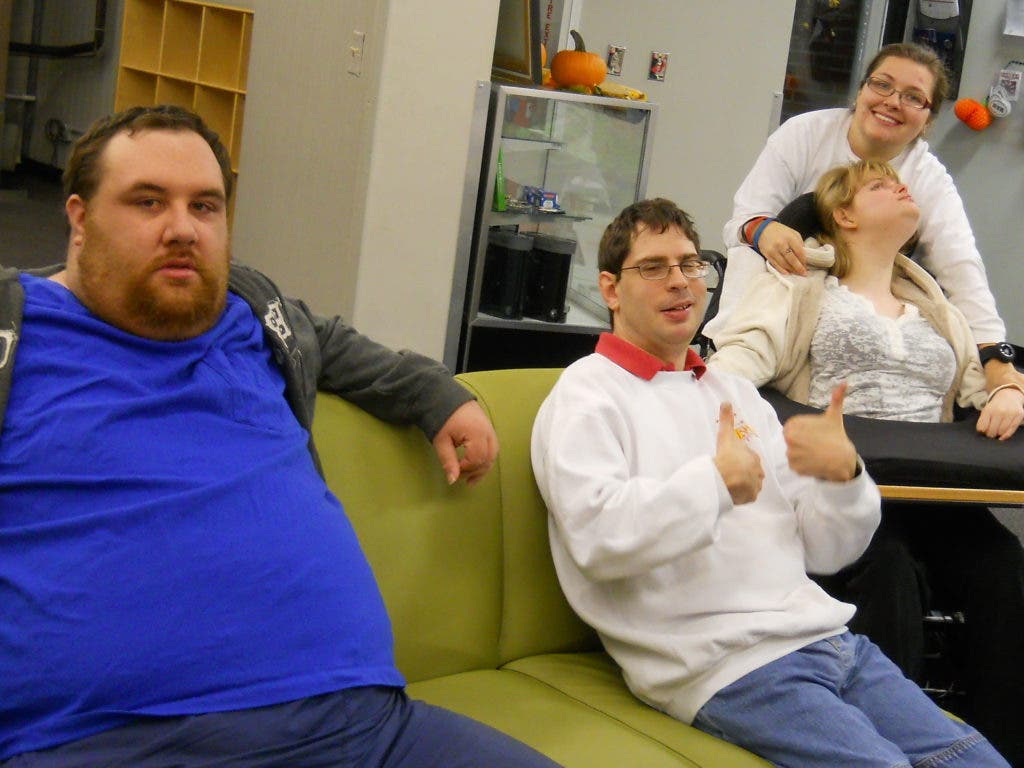
There's a brand new club in McLean. And it's providing a variety of opportunity and service to its members. The Specially Adapted Resource Club, more commonly known as SPARC, is the second of its kind in northern Virginia. It opened last month at the Old Firehouse Teen Center in downtown McLean.
The club provides learning opportunities and fellowship for eight young adult members who are disabled. Every Monday, Wednesday and Friday, big smiles can be seen on the faces of SPARC members as they enter the OFTC. Some walk in on their own. Some enter with the help of an assistant or a wheelchair. But each looks eager to spend a good part of the day with their new friends and fellow club members.
Monica Benteler, director of programs for SPARC, described the club's origin. "You go to school, and then you graduate and there's nothing to do. This provides an opportunity for them to have a fun, fulfilling day," she said.
Find out what's happening in McLeanfor free with the latest updates from Patch.
The first SPARC club was founded by Donna Goldbranson, now executive director of SPARC. Goldbranson and Benteler have been friends for 25 years. They worked together, and were office mates. Each of them eventually married and had a family. And each of them had a daughter with a disability. When the girls were in elementary school, Goldbranson began to think about opportunities for the girls after high school.
"We saw there was going to be a need," said Benteler. Goldbranson started attending a multitude of county-level meetings, and made a number of government contacts. She became well-versed in government-sponsored programs for disabled adults. But she and Benteler learned that without a special government-waiver, there are few opportunities. Even with a waiver, the programs are limited, and often extremely crowded.
Find out what's happening in McLeanfor free with the latest updates from Patch.
Goldbranson eventually created the first SPARC club in Reston. There are 17 club members in Reston and eight in McLean. The clubs are nonprofit, so the number of members and staff remain relatively small, by necessity. Club members range from those with physical or intellectual disabilities, to those on the autism spectrum. There are two staff persons in the McLean club, and art and music teachers that each come in twice a month. The program also welcomes volunteers.
"It makes for a fun day," said Benteler. "But yet it's a productive day, and it's fulfilling."
"Art is my favorite," said club member Danielle Dague. Dague, a bright young woman with a cheerful outlook, was discussing the SPARC program with three fellow club members one recent Friday morning. "I don't have a job here. So it gets me out of the house," she said.
Club member Paul Osgood agreed. "I appreciate what they do because they actually give me something to do during the day, instead of being bored at home," he said. Osgood also enjoys the art and music programs. "Art is just relaxing, and so is music. So it quiets people down," he said.
The McLean club grew out of the popularity of the Reston club. Both clubs now have waiting lists, and McLean residents are given priority in the McLean club's membership, when possible.
Benteler and Goldbranson wanted to open a club in this part of the county so that the services could be more wide-spread. Goldbranson met George Sachs, executive director of the McLean Community Center, who offered the teen center to SPARC during the day when it is not being fully utilized.
Benteler said that club members really enjoy being in the heart of the community. "In McLean, what's great about being here is that we're so in the community, and we have so many places we can walk to." They walk to the fire station on Whittier Avenue, the bookstore, the pumpkin patch. And they love going to nearby McLean Pizza or Giant to buy lunch.
The club members are busy. They fill their days not only socializing with each other, but learning life skills, and working on entrepreneurial projects. For example, they use adapted cameras, which can be hooked onto wheelchairs, to take photos. The photos are eventually made into notecards, which are sold on the SPARC website. Profits are put back into the program. They also participate in community service projects. They are working on a food drive. They are planning a Thanksgiving basket for a family they adopted. They write letters to the troops, and are working on a spring fashion show, which will feature models with and without disabilities. "It makes them feel good that they can help someone else and give back to the community," Benteler said.
But above all, the program gives club members a sense of worth. Ryan Cotnoir, a well-spoken young man and club member, said "I am really, really proud of SPARC. It has developed me socially and emotionally in ways I never thought possible."
This is the program's value, according to Benteler. "It really puts things into perspective for me, how much little things can make such a difference in someone's life."
She recalled the first time that a club member opened a can by herself. Benteler helped rig a spoon to a paint stirrer. "The top popped off. And even now I get teary-eyed when I think about it. Soup was flying everywhere. Everyone gave a big cheer, and clapped. Because you see, just such little things that we take for granted every day, they are so thankful to be able to do."
It is these little accomplishments that make the SPARC program special. As club member Cotnoir said, "We focus on trying to be adults as much as we can, but we still need a little nudge sometimes."