Crime & Safety
Alexandria Resident Sues City for Not Allowing Him to Display 'For Sale' Sign on Vehicle
His attorneys say the City is violating the First Amendment. See a video below about Scott McLean's disagreement with the ordinance.

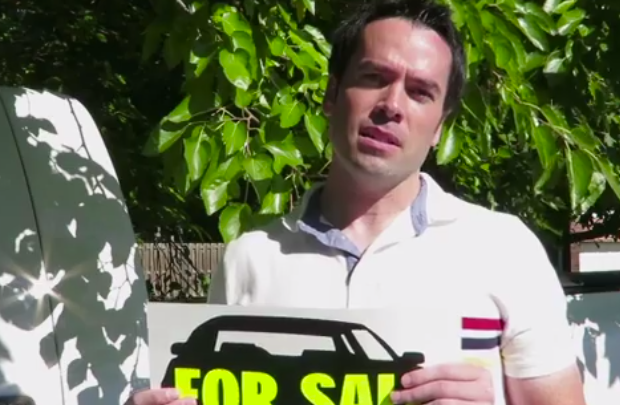
Alexandria resident Scott McLean today filed a lawsuit challenging the constitutionality of a City ordinance that forbids “for sale” signs in cars parked on the street, by making it illegal to park on a public street for the purpose of advertising your car, according to a news release from his attorneys. Here’s more about McLean’s beef, from the release:
His lawsuit argues that this prohibition, Section 10-4-13 of the Alexandria Municipal Code, violates First Amendment protections for freedom of speech.
McLean is represented by lawyers with Pacific Legal Foundation (PLF), a public interest watchdog organization that litigates nationwide for limited government, free enterprise and individual rights. PLF represents McLean, as with all its clients, free of charge.
Find out what's happening in Old Town Alexandriafor free with the latest updates from Patch.
“In Alexandria, you can advertise almost anything on your car, including political causes or a service or product that you want to sell,” said Christina Martin, attorney with PLF’s Atlantic Center office in Palm Beach Gardens, Fla. “But if you put a ‘For Sale’ sign in your car, the city will ticket you. There is no reason to single out those signs for censorship. That’s not right and it’s a violation of the First Amendment.
“The First Amendment protects everyone’s right to express themselves, and that includes the freedom to advertise,” Martin said.
Find out what's happening in Old Town Alexandriafor free with the latest updates from Patch.
Scott McLean just wants to sell his pickup truck
Scott McLean’s first encounter with what he calls Alexandria’s censorship of car owners came in October 2012. Wishing to sell his 2008 Chevrolet Malibu, he parked it on Old Dominion Boulevard, a public street in a residential neighborhood near his apartment. He parked on this street because he knew that if he placed a standard “For Sale” sign in his car, he would get calls from prospective buyers.
Instead, a police officer ticketed him for violating the city’s ordinance against “park[ing] a vehicle upon any street for the purpose of displaying the vehicle for sale.”
McLean was surprised that such a law existed, but he paid the $40 fine.
Now, two years later, he wants to sell his 2007 Dodge Ram pickup truck. Again, he wants to display a standard “For Sale” sign in his truck — but he doesn’t want to be fined for exercising his free speech rights. Nor does he want to be forced to go to another city to display his signs legally.
Therefore, he is challenging the city’s unconstitutional ban on advertising — and its arbitrary discrimination against “commercial speech.”
“Most people in Alexandria aren’t aware of this law and they’d be surprised, I’m sure, to find out they’re prohibited from doing something that people elsewhere take for granted,” said McLean. “This ban on a common form of speech and communication is just plain wrong, and I’m suing to make things right. I’m grateful to Pacific Legal Foundation for helping me take a stand for the First Amendment.”
The First Amendment protects advertising, like other forms of speech
“Alexandria’s ordinance blatantly discriminates against just one form of communication — advertising to sell your own car,” said Martin. “Scott McLean could have parked his car on the street to display a sign advertising real estate, a political cause, or Girl Scout cookies, or even someone else’s car for sale. But advertising his own car made him a lawbreaker. That double standard is crazy — and unconstitutional.
“The First Amendment doesn’t allow government to pick and choose what kinds of speech will be valued and permitted,” Martin continued. “And the First Amendment covers all kinds of communication, including advertising and other forms of commercial speech.
“Scott McLean’s case matters because it can drive home the importance of the First Amendment’s protections for commercial speech,” said Martin. “Unfortunately, courts have often failed to protect people’s right to speak about and advertise their goods and services. Yet the ability to earn a living and to sell items often depends on having the freedom to talk about your product or services. Stated very simply, free speech is essential to free enterprise.”
The case is McLean v. City of Alexandria.
About Pacific Legal Foundation
Donor‑supported Pacific Legal Foundation (www.pacificlegal.org) is the leading legal watchdog organization that litigates for limited government, property rights, individual rights, and free enterprise, in courts across the country. PLF’s Atlantic Center is located in Palm Beach Gardens, Fla. PLF represents all clients free of charge.
Get more local news delivered straight to your inbox. Sign up for free Patch newsletters and alerts.