Health & Fitness
Organic Fertilizers & Cherry Trees!
Some ins and outs of organic and chemical fertilizers. And ... it's that time of year again ... Cherry Blossoms! Which cherry trees are more likely to bloom in your yard?
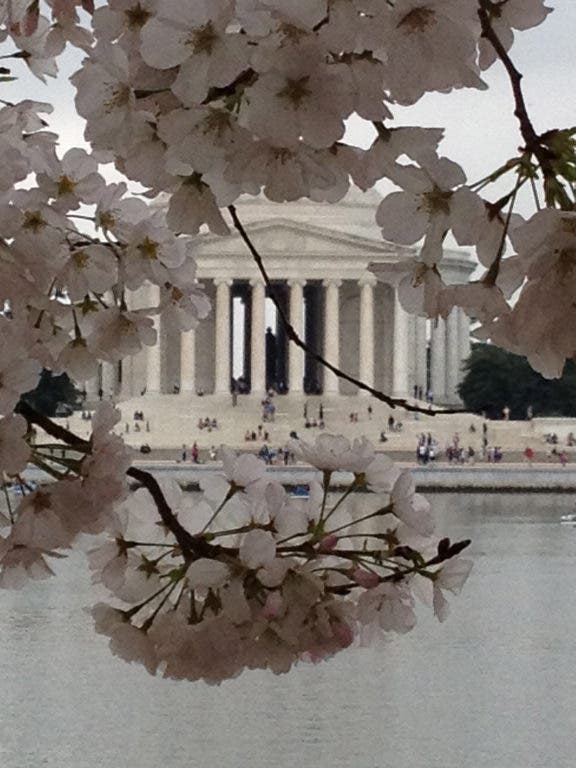

This week, I’m discussing that age-old question: organic versus chemical based fertilizers, which is better for creating a lush green lawn that your kids and pets can play on!? And, with the cherry blossom peak dates now extended into April, we answer questions about how to ensure your cherry trees are in full bloom too.
Tip of the Week: Organic v. Chemical Fertilizers
Find out what's happening in Old Town Alexandriafor free with the latest updates from Patch.
Not only am I frequently asked to weigh the benefits of organic versus chemical fertilizers for my clients, as a father and dog owner myself I have given a lot of thought to this issue. The short answer is: It depends!
First, it’s important to note, that any fertilizer if used incorrectly can harm you and the environment. So, if you are applying fertilizer yourself, it is best to test your soil for nutrients and deficiencies, follow directions, and use the correct and indicated ratios. Your soil contains nitrogen (“N”), phosphorus (“P”), and potassium (“K”), and when you buy fertilizer there is a N-P-K ratio included on the package. You will see numbers like “17-8-10,” “16-16-16,” or “25-4-2,” which indicate the prescribed N-P-K ratios. So, when you choose a fertilizer you want to get a fertilizer that will address the areas of deficiency in your soil, using the N-P-K ratio is your reference guide. Most home owners are unsure about what’s going on in their soil and, if so, can purchase an inexpensive soil kit at the local garden supply store, or hire a professional to test your soil.
Find out what's happening in Old Town Alexandriafor free with the latest updates from Patch.
Organic chemicals, which are composed of minerals, animal or plant based resources, are processed more naturally and can produce results at a slower pace compared to chemical fertilizers. They are gradually worked into the soil over time, changing the soil’s property, making it more hospitable and hardy for your grass, garden, and vegetables. Chemical based fertilizers, which are harnessed from rock, animal, or petroleum based products, tend to generate more immediate results. Plants, grass, trees, and shrubs get instant gratification from these fertilizers, which seep into your plants or grasses root system allowing them to instantly put to work the fertilizer. And, while organic fertilizers are obviously the more natural choice, they are not entirely chemical free. Rather, they use natural occurring chemicals found in materials such as manure, which may still cause some pollution in water run-off.
Sometimes, a combination of both organic and chemical fertilizers achieves the best results, effectively balancing their benefits and drawbacks.
Question of the Week: What variety of cherry trees grow well in our area and how do care for them?
Cherry blossoms must be in the definition of DC living. As we celebrate their blooms each year, cherry trees also offer a gorgeous pop of spring color to your own landscape and create a nice shady spot in your yard during summer.
Yoshino, Kwanzan, and Weeping are not only the most popular cherry tree varieties in our area but grow the best too. All three produce beautiful blooms in elegant pink varieties. Before purchasing any one of these trees you’ll want to site a sunny spot (full sun) in your yard where the soil is well drained, and with enough room to accommodate a mature spread of up to 25 feet. This is particularly important if you choose to plant a Yoshino or Kwanzan tree, which can grow as tall as twenty five feet with a mature spread equal to its height. It’s also important to note a tree with the potential to grow so large you will want to plant it a good distance from your house, the roots have the potential to be invasive and could damage your home. If you’re planting in a spot currently occupied with grass, you’ll want to remove the grass as much as 4 feet in diameter, so that the tree does not have to compete with the grass for resources and nutrients. Once planted cherry trees require regular pruning in the winter, a good mulching, and fertilizing each spring.
So, hop to it, spring is the best time to plant a cherry tree in Northern Virginia!
Please send any landscape questions you would like answered to: PatchQuestions@GreenerSideLLC.com.
Aaron Gorski
Owner, The Greener Side Lawn & Landscaping LLC