Health & Fitness
Tips for Blind Dogs
UPDATE: Daisy has been adopted! Learn a few of the tricks used to train blind dogs and what you can do at home.
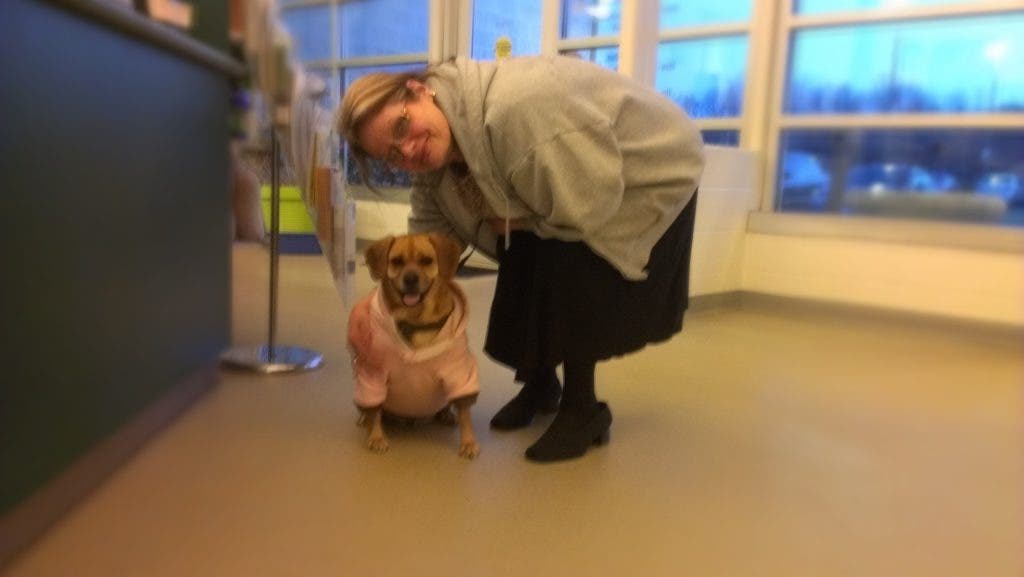

UPDATE: Since the writing of this post, Daisy has been adopted! Her new adopters are getting her adjusted to her new home and will continue to work with her.
We recently brought you video of one of our volunteers working with Daisy, the blind Pug/Beagle mix. As you probably noticed, Daisy is very intelligent and a quick learner, and it doesn’t hurt that she is rewarded with a treats. The more you get to know Daisy, the more you’ll see that although she is blind, she’s just like any other dog.
In fact, Daisy requires very little from our Behavior and Training team. There are no behavioral barriers to her being adopted and Daisy is simply waiting for the right person to fall in love with her. That being said, there are some things League staff and volunteers are doing to make shelter life a little easier for her, and there are things her adopter, or anyone with a blind dog, can do at home.
Daisy’s kennel is set up with rugs around the edges, which provide boundaries for her and serve as a guide to help prevent Daisy from running into the walls. Think of it like a warning track for an outfielder. With her space clearly defined, Daisy has no trouble recognizing where she is within her confines at the shelter. At home, her parents can use different textures along the edges of rooms or in front of doors so Daisy can easily recognize where she is. It is also important to keep a clear, consistent path for her to maneuver about the home. Daisy will soon get acclimated to her new surroundings, but rearranging the furniture or placing obstacles in her path is not something you’ll want to do.
Dogs have powerful hearing and smell senses, so the fact that Daisy cannot see is not a serious impediment to her health, happiness, and mobility. While body language and visual cues are used to train dogs, sound and smell are also senses routinely stimulated by our Behavior and Training team when working with all dogs. As you saw in last week’s video, Daisy responds well to treats and they can continue to be used to lure and train her. When walking Daisy on a leash, you can treat her as you would any other dog. She will be interested in stopping to smell the roses, but with firm control of the leash you can help keep her by your side and out of harm’s way.
Reward-based training is employed by the Animal Welfare League of Alexandria and it has forever changed many of the dogs that have come through the Vola Lawson Animal Shelter. Daisy is no different, and by rewarding her at home for her good behavior and establishing positive reinforcement, you’ll form a strong bond with a happy and obedient dog. Daisy is smart and trainable and available for adoption now.