Politics & Government
DC, Virginia's Child Sex Trafficking Laws Could Be Better: Study
A study looks at the District and Virginia's efforts to protect minors caught in the web of sex trafficking, and what more can be done.


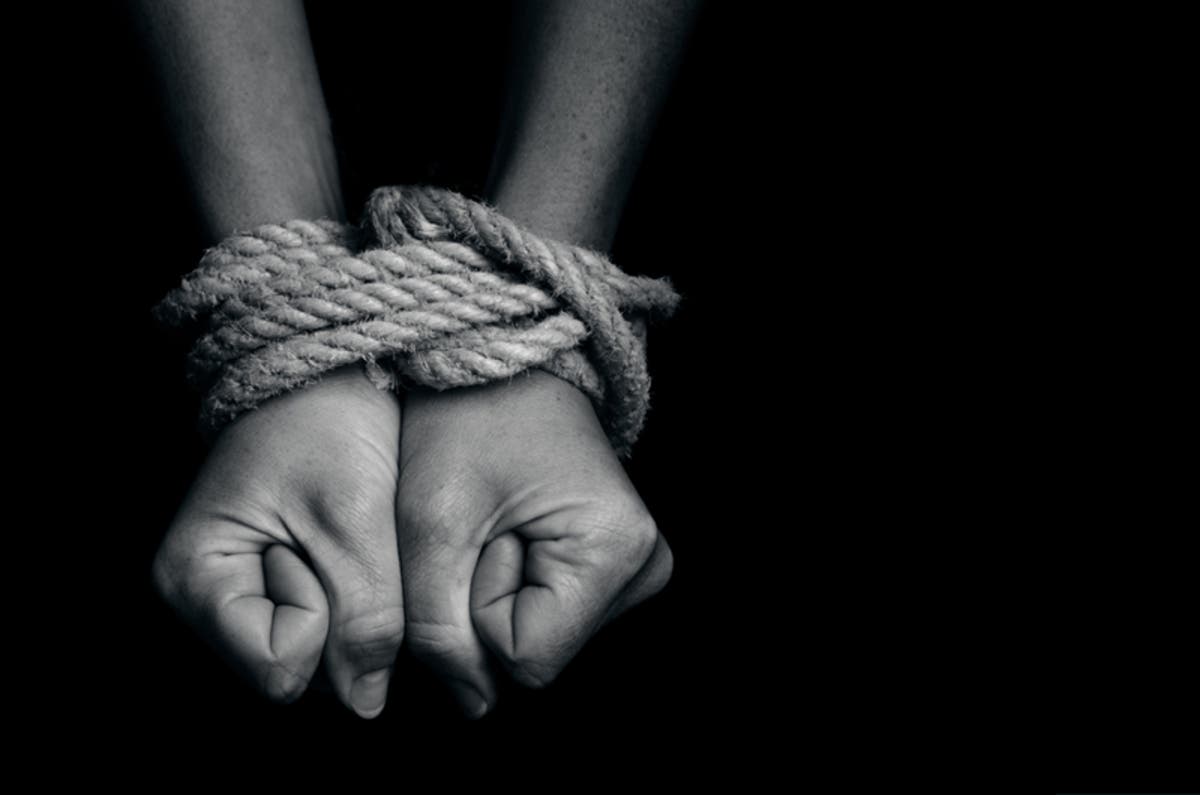
WASHINGTON, DC — The District of Columbia and Virginia are among nearly a dozen states that received an average grade when it comes to laws protecting children from sex trafficking and providing victims justice, according to a new analysis. But the report points out areas where advocates believe more legislation is needed to thwart traffickers. "The sex trafficking law does
not reach buyers of sex with minors. While defendants convicted of sex trafficking face sex
offender registration and asset forfeiture, minor victims still face delinquency and detention for
prostitution charges," says Shared Hope International of Virginia's laws.
Most U.S. states are showing improvement in efforts to protect minor children from sex trafficking, which especially affects those in foster care and runaways, according to the nonprofit's new report. Both Washington, D.C., and Virginia received a C for efforts to prevent sex trafficking and provide justice to victims.
Find out what's happening in Old Town Alexandriafor free with the latest updates from Patch.
"Every day in America, children are being bought and sold for sex," Shared Hope International report said. "And they are waiting for you to notice."
Commercial sex acts may include prostitution, pornography and sexual performance, whether from pimp-controlled trafficking, gang-controlled trafficking, familial trafficking for basic needs or drugs or “survival sex,” when a minor becomes involved in commercial sex acts to meet basic needs such as food or shelter.
Find out what's happening in Old Town Alexandriafor free with the latest updates from Patch.
Virginia earned a 71 out of a possible 102.5 on its report card that examined and ranked six criteria.
- Criminalization of domestic minor sex trafficking: 7.5 out of 10 possible points;
- Criminal provisions addressing demand: 17 out of 25 possible points;
- Criminal provisions for traffickers: 12.5 out of 15 possible points;
- Criminal provisions for facilitators: 5 out of 10 possible points;
- Protective provisions for child victims: 14.5 out of 27.5 possible points;
- Criminal justice tools for investigations and prosecution: 14.5 out of 15 possible points.
DC earned a 73 out of a possible 102.5 on its report card that examined and ranked six criteria.
- Criminalization of domestic minor sex trafficking: 7.5 out of 10 possible points;
- Criminal provisions addressing demand: 17 out of 25 possible points;
- Criminal provisions for traffickers: 9.5 out of 15 possible points;
- Criminal provisions for facilitators: 7.5 out of 10 possible points;
- Protective provisions for child victims: 22.5 out of 27.5 possible points;
- Criminal justice tools for investigations and prosecution: 9 out of 15 possible points.
Children are most likely to fall into the net of sex trafficking between the ages of 14-16. Pimps most often find them on social media, but also in their homes or neighborhoods, clubs or bars, school, and the internet.
According to the National Center for Missing and Exploited Children, one in seven endangered runaways in 2017 were likely child sex trafficking victims, and 88 percent of those children were in the care of social services or foster care when they went missing.
Shared Hope International gives Virginia a low score for laws that target the demand for children, noting that Maryland does not criminalize purchasing sex acts with a minor, leaving buyers subject only to the crime of sexual solicitation of minor. "Buyers who use the Internet to purchase commercial sex acts with a minor could be prosecuted under the sexual solicitation of a minor offense," the study says. "Asset forfeiture is very limited in application for offenses committed by buyers."
Read more about Virginia's laws and recommended changes in the report.
D.C. criminalizes child sex trafficking without regard to force, fraud, or coercion; minors are
immune from prosecution under the prostitution law; and state law provides for a specialized
response that connects survivors with resources that are necessary to promote healing, the report says. "However, laws designed to combat the growing use of the Internet to commit sex trafficking offenses are not provided."
Read more about Washington, D.C.'s laws and recommended changes in the report.
Commercial sex acts may include prostitution, pornography and sexual performance, whether from pimp-controlled trafficking, gang-controlled trafficking, familial trafficking for basic needs or drugs or “survival sex,” when a minor becomes involved in commercial sex acts to meet basic needs such as food or shelter.
Children are most likely to fall into the net of sex trafficking between the ages of 14-16. Pimps most often find them on social media, but also in their homes or neighborhoods, clubs or bars, school, and the internet.
According to the National Center for Missing and Exploited Children, one in seven endangered runaways in 2017 were likely child sex trafficking victims, and 88 percent of those children were in the care of social services or foster care when they went missing.
(For more news like this, find your local Patch here. If you have an iPhone, click here to get the free Patch iPhone app; download the free Patch Android app here. And like Patch on Facebook!)
Key Findings
Overall, 10 states received an “A” and 25 received a “B” grade in 2018. That compares to 26 states that got “F” grades in 2011. Shared Hope didn’t hand out any “F” grades in its 2018 report card, but gave five “D” grades and 11 “C” grades.
Tennessee scored the highest in 2018,with 96.5 points, followed by Louisiana (95.5 points); Washington (95 points); Alabama (94.5 points) and Florida (94 points). States showing the most improvement were South Carolina, which improved its score by 11.5 points and moved from a “C” to a “B,” and Alabama, where the score improved by 11 points and the letter grade moved from a “B” to an “A.”
The states receiving “D” ratings were New Mexico and South Dakota, with 69.5 points each; Wyoming with 68 points; New York with 66 points; and Maine with 60 points.
Domestic minor sex trafficking is a federal crime under the Trafficking Protection Act, which defines those in violation of the law as anyone who “recruits, entices, harbors, transports, provides, obtains, advertises, maintains, patronizes, or solicits by any means” a minor for the purpose of a commercial sex act.When considering the crime of domestic minor sex trafficking, under the TVPA, the victim’s age is the critical issue — there is no requirement to prove that force, fraud, or coercion was used to secure the victim’s actions if the victim is a minor.
Great diversity exists among the states on the treatment of children who have been exploited. “Safe harbor” laws in 23 states and the District of Columbia prohibit prostitution charges against minors, but not all protect them from arrest, detention, interrogation, harmful investigative practices and, ultimately, proving they were victimized.
As a result “not all Safe Harbor laws are necessarily safe for all exploited youth,” Shared Hope International said in its report. “Although nearly half the states in the nation have enacted non-criminalization laws, 12 of those states’ laws specifically contemplate detaining or arresting a minor for prostitution.”
Additionally:
- Five states solely require a finding of trafficking victimization to prevent the criminalization of the minor for prostitution offenses, suggesting that some minors engage in commercial sex acts out of choice.
- Eight states and the District of Columbia couple non-criminalization laws with statutory avenues to specialized services.
- Only four states — California, Connecticut, Florida and Minnesota — have enacted non-criminalization laws that are designed to prevent the arrest and detention, as well as prosecution, of minors for prostitution offenses in addition to connecting child sex trafficking victims with holistic, specialized care and services.
“Developing and enacting comprehensive non-criminalization laws requires a multi-year and multi-agency commitment, inclusive of input, buy-in, and contribution from a variety of stakeholders,” Shared Hope International said. “Importantly, through expansive training and cultural changes, states should simultaneously seek policy, practice, and culture reform, ultimately shifting away from viewing and responding to commercially sexually exploited children as delinquent youth rather than as survivors of child sex trafficking.”
Read more about the problem here.
Photo via Shutterstock
Get more local news delivered straight to your inbox. Sign up for free Patch newsletters and alerts.